Ferrari hybrid maintenance follows the same annual service schedule as any modern Ferrari, but adds specialized inspection of high-voltage systems, battery health, thermal management, and control software.
Service adds hybrid-specific diagnostics on top of standard mechanical inspection:
Hybrid platforms, including the 296 GTB, 296 GTS, SF90 Stradale, SF90 Spider, and 849 Testarossa, combine a combustion engine with high-voltage batteries, electric motors, and power electronics working together to manage torque delivery and regenerative braking.

High-voltage battery systems require specialized training and safety procedures: safe isolation before inspection, insulated tools, and factory-approved diagnostic equipment.
These systems store and transfer significant electrical energy, so service outside a properly equipped, trained environment can introduce real safety risk and affect warranty coverage.
Hybrid Ferraris manage heat through dedicated cooling circuits, separate from the engine:
Each circuit has its own pumps and heat exchangers, keeping high-voltage components within tightly controlled thermal thresholds regardless of what the engine is doing. Annual service checks coolant condition and temperature consistency across all three.
Hybrid platforms run on control software that coordinates torque delivery, regenerative braking, and thermal response in real time.
Scheduled service reviews stored performance data, applies manufacturer updates when issued, and recalibrates between electric and combustion systems. Even without a warning light, these updates can meaningfully improve long-term stability.
Every plug-in hybrid Ferrari includes a 5-year warranty covering the battery, BMS, inverter, and electric motors, monitored for battery health and even activatable on expired-warranty cars after inspection.
Hybrid coverage by year
Hybrid Component Warranty
Years 1–5, standard
Warranty Extension Hybrid
Through year 8, annual enrollment
Power Hybrid
Years 9–16, annual enrollment
Battery replacement
Years 8 and 16, if continuously enrolled
Coverage includes the battery, battery management system, inverter, and electric motors. You pay an annual program fee rather than a battery bill; our service team can confirm current pricing for your model.
Outside Ferrari’s coverage programs, replacing an SF90’s high-voltage battery typically costs $17,000 to $23,000 including labor. Pricing for the 296 and 849 Testarossa is quoted by model; our service team can give you a current figure.
Most owners never pay that bill. Cars kept continuously enrolled in Ferrari’s Warranty Extension Hybrid and Power Hybrid programs receive a replacement battery at year 8 and year 16.
The 7-Year Genuine Maintenance program covers scheduled annual service, labor, and genuine parts for new vehicles, same as any other Ferrari. After that, hybrid-specific costs come mainly from the extended coverage programs above rather than routine service itself.
For the full annual ownership cost picture, see our Ferrari Ownership Costs Guide.
Hybrid Ferraris continue monitoring battery status even when parked. For extended non-use:
For storage beyond two weeks, use the Battery Conditioner as directed, it’s required to keep the Hybrid Component Warranty valid, not just good practice. See our Hybrid Ferrari Recharge Guide for full charging setup.
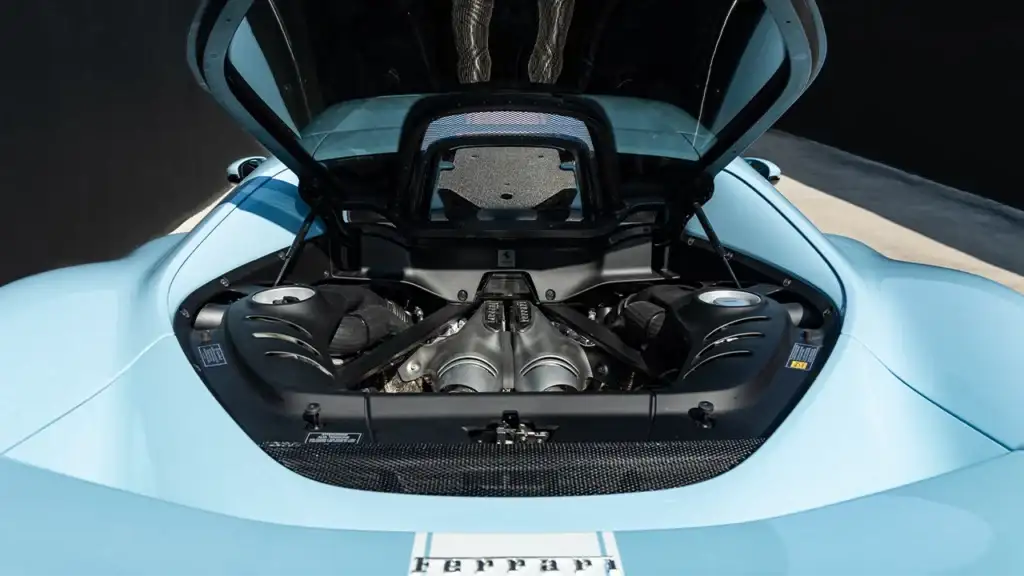
The same annual schedule as any Ferrari, with added battery and high-voltage diagnostics included in that same visit.
Additional, not entirely different. Standard mechanical service still applies, plus battery health checks, inverter inspection, and software calibration specific to the hybrid system.
Strongly recommended, and often necessary for warranty purposes. High-voltage systems require certified training and factory diagnostic tools most independent shops don’t have.
For routine mechanical work, often yes. For anything involving the high-voltage system, service at an Official Ferrari service center with certified technicians and proper safety equipment is the safer, warranty-protecting choice.
Yes. Heat and cold both affect battery performance and cooling system demand, climate-stable storage helps preserve long-term battery health specifically.
Yes. Buyers and Ferrari Approved inspections look for a complete hybrid service history, including battery health records.
Yes. Hybrid performance relies on coordinated software systems. Regular updates help maintain calibration accuracy, battery protection logic, and overall system consistency even if no warning indicators are present.


A Ferrari is not an investment—it’s a way of life.
At Ferrari of Fort Lauderdale, we guide ownership with discretion and intention—offering private access, curated experiences, and long-term stewardship for those who expect more than a car.
