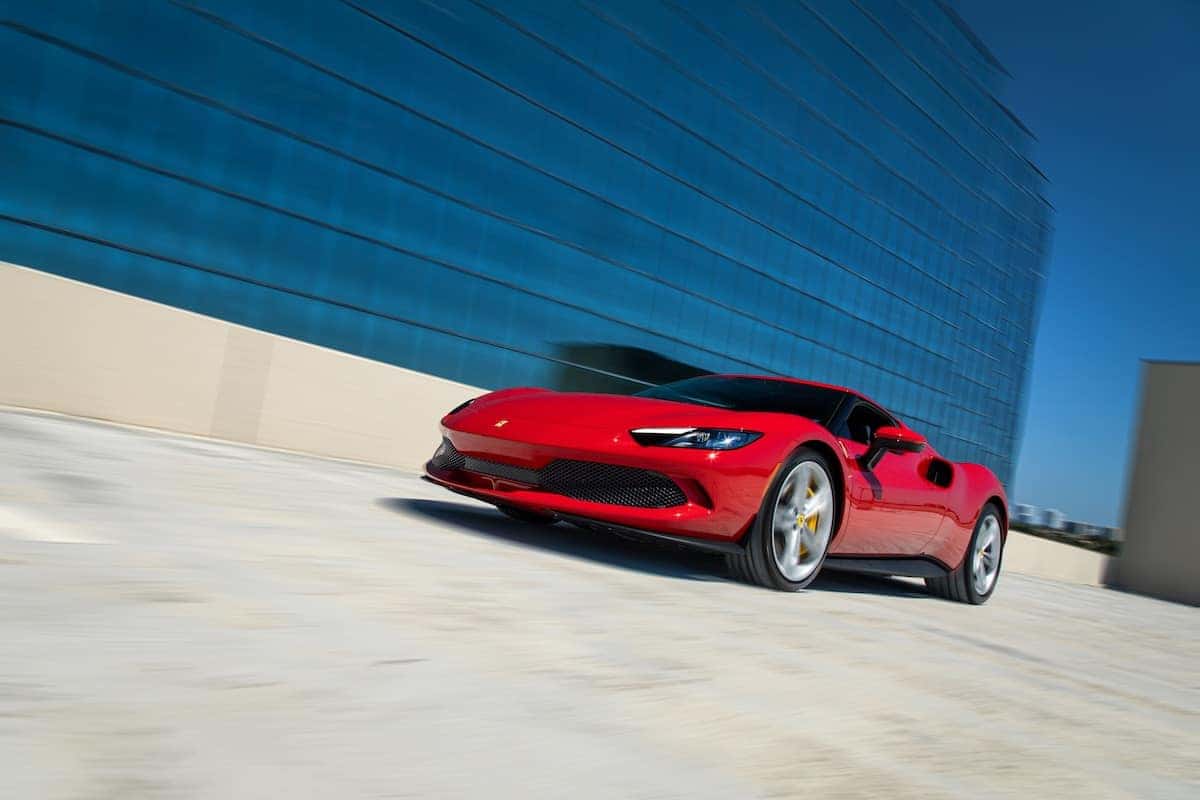
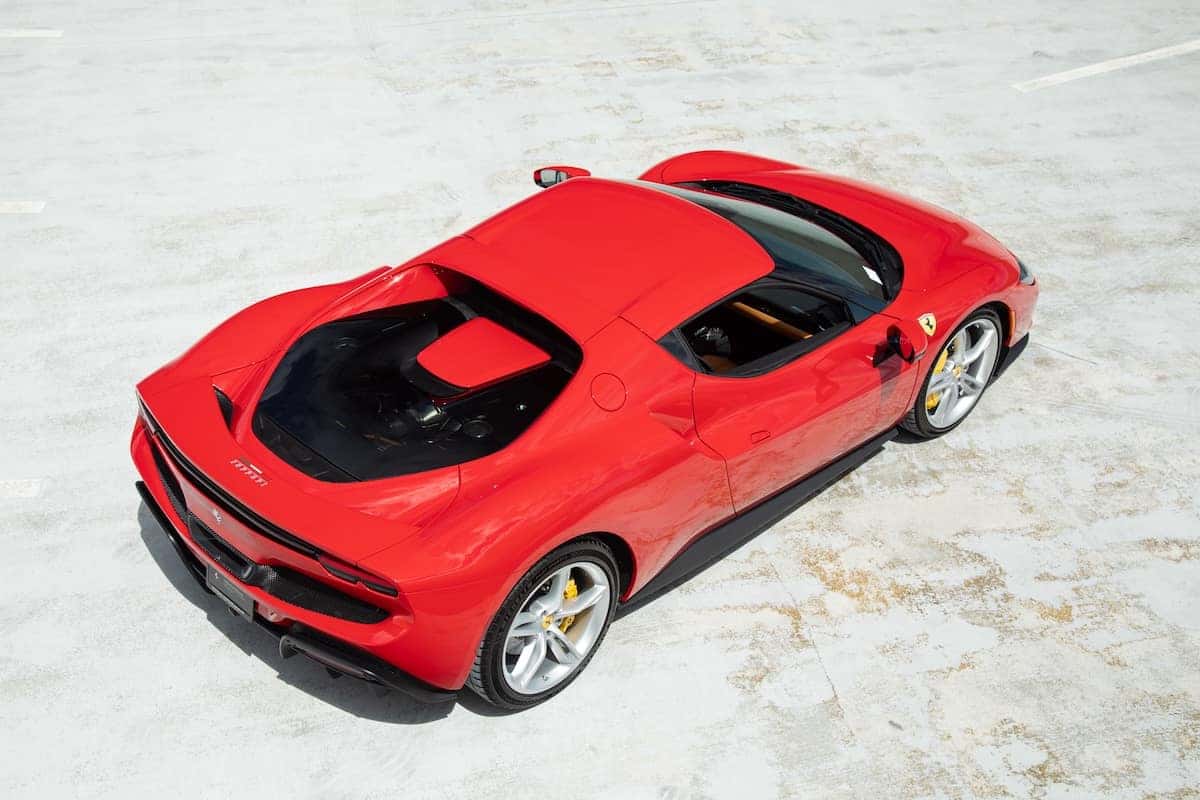
The 296 GTB, an evolution of Ferrari’s mid-rear-engined two-seater sports berlinetta concept, represents a revolution for the Maranello-based company as it introduces the new 120° V6 engine coupled with a plug-in (PHEV) electric motor capable of delivering up to 830 cv. The car thus redefines the idea of driving fun to provide pure excitement not only when pursuing maximum performance but also during everyday driving.
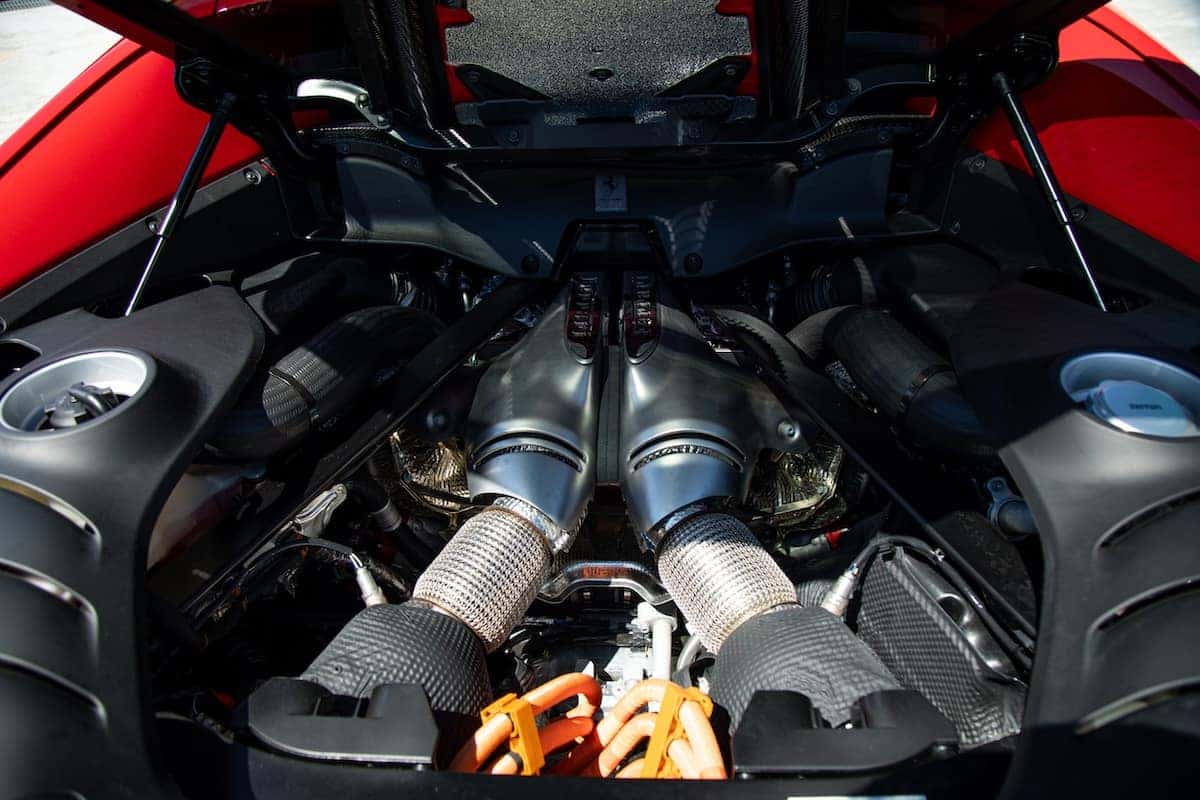
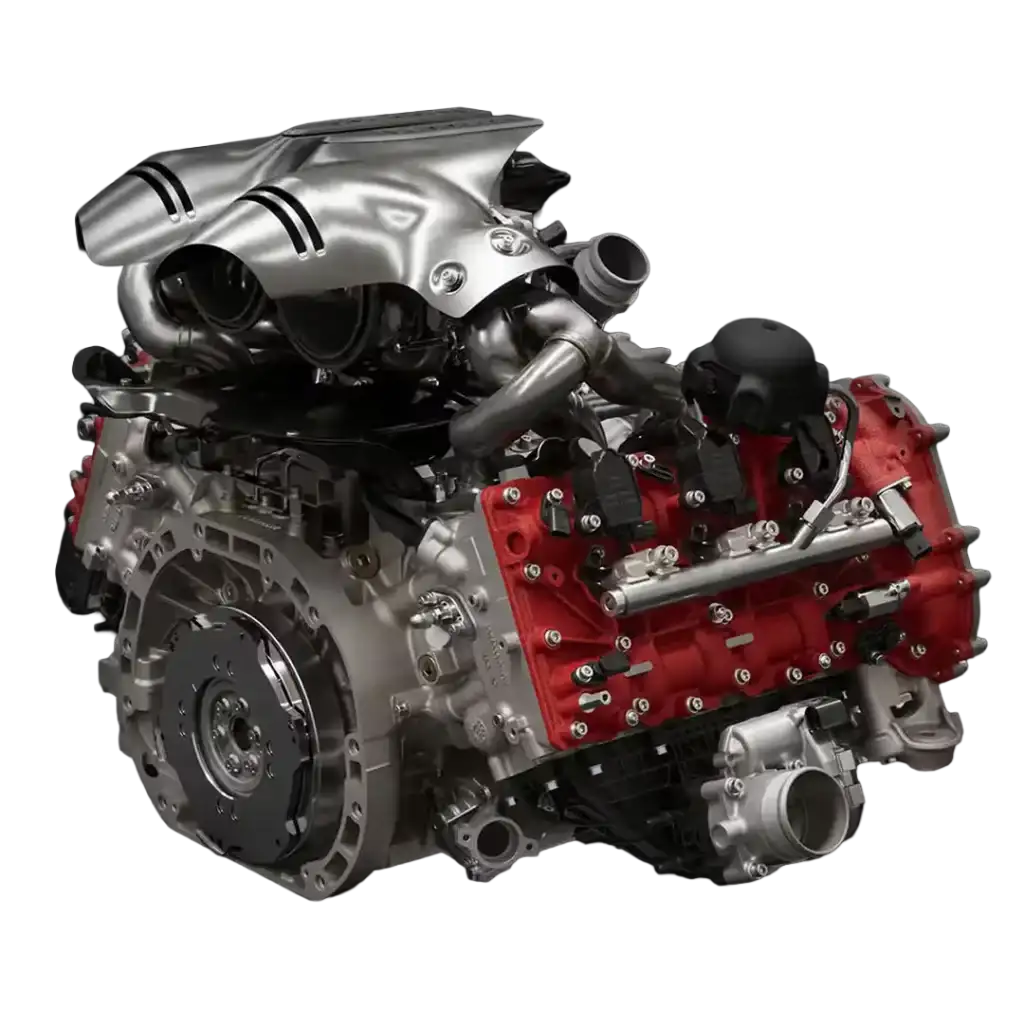
The 296 GTB is the first Ferrari road car fitted with a 120°, 6-cylinder turbo engine. The engine structure means that the turbochargers can fit within the “Vee”. This increases its compactness, lowers its center of gravity, reduces its mass, and helps it achieve extraordinarily high power levels (663 cv). The new Ferrari V6 sets a record of 221 hp/l for specific torque output for a production car.
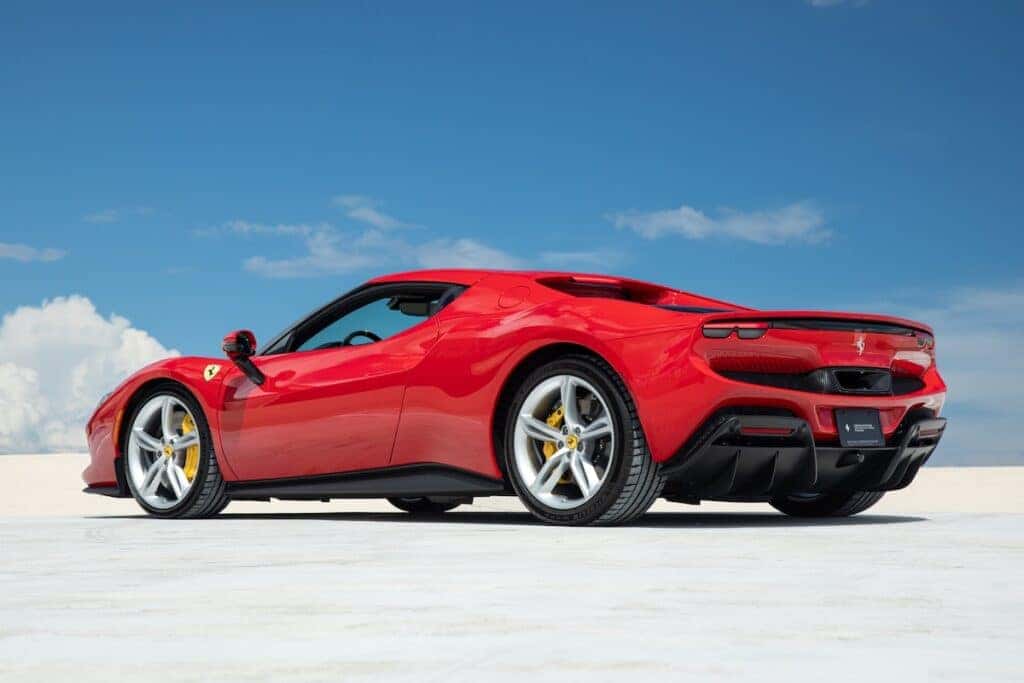
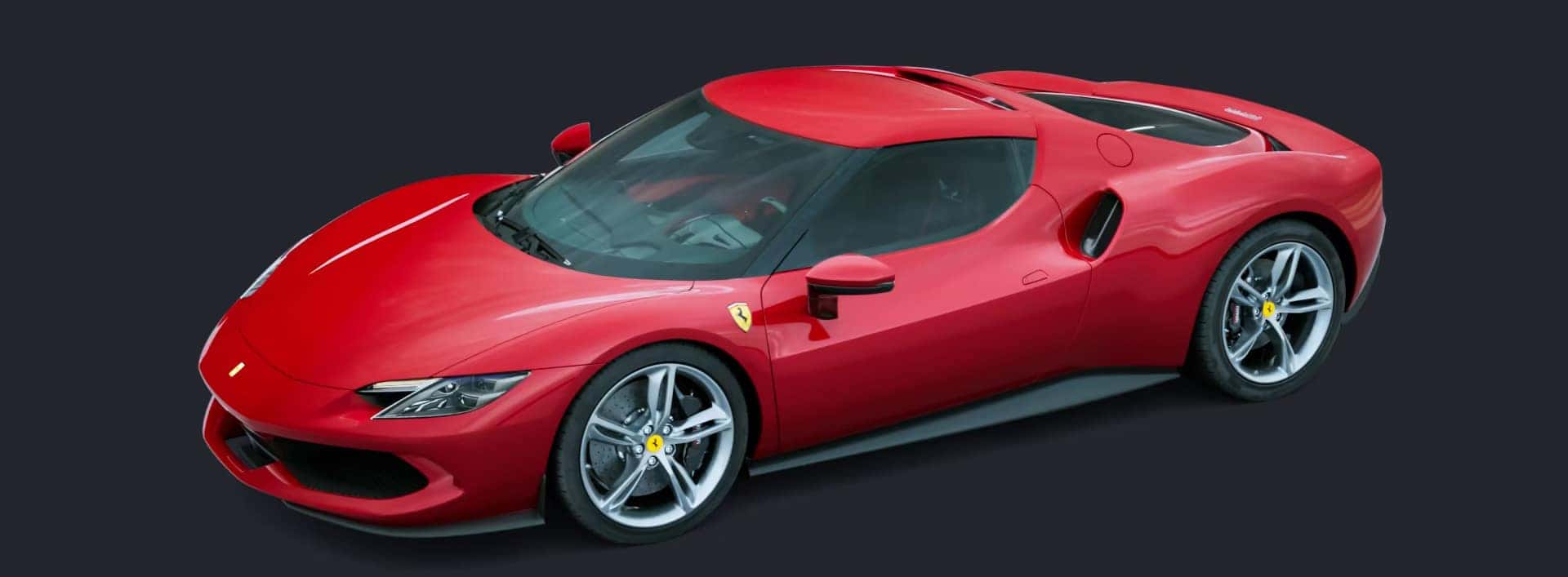
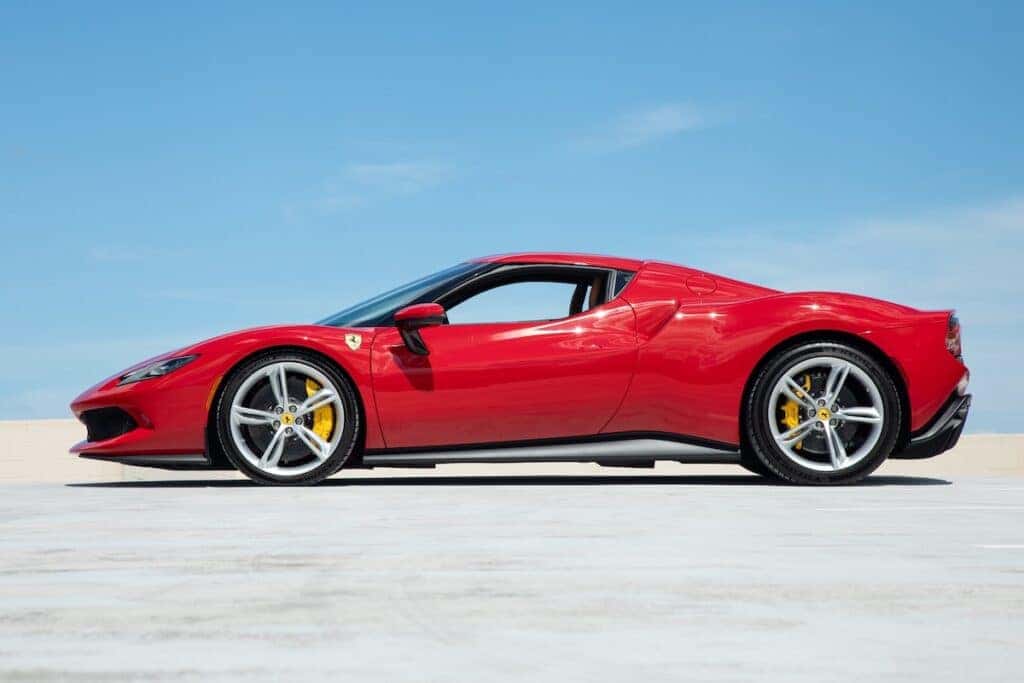
The design of the 296 GTB redefines the identity of Ferrari’s mid-rear-engined berlinetta, giving the car a compact, modern and original line. Its short wheelbase and monolithic appearance make it the most compact berlinetta from Maranello of the last decade.
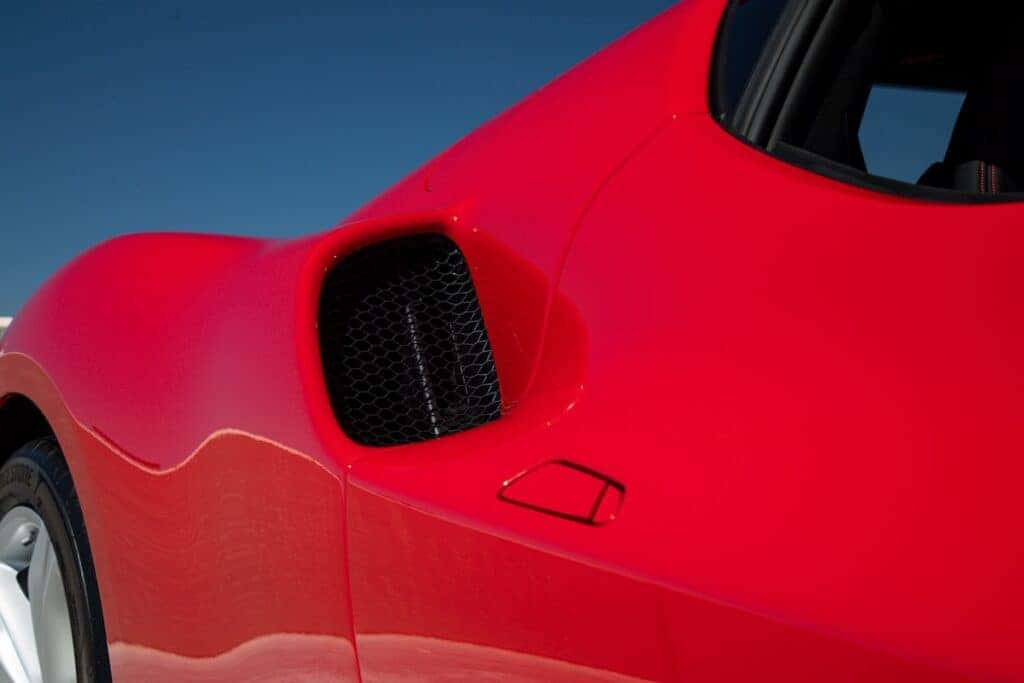
Having abandoned the typical fastback berlinetta layout, the Ferrari Style Centre focused on creating a cabin set within a powerful volume. This was the result of the short wheelbase and aspects such as muscular mudguards, a visor roof, flying buttresses and a brand new vertical rear screen.
The 296 GTB enters the sports berlinetta segment with radical aerodynamic choices. Placing the turbocharger in the crankcase’s “Vee” improves thermal management of the engine and electrical components. This shift also reverses Ferrari’s recent active aero paradigm: here, the active device generates additional downforce rather than managing drag.
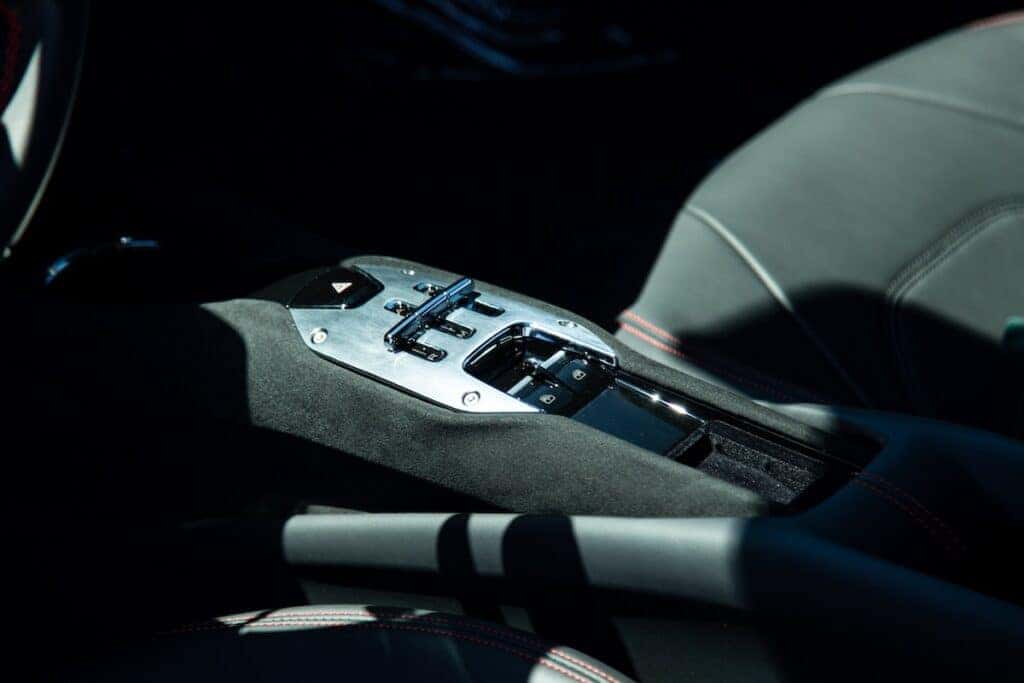
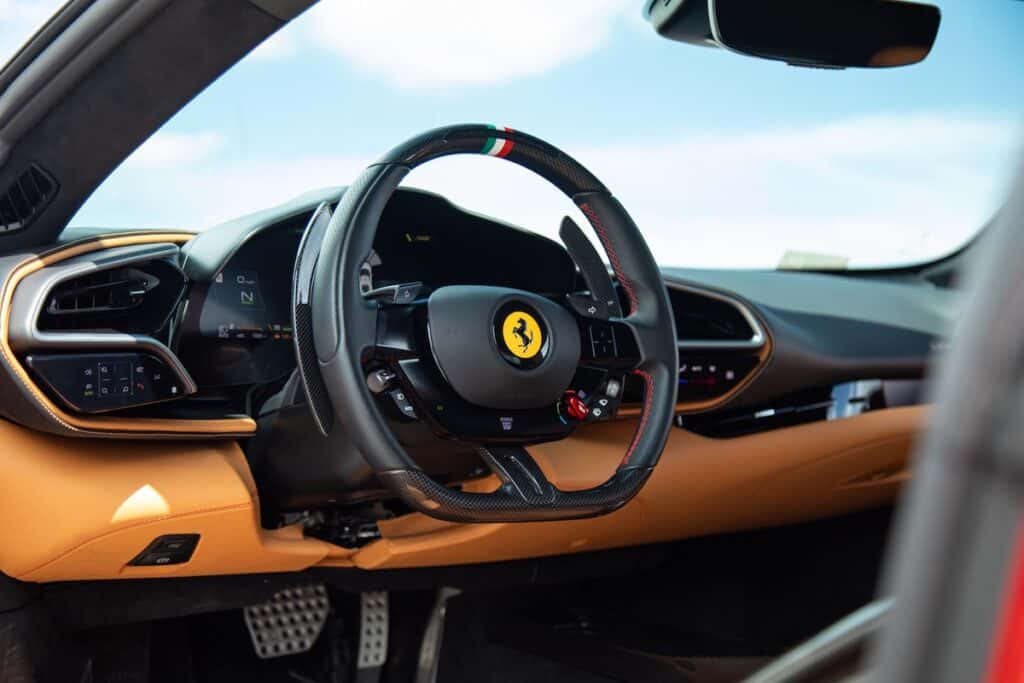
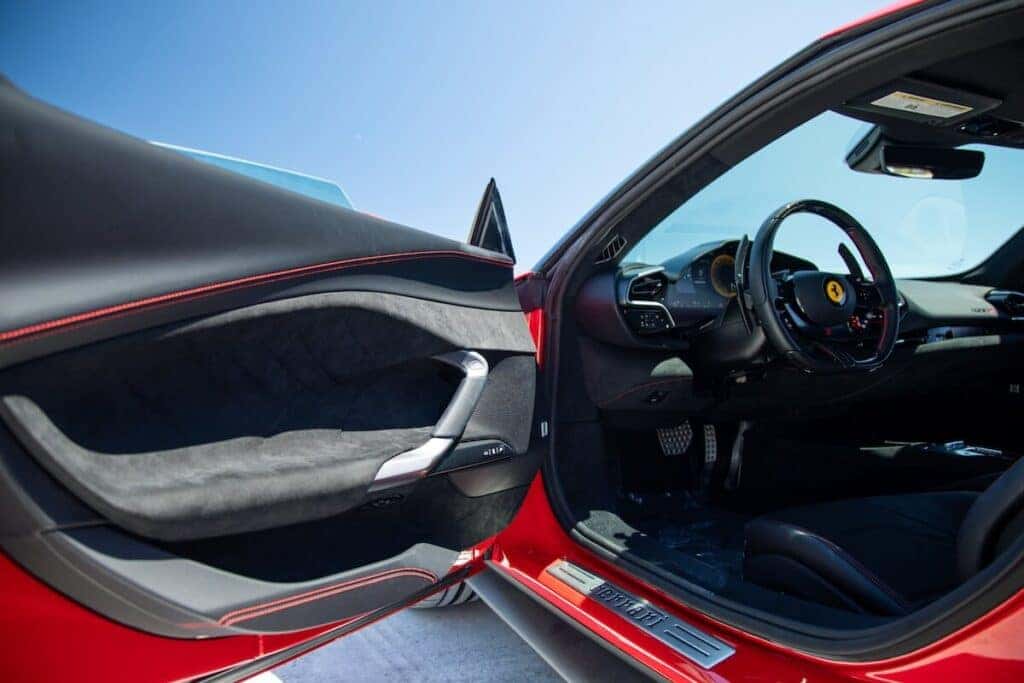
The 296 GTB’s cockpit centers everything around the driver, with a compact, wraparound layout, a fully digital instrument cluster, and Ferrari’s latest HMI interface for intuitive control. Premium materials and a minimalist design keep the focus where it belongs — on the driving experience.
830 cv from a twin-turbo V6 hybrid powertrain — Ferrari’s first plug-in berlinetta, pairing raw turbocharged power with instant electric torque through an 8-speed dual-clutch transmission. A powertrain that thrills when pushed and refines itself when the journey calls for comfort.
Every element of the intake and exhaust architecture has been meticulously crafted to deliver a sound worthy of Maranello — proving that a V6 can stir the soul just as deeply at every revolution.
The electric motor delivers instant torque to fill the gap before the turbos spool, ensuring seamless, effortless response at every moment you demand it — no lag, just power.
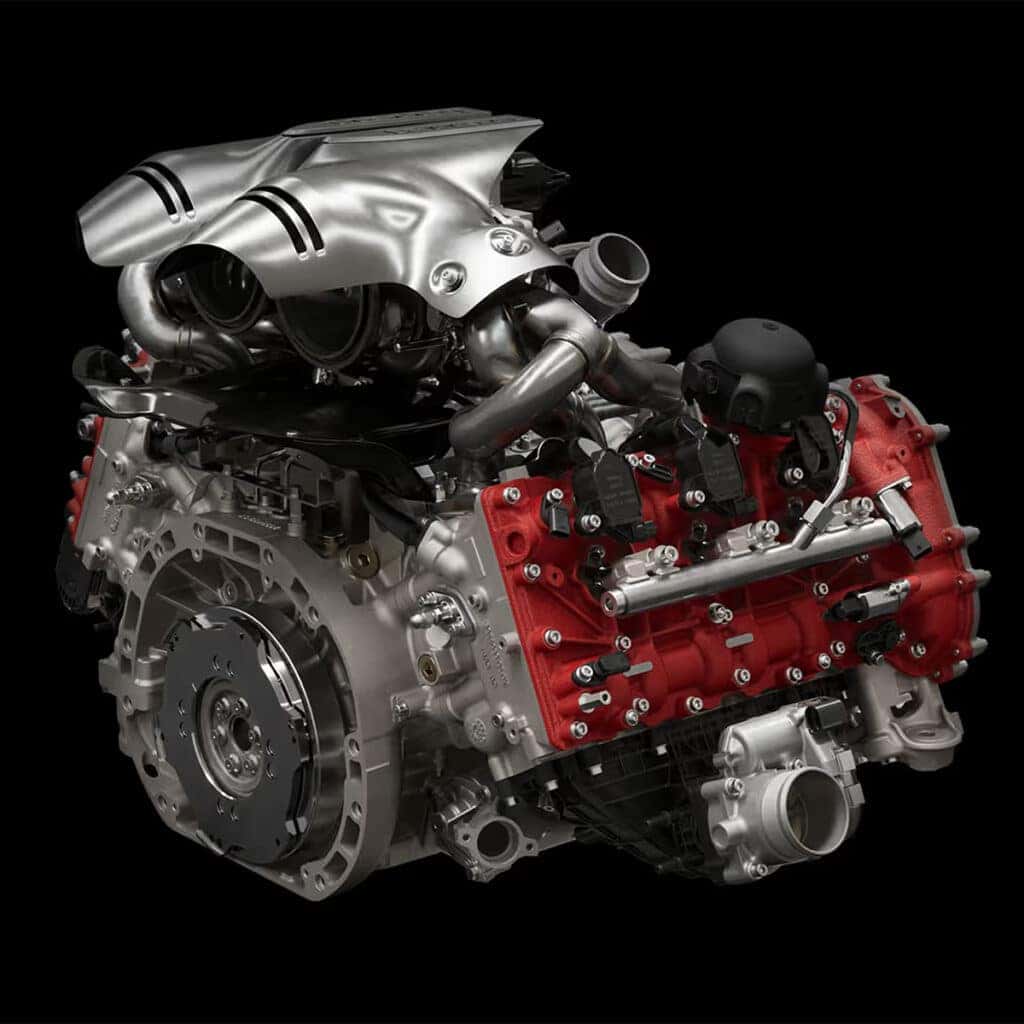
The heart of the 296 GTB — a 2.9-liter twin-turbo V6 paired with an electric motor, delivering a combined 830 cv and an unforgettable soundtrack that redefines what a six-cylinder Ferrari can be.
Advanced dynamic controls, powered by the latest Side Slip Control system, translate hybrid power into precise, natural movement.
The car’s cabin is built around the full-digital interface introduced on the SF90 Stradale. However, if the SF90 Stradale highlighted advanced technology and a break with the past, the 296 GTB seeks to assimilate the technical content into a refined look. The result is pure and characterized by considerable elegance, as well as being consistent with the design of the exterior.
Most of the instruments are concentrated on the driver’s side. The cockpit is created from a break in the upholstery of the dashboard from which the steering wheel and instrument panel emerge, centrally supported by two visible buttresses that converge in the dashboard. The figure is closed by two lateral surrounds that cover a large area. The passenger area has a minimalist look; the display offers the chance to participate in the journey, almost as a co-driver.
The 296 GTB’s architecture is rooted in Ferrari’s racing legacy. The 246 SP became the first mid-rear V6 Ferrari in 1961, winning the Targa Florio that year and in 1962. That same year, the 120° V6-powered 156 F1 secured Ferrari’s first F1 Constructors’ title.
Ferrari later pioneered mid-mounted turbos with the 126 CK and 126 C2, which in 1982 became the first turbocharged car to win the F1 World Championship. Since 2014, V6 PHEV turbo architecture has been standard across all Formula 1 cars.
The 296 GTB features an unprecedented 120° “Vee” configuration with centrally mounted turbos inside the “Vee.” The wider bank angle compared to a traditional 90° vee allows for a more compact layout, reducing engine size and shortening the air path to the combustion chamber for maximum efficiency.
This engineering also delivers a remarkable soundtrack, combining the force of turbos with the high-frequency harmony of a naturally-aspirated V12. Even at low revs, the cabin fills with pure V12 harmonic orders, building to a signature treble as revs climb — marking a new chapter in Maranello’s berlinetta history.
The 296 GTB introduces bold aerodynamic choices to the sports berlinetta segment. Its design prioritizes generating downforce through active aerodynamic devices — a departure from Ferrari’s recent approach of using them primarily to manage drag. This shift, combined with carefully sculpted bodywork and optimized airflow management, delivers exceptional stability and grip at high speeds.
The bumper’s downforce-generating design increases underbody cooling, eliminating the need for active front mechanisms. The most distinctive element is the tea-tray — made possible by the lateral cooler arrangement freeing up central space. Drawing from GT racing experience, this device creates overpressure to counteract underbody suction.
The 296 GTB’s aerodynamics deliver more downforce than ever in Low Drag (LD) configuration, with an additional 100 kg generated by the active High Downforce (HD) spoiler. This perfect blend of performance engineering and Ferrari styling results in unprecedented handling, braking, and driving excitement.
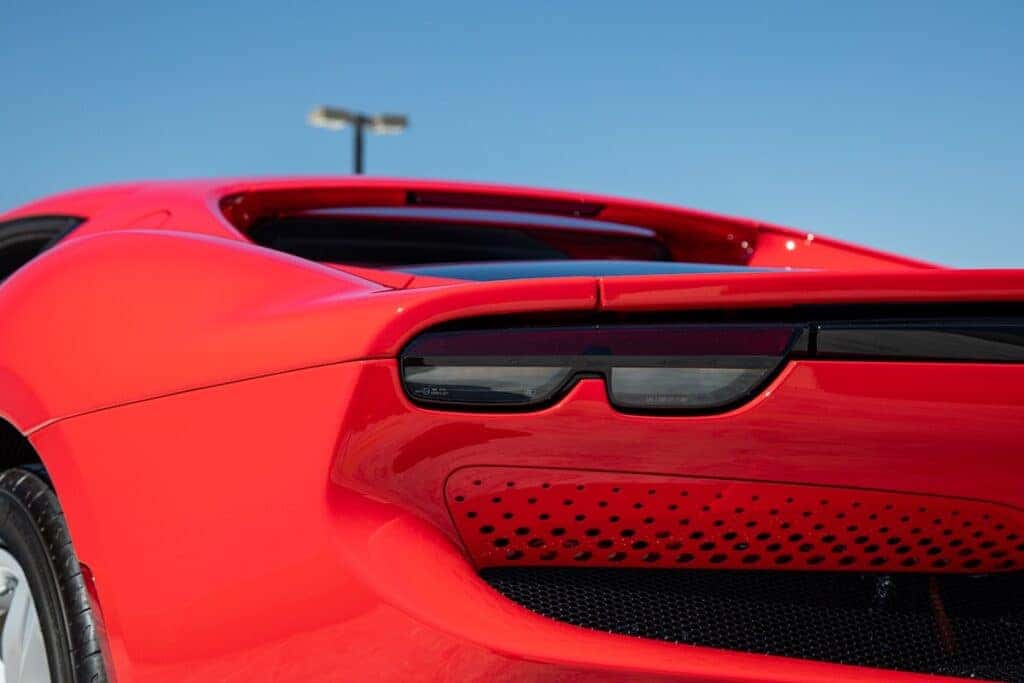
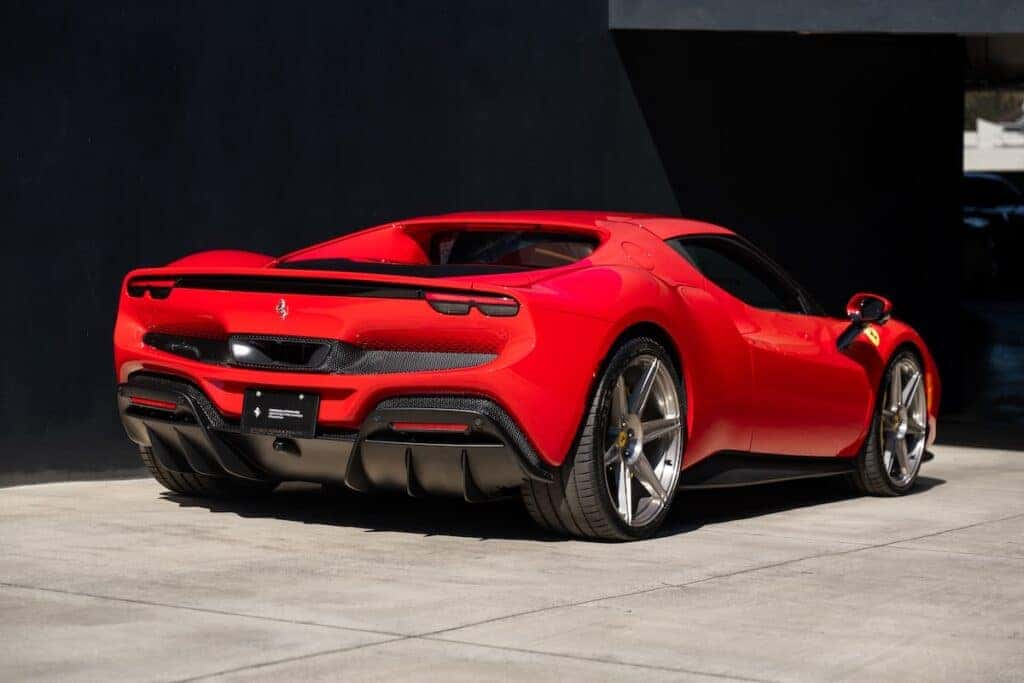
The rear styling breaks from Ferrari coupé tradition with a gap between roof and trunk typically seen on spider models. This distinctive design choice enabled the introduction of a wing profile that surmounts the roof and extends into two side fins framing the rear hood.
The rear’s active spoiler reverses the philosophy of previous Ferrari berlinettas — rather than reducing drag, it boosts downforce. Hidden in the tail when not needed, it raises once acceleration exceeds a given threshold. This LaFerrari-inspired design generates up to 360 kg of downforce at 250 km/h with the Assetto Fiorano package — a 100 kg rear increase that enhances driving fun and minimizes stopping distances.The rear’s active spoiler reverses the philosophy of previous Ferrari berlinettas — rather than reducing drag, it boosts downforce. Hidden in the tail when not needed, it raises once acceleration exceeds a given threshold. This LaFerrari-inspired design generates up to 360 kg of downforce at 250 km/h with the Assetto Fiorano package — a 100 kg rear increase that enhances driving fun and minimizes stopping distances.
The dynamic development of the 296 GTB aimed to increase the car’s performance, provide class-leading driving fun, and improve the usability of its performance and hybrid layout. A range of new components has been developed, including the TMA actuator and 6w-CDS body sensor, plus features such as the first-ever ‘ABS evo’ controller and grip estimator integrated with the EPS.
1. Lateral: response to steering wheel controls, feeling of rear-end responsiveness, ease of driving
2. Longitudinal: rapidity and constancy of the throttle response curve
3. Shifting: shift times, feeling of ratio progression with each gear change
4. Braking: feel of the brake pedal in terms of travel and response (efficiency and modulation)
5. Sound: level and quality in the cabin and graduated rise in the engine sound as revs increase
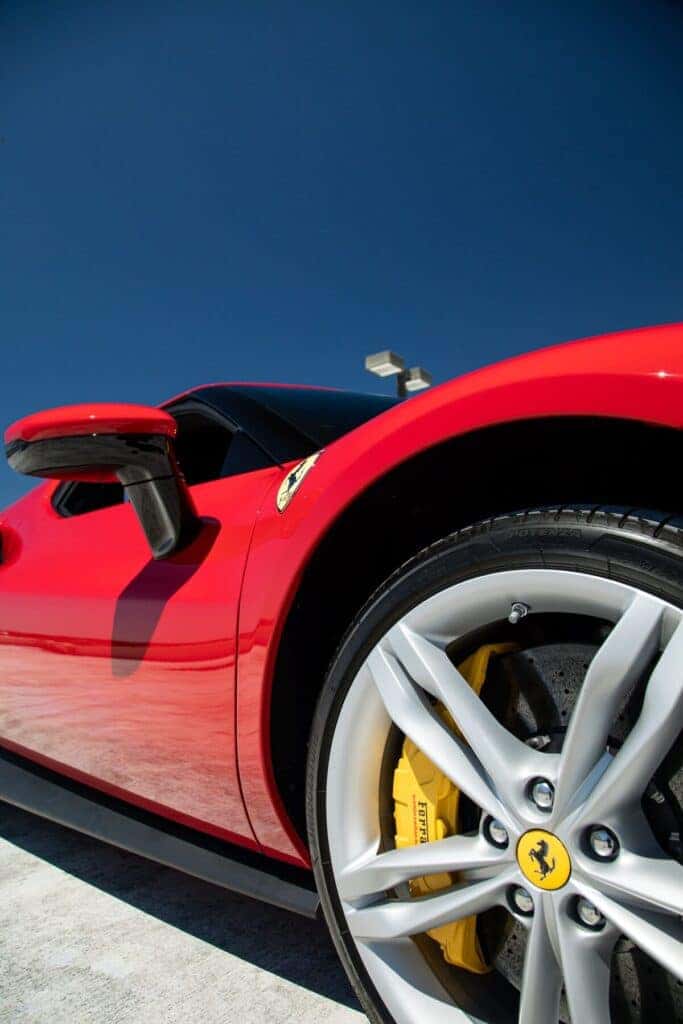
The chassis has a 50 mm shorter wheelbase than previous mid-rear engine Ferrari berlinettas, which improves dynamic agility. Also noteworthy are the revamped brake-by-wire system and ‘Aero’ brake caliper, as well as SMC-FRS magnetorheological dampers.
The new ABS control module, which is integrated with the new 6w-CDS sensor, allows the grip limits of the rear tyres to be pushed still further, makes for greater repeatability of stopping distances and thus improving performance when turning into corners.
Meticulous attention was paid to reducing weight to ensure the car’s balance and delicacy of handling: la 296 GTB is class-leading in regards to the overall weight-to-power ratio: 1.77 kg/cv.
The usability of performance is critical on the 296 GTB. For example, electric driving in eDrive mode enables the car to reach a speed of 135 km/h without the aid of the internal combustion engine. In the Hybrid position, the internal combustion engine supports the electric motor only when higher performance is required. Stopping distances on dry surfaces have been significantly shortened by the new ‘ABS evo’ and its integration with the new 6w-CDS sensor, ensuring greater repeatability of the braking action.
| Performance | |
|---|---|
| Top Speed | Over 205 mph |
| 0–100 km/h | 2.9 sec |
| 0–200 km/h | 7.3 sec |
| 200–0 km/h | 107 m |
| Powertrain | |
|---|---|
| Engine | 3.0L Twin-Turbo V6 – 120° |
| Displacement | 182.6 cu in (2,992 cc) |
| Maximum Engine Power | 663 cv @ 8,000 rpm |
| Maximum Hybrid System Power | 830 cv @ 8,000 rpm |
| Maximum Torque | 740 Nm @ 6,250 rpm |
| Maximum Engine Speed | 8,500 rpm |
| Compression Ratio | 9.4:1 |
| Lubrication System | Dry Sump |
| High-Voltage Battery Capacity | 7.45 kWh |
| Transmission | 8-Speed F1 DCT |
| Transmission & Electronic Controls | |
|---|---|
| Transmission | 8-Speed F1 Dual-Clutch Transmission |
| Differential | Electronic Differential (E-Diff) |
| Side Slip Control | SSC 8.0 |
| ABS | ABS Evo |
| Steering | Electric Power Steering |
| Manettino | 5-Position Manettino Switch |
| Weights & Dimensions | |
|---|---|
| Length | 179.9 in |
| Width | 77.8 in |
| Height | 46.7 in |
| Wheelbase | 102.4 in |
| Dry Weight | 3,241 lbs |
| Weight Distribution | 40.5% Front / 59.5% Rear |
| Fuel Tank Capacity | 17.2 gal |
| Luggage Capacity | 7.1 cu ft |
| Tires & Brakes | |
|---|---|
| Front Tires | 245/35 ZR20 |
| Rear Tires | 305/35 ZR20 |
| Front Wheels | 20 × 9.0 in |
| Rear Wheels | 20 × 11.0 in |
| Front Brakes | 398 mm Carbon-Ceramic |
| Rear Brakes | 360 mm Carbon-Ceramic |
| Fuel Consumption | |
|---|---|
| Fuel Type | Unleaded Gasoline |
| Fuel Tank Capacity | 65 L (17.2 gal) |
| Combined Fuel Consumption (WLTP) | 6.4 L/100 km |
| CO₂ Emissions (WLTP) | 145 g/km |
The 296 GTB’s performance can be further boosted by the Assetto Fiorano set-up, equipped with aerodynamic and weight reduction features, including the Multimatic dampers derived from GT racing with fixed settings optimized for track use, the high-load carbon-fiber aids on the front bumper, and the extensive use of lightweight materials on interiors and exteriors.
The structure of some components, including the door panel, has been totally redesigned to save more than 12 kg. Finally, in addition to the optional rear screen in ultra-light Lexan®, the Assetto Fiorano set-up also features an optional livery inspired by the 250 LM. This starts with the front bumper’s background which embraces the central grille and outlines its contours, continuing first on the hood and then longitudinally up to the roof and rear spoiler.