
Home > Blog > Ferrari Model Showcase > Ferrari Dino: Specs, Price & the Ferrari That Wasn’t a Ferrari
Share this post:
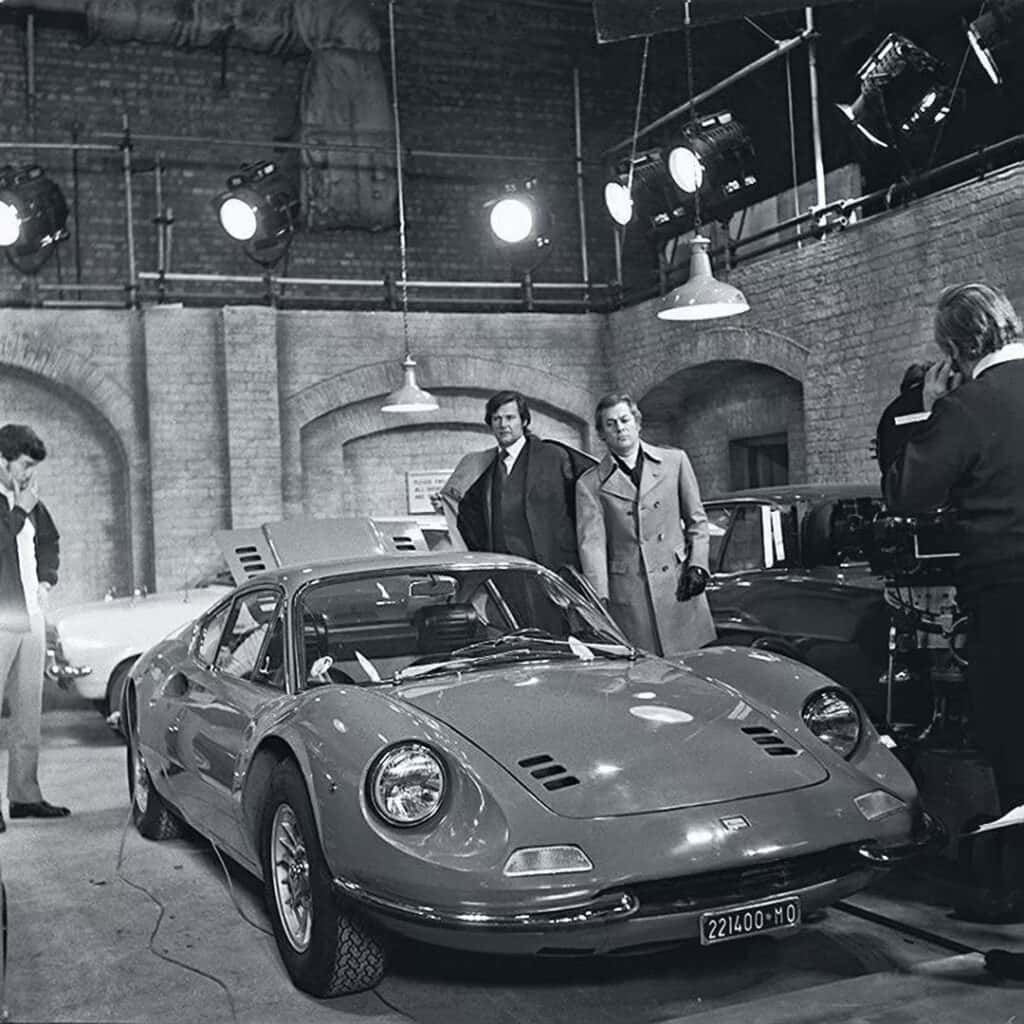
The Dino 206 GT and 246 GT are mid-engine V6 sports cars built between 1967 and 1974. They were Ferrari’s first mid-engine road cars and the first the company built in significant numbers.
They were not badged as Ferraris. Dino was launched as a separate marque, named for Alfredo “Dino” Ferrari — Enzo’s son, who died in 1956 at 24. Every reference to a “Ferrari Dino” today is a retroactive one.
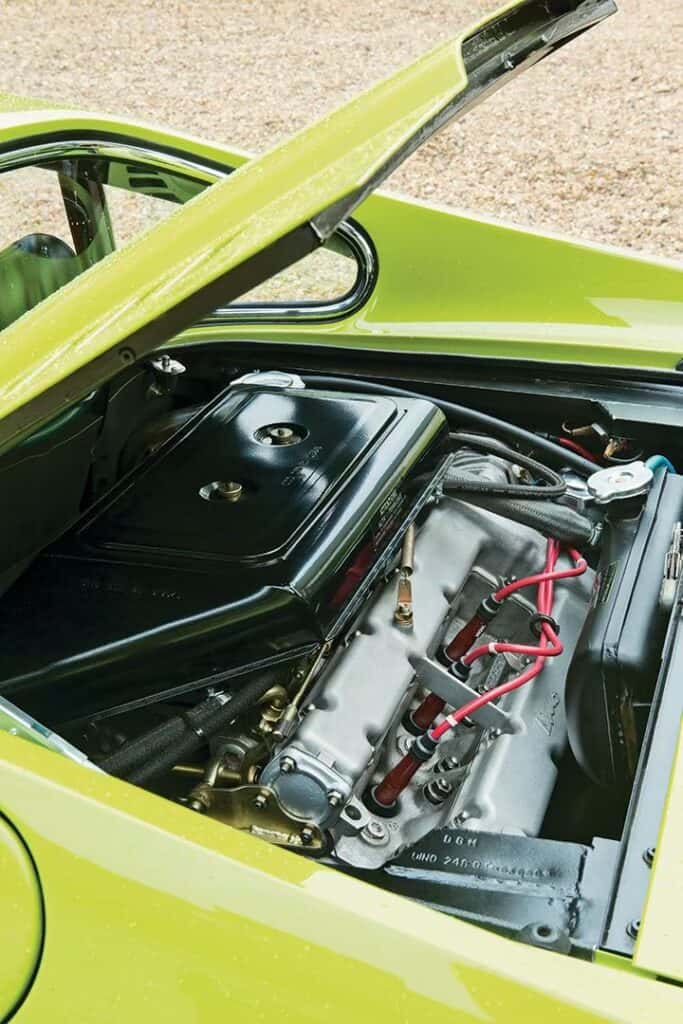
The V6 architecture they introduced runs directly to the 296 GTB in Ferrari’s current range.
The Dino made its case on balance rather than power. It weighed under 2,400 lb with the engine behind the driver — a layout no Ferrari road car had used before.
| Category | 206 GT | 246 GT |
|---|---|---|
| Years | 1967–1969 | 1969–1974 |
| Engine | 2.0L 65° V6 | 2.4L 65° V6 |
| Block | Aluminum | Cast iron |
| Horsepower | ~180 hp | ~195 hp |
| Transmission | 5-Speed Manual | 5-Speed Manual |
| Body | Aluminum | Steel |
| Wheelbase | 2,280 mm | 2,340 mm |
| Production | 152 | ~3,569 (incl. GTS) |
The 246 is the heavier car and the slower one on paper. It is also the one almost everyone means when they say Dino — Ferrari built roughly 23 of them for every 206.
Alfredo Ferrari — Alfredino, or Dino — was Enzo’s first son, born in January 1932 and groomed from childhood to run the company.
He studied engineering in Switzerland, where his thesis was a design for a 1.5-liter engine. At the end of 1955 he proposed that Ferrari build a V6 for Formula 2. Shortly afterward he was diagnosed with Duchenne muscular dystrophy.
He spent his final months in a hospital bed in Modena, working through the engine’s technical details with Vittorio Jano and with his father. Enzo later described his son’s “intensity, intelligence, and attentiveness” in those conversations.
Dino died on 30 June 1956, aged 24. He never saw the engine built.
The script on every Dino badge and cam cover is based on Alfredo’s own signature. Enzo also founded a journalism prize in his name in 1962, and the circuit at Imola was originally named for Dino alone — Enzo’s name was added only after his own death in 1988.
The V6 Dino proposed became a racing engine first and a road car engine second — and it won before it ever reached a showroom.
Vittorio Jano did the engineering. That much is not disputed. Whether the V6 was Dino’s idea or Jano’s has been argued for seventy years, and the honest answer is that Dino participated in the discussions and Jano designed the engine. Enzo named it for his son regardless.
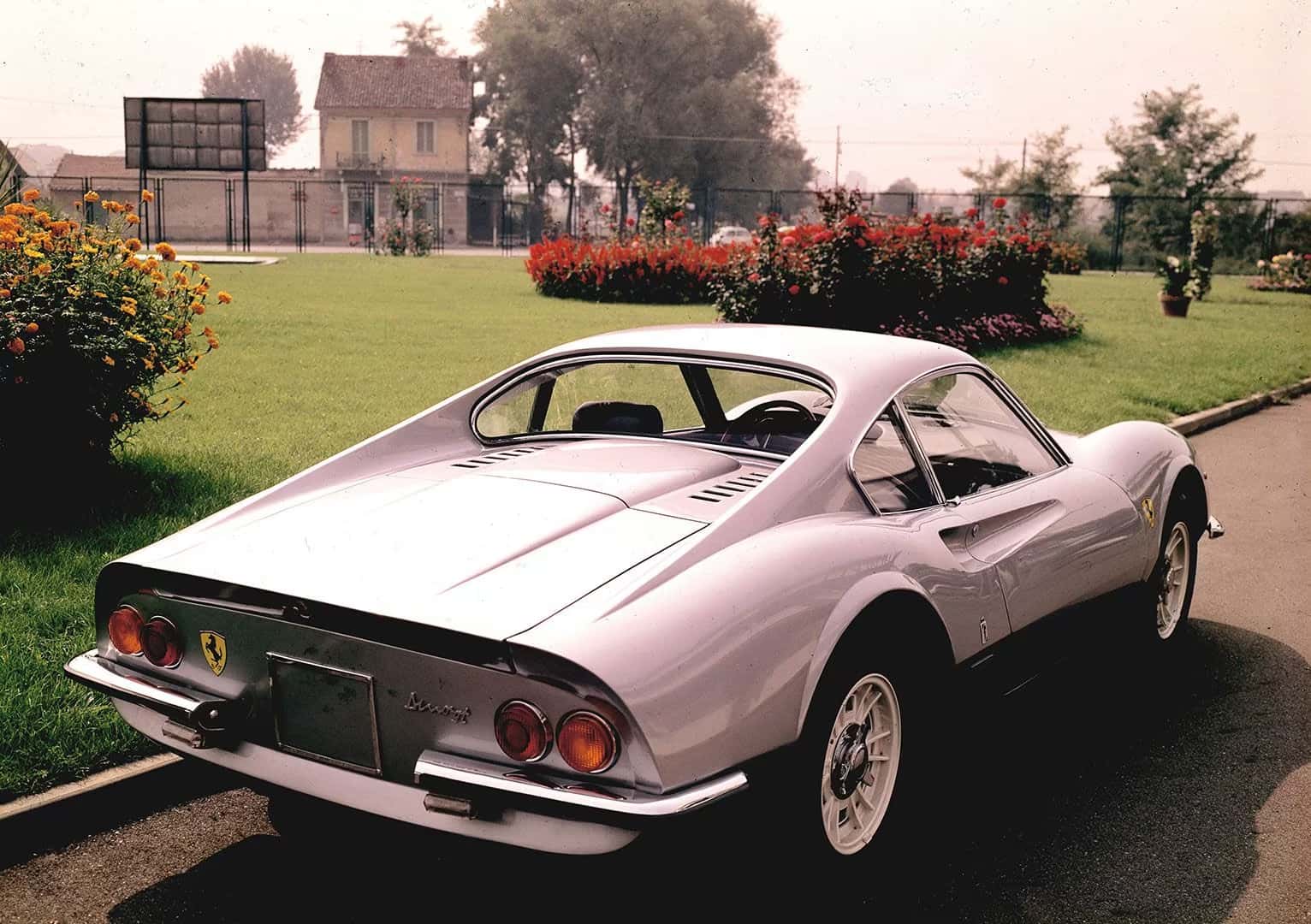
Enzo had a rule: a Ferrari had twelve cylinders. A V6 sports car priced below the V12 range was a different proposition, and he did not want the badge on it.
So Ferrari created a marque. Dino cars carried Dino badges, Dino literature, and Dino dealerships. The Prancing Horse appeared nowhere on the car.
There was a second reason, and it was commercial. The Dino was built to compete with the Porsche 911 — a market Ferrari had never entered — and the separate brand made the price positioning easier to defend.
The strategy did not survive contact with the market. Buyers called them Ferraris immediately, values now track Ferrari values, and Ferrari Classiche certifies them. The badge was the only part that ever said otherwise.
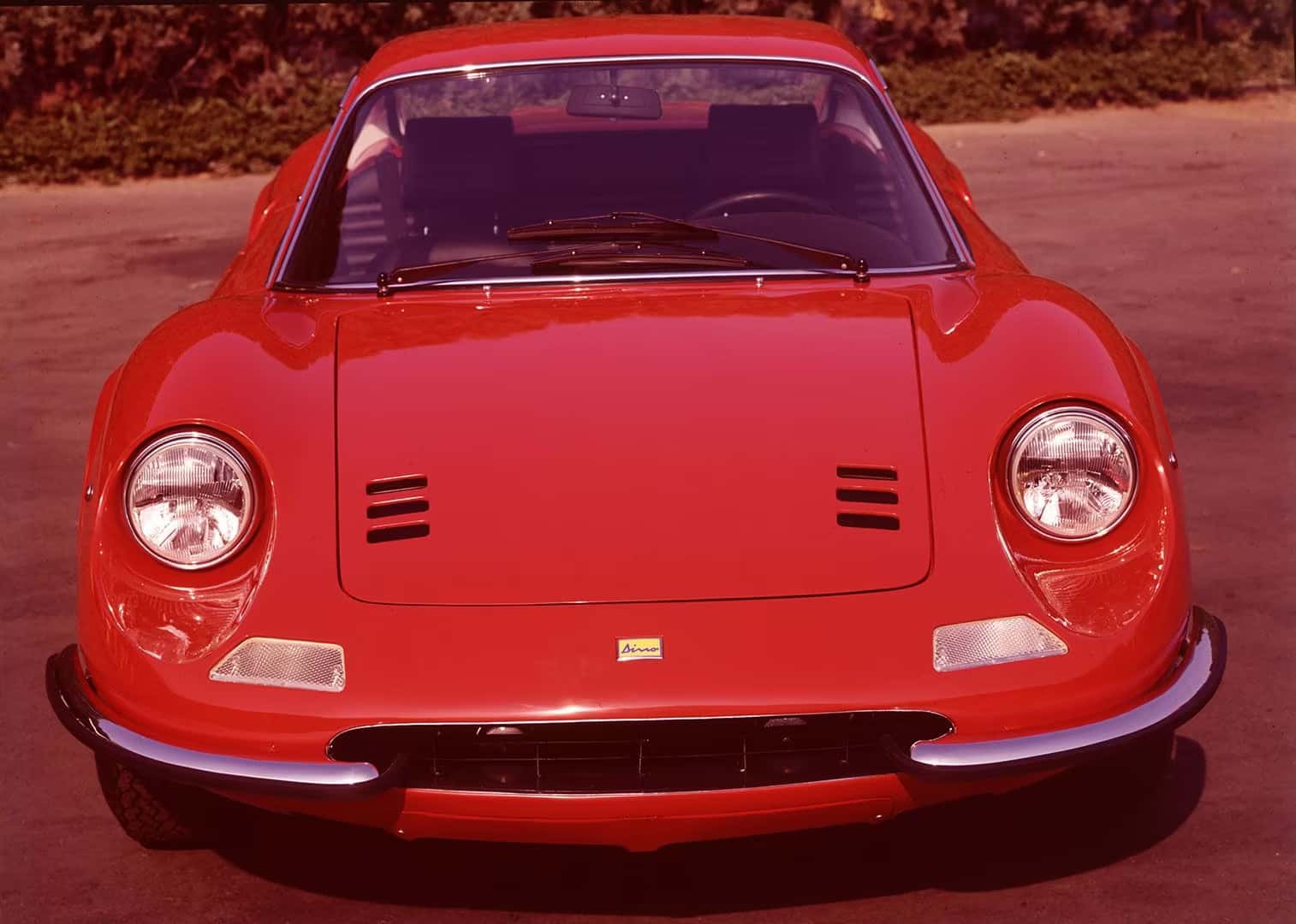
Pininfarina designed the Dino under Aldo Brovarone and Leonardo Fioravanti, and Scaglietti built the bodies. It is one of the most admired shapes of the period.
Enzo reportedly rejected the design at first, on the grounds that it was not sufficiently Ferrari. Sergio Pininfarina talked him into it.
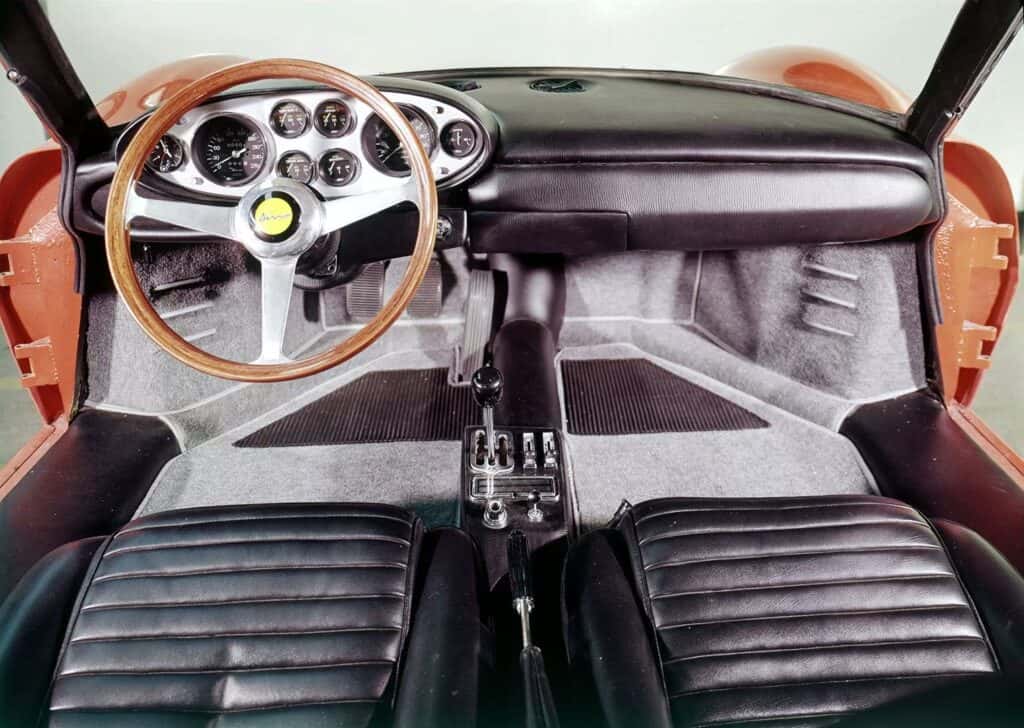
The cabin is the clearest evidence that this was meant to be driven rather than displayed.
| Gearbox | Open metal gate, five speeds, mounted high on the center tunnel |
| Instruments | Full Veglia gauge set angled toward the driver |
| Seats | Low-mounted buckets; Daytona-style seats were a factory option |
| Steering wheel | Wood-rimmed Nardi on early cars |
| Trim | Leather and vinyl, no carbon anywhere — this predates that entirely |
The “chairs and flares” option combined Daytona seats with widened wheel arches. Both Dinos to pass seven figures at auction were flared cars, and the option can be worth $200,000 or more on the right example.
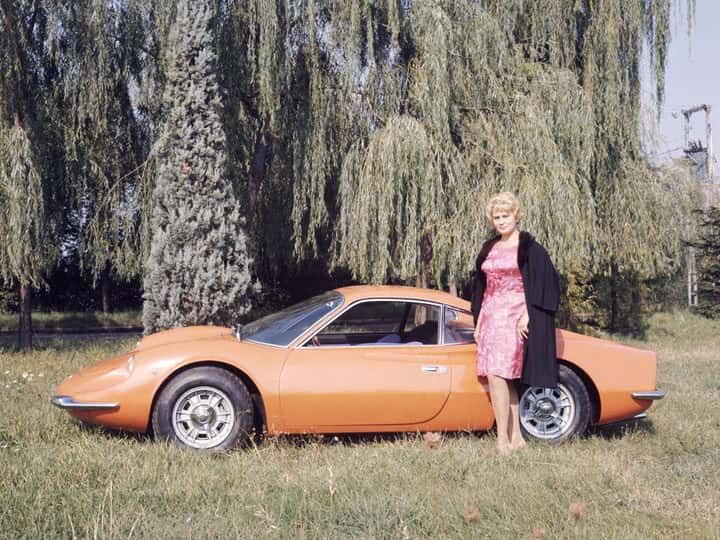
Ferrari built 152 Dino 206 GTs and 3,569 246 GT and GTS cars — making the 246 the first Ferrari-built car produced in genuinely large numbers.
| Variant | Years | Production |
|---|---|---|
| 206 GT | 1967–1969 | 152 |
| 246 GT — L Series | 1969–1970 | 357 |
| 246 GT — M Series | 1970–1971 | 506 |
| 246 GT — E Series | 1971–1974 | 1,432 |
| 246 GTS | 1972–1974 | 1,274 |
| 246 total | 1969–1974 | 3,569 |
Registries differ slightly on the series splits — some list 507 M Series cars, and E Series counts vary depending on whether GTS chassis are included. The 3,569 total and the 1,274 GTS figure are consistent across sources.
The 206 GT is the rare one, and the one collectors chase.
Ferrari switched to a cast-iron block and steel body for the 246 specifically to cut cost. The 206 is the purer car and the 246 is the better one — a distinction that keeps Dino owners arguing.
The GTS added a removable targa panel in 1972, and roughly 1,274 were built out of the 246 run. It is the more valuable body style today, and the gap has widened considerably in the last few years.
A 246 GT typically trades between $250,000 and $550,000, with GTS cars running higher and the 206 GT higher still.
For most of its life the Dino traded at a discount to every V12 Ferrari of the period. That gap has narrowed sharply as the market has reassessed what “first mid-engine Ferrari” is worth.
| Variant | Value |
|---|---|
| 246 GT — average | ~$395,000 |
| 246 GT — range | ~$250,000 – $550,000 |
| 246 GTS — average | ~$575,000 |
| 246 GTS — range | ~$350,000 – $750,000 |
| 206 GT | ~$600,000 – $900,000+ |
A Signal Orange 1974 Dino 246 GTS, sold at Gooding & Company’s Amelia Island auction in March 2026. It took the record from a “chairs and flares” GTS that made $1,028,000 at Pebble Beach in 2025 — the first Dino to pass seven figures. The 246 GT record stands at $755,000.
Condition spread is unusually wide on these. A 246 GT traded at $192,500 in April 2025, less than a third of the model’s public record. Originality, matching numbers, and the “chairs and flares” option account for most of the difference.
If you own a Dino or another collector Ferrari, our specialists can value your car or discuss consignment.
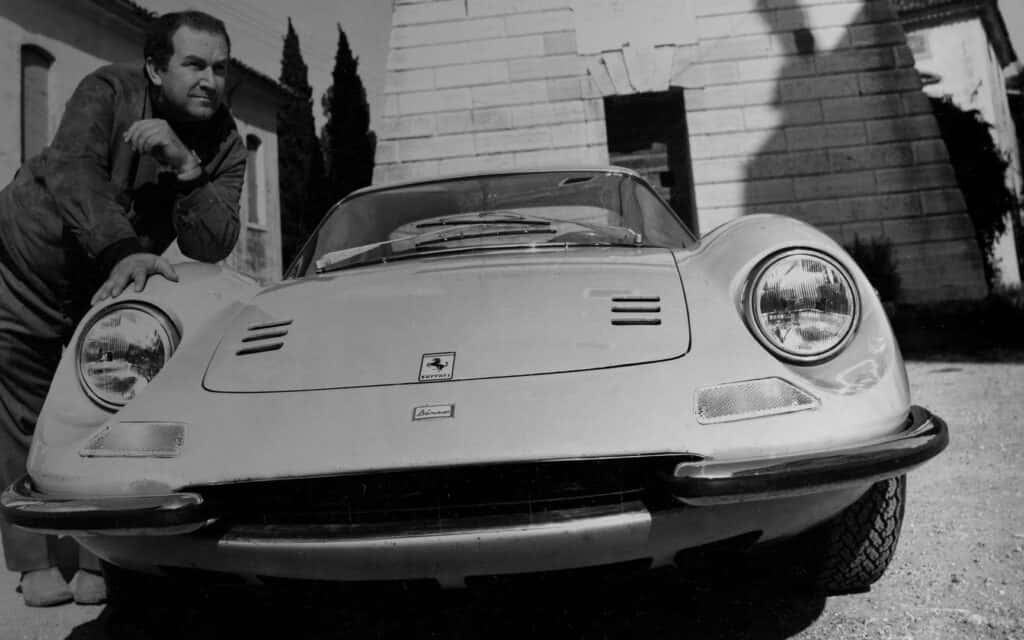
A Dino is a fifty-year-old Italian sports car with a small-production V6. It rewards a specialist and punishes a general shop.
Ferrari of Fort Lauderdale is a factory-authorized dealer with a dedicated vintage Ferrari service department and an on-site Ferrari Classiche program.
Ferrari abandoned the V6 road car after the Dino and did not build another for nearly fifty years. When it returned, it returned deliberately.
| Feature | Dino 246 GT (1969–74) | Ferrari 296 GTB (2022–) |
|---|---|---|
| Engine | 2.4L 65° V6 | 3.0L 120° V6 + electric motor |
| Horsepower | ~195 hp | 819 hp combined |
| Layout | Transverse mid-engine | Longitudinal mid-engine |
| Transmission | 5-speed manual | 8-speed dual-clutch |
| 0–60 mph | ~7.1 sec | ~2.9 sec |
Ferrari made the connection explicit at launch. The 296 GTB is the first V6 road car to wear a Ferrari badge — which is the thing the Dino never got.
Yes and no. Dinos were built by Ferrari at Maranello, designed by Pininfarina, and bodied by Scaglietti — but they were sold under the separate Dino marque and carry no Ferrari badge. Ferrari Classiche certifies them today, and the market treats them as Ferraris.
The cars are named for Alfredo “Dino” Ferrari, Enzo’s son, who proposed the V6 engine in 1955 and died of muscular dystrophy in 1956 at the age of 24. The script on the badge is based on his signature.
A 246 GT averages around $395,000, with GTS cars closer to $575,000 and 206 GTs well above both. The public record is $1,325,000, set by a 246 GTS in March 2026.
The 206 has a 2.0-liter aluminum engine and an aluminum body; 152 were built. The 246 has a 2.4-liter cast-iron engine and a steel body, is 60mm longer in the wheelbase, and was built in far greater numbers.
A factory option combining Daytona-style seats with widened wheel arches. Cars fitted with it command a premium.
152 Dino 206 GTs and roughly 3,569 246 GT and GTS cars between 1967 and 1974.
It was the first mid-engine Ferrari road car. Ferrari had raced mid-engine cars for years before committing to the layout for the street.
They share the engine. Ferrari needed to build 500 units to homologate the V6 for Formula 2, so Fiat produced the Fiat Dino coupe and spider using the same powerplant.
The Dino 308 GT4 in 1973, followed by the 308 GTB. The GT4 was also sold as a Dino before receiving Ferrari badges in 1976.
The Dino started a line Ferrari took fifty years to return to.
Ferrari of Fort Lauderdale proudly represents Ferrari in Broward County, Greater South Florida, and across the United States.