
Home > Blog > Ferrari Model Showcase > Ferrari 250 GTO: Specs, Value & the World’s Most Valuable Ferrari
Share this post:
The Ferrari 250 GTO is a competition berlinetta built from 1962 to 1964, of which only 36 were produced. GTO stands for Gran Turismo Omologato — Italian for “grand touring homologated,” a reference to the FIA class the car was built to contest.
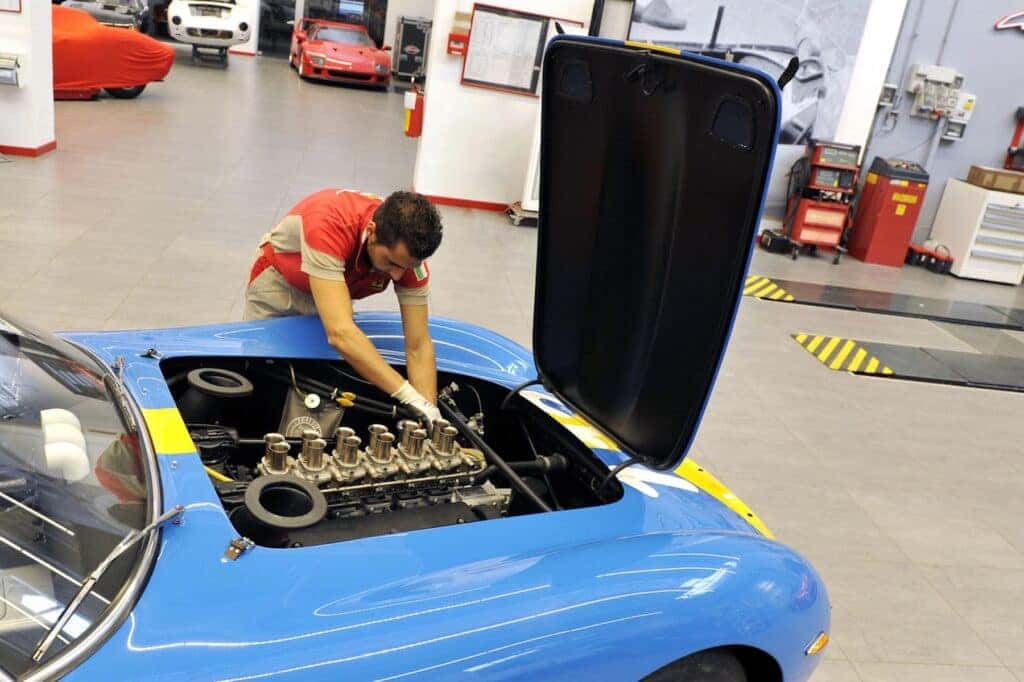
Developed from the 250 GT SWB and powered by a 3.0-liter Colombo V12, it won the FIA International Championship for GT Manufacturers in three consecutive seasons. It is widely considered the most valuable production car in the world.
The 250 GTO paired a proven racing engine with a lightweight aluminum body and aerodynamics developed through genuine wind tunnel testing — unusual for a GT car in 1962.
| Category | Specification |
|---|---|
| Engine | 3.0L (2,953 cc) Colombo Tipo 168/62 Comp V12 |
| Induction | Six Weber 38 DCN twin-choke carburetors |
| Horsepower | 296 hp (300 PS) @ 7,500 rpm |
| Torque | 217 lb-ft @ 5,500 rpm |
| Transmission | 5-Speed Manual |
| 0–60 mph | ~5.4 seconds |
| Top Speed | ~174 mph |
| Dry Weight | ~1,940 lb (880 kg) |
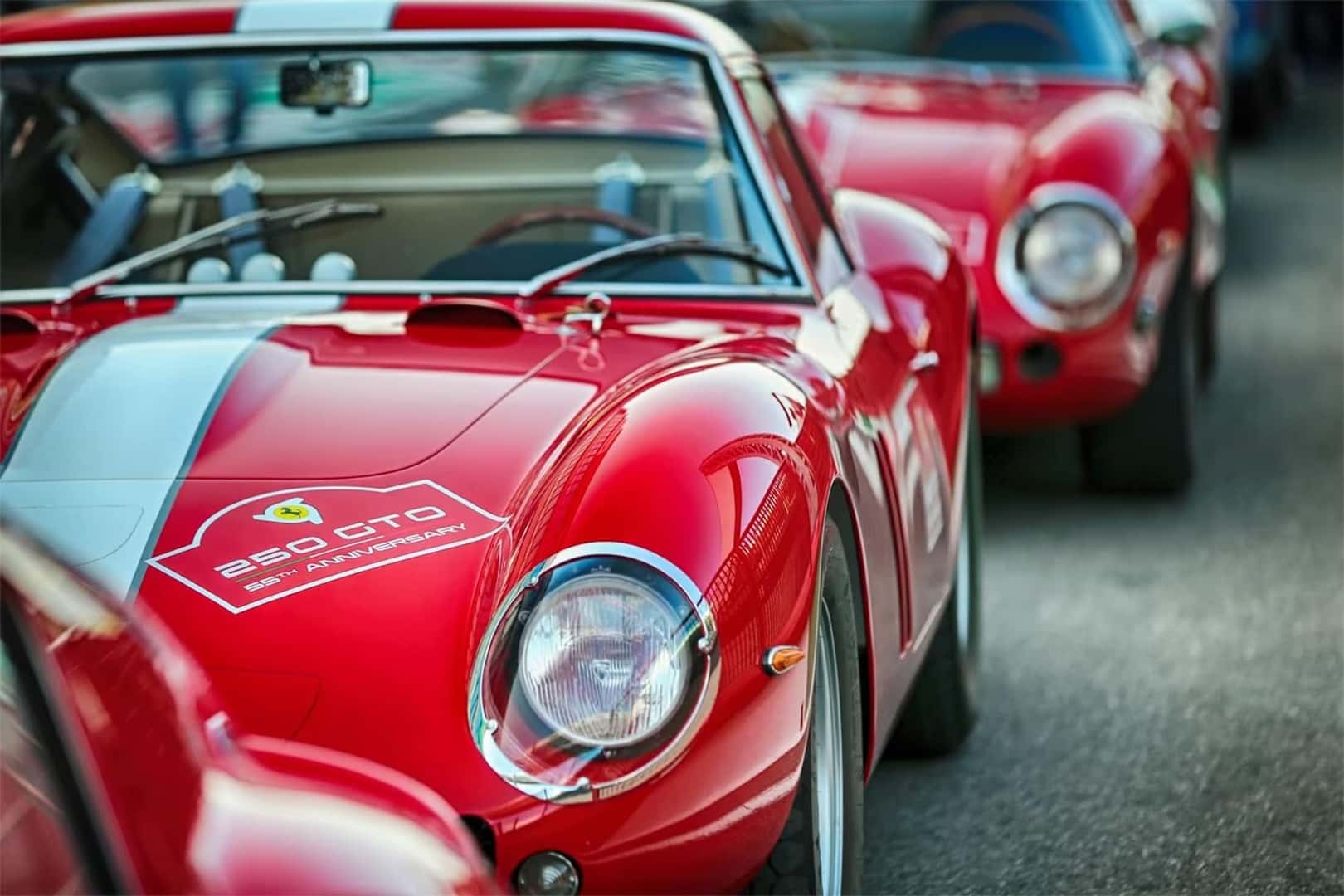
The 250 GTO was Ferrari’s answer to the Jaguar E-Type in FIA Group 3 GT competition. Its homologation remains one of the sport’s more notable irregularities.
The car delivered immediately, taking a class win and second overall at Le Mans in its debut season.
| Year | Results |
|---|---|
| 1962 | FIA GT Championship (over 2.0L) · Le Mans class win, 2nd overall |
| 1963 | FIA GT Championship (over 2.0L) · Daytona Continental · Tour de France · Le Mans class win |
| 1964 | FIA GT Championship (over 2.0L) · Daytona 2000 km · Tour de France |
The 250 GTO won both Daytona races outright rather than on class — Pedro Rodríguez solo in 1963, then with Phil Hill in 1964, both for Luigi Chinetti’s North American Racing Team. The model also took class honors at the 12 Hours of Sebring, the Targa Florio, the Goodwood Tourist Trophy, and the Nürburgring 1000km.
Le Mans 1964 was where it ended. The Shelby Cobra Daytona Coupe of Dan Gurney and Bob Bondurant took GT honors ahead of nine Ferraris, breaking a seven-year Ferrari run in the class — though Ferrari still held the championship by six points.
The 250 GTO’s shape was determined by airflow rather than styling. It became one of the most recognized silhouettes Ferrari has produced.
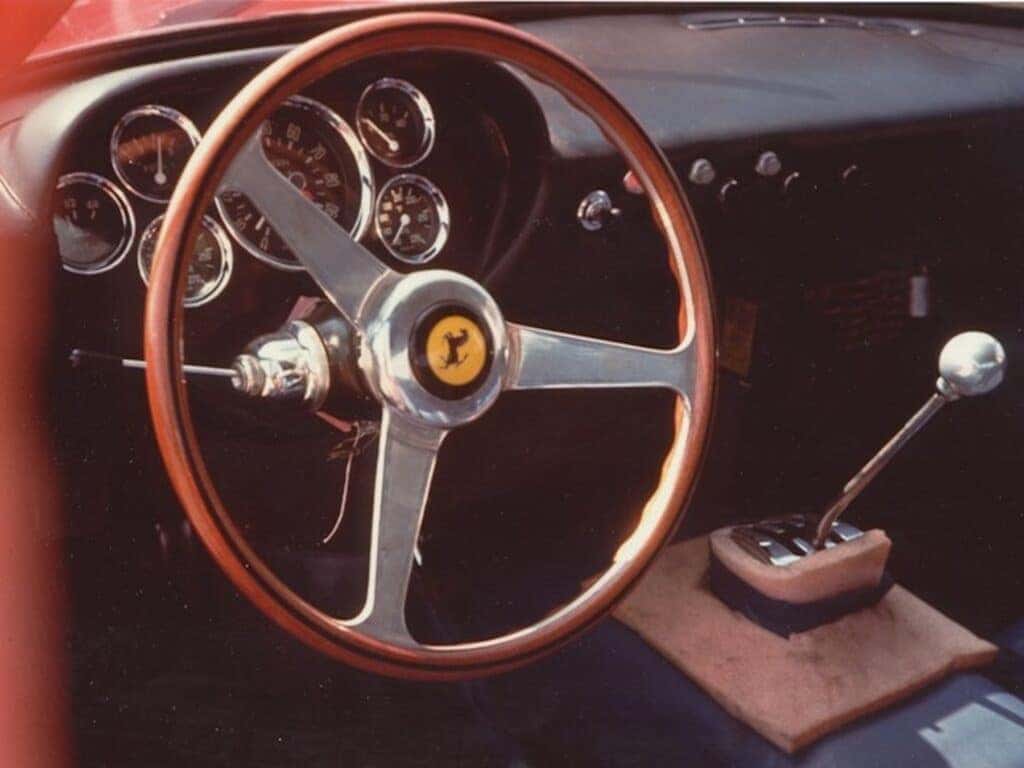
Inside, the car makes no pretense of being a road car. Most examples left the factory without a speedometer — just a large central tachometer, exposed chassis tubing, an open metal gate for the shifter, and aluminum seats in the model’s signature blue cloth.
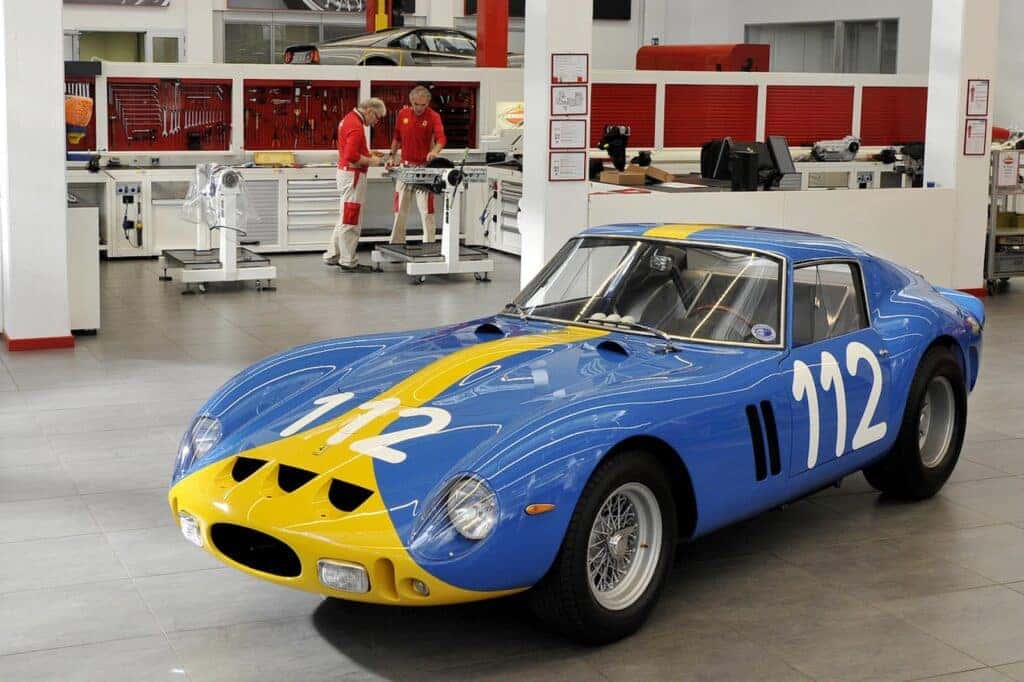
Most wore Rosso Corsa. The famous exception is the Lady in Blue, repainted in Swedish colors by racer Ulf Norinder in 1963 — a livery Ferrari Classiche preserved when it restored the car, treating sixty years of history as more original than the factory paint.
Ferrari built exactly 36 examples of the 250 GTO between 1962 and 1964 — far short of the 100 the rulebook demanded, and the primary reason the model is valued as it is today.
| Variant | Units Produced |
|---|---|
| Series I (1962–63 bodywork) | 33 |
| Series II (1964 bodywork) | 3 |
| Series I cars rebodied to Series II | 4 |
| Total production | 36 |
Some sources cite 39 rather than 36. The higher figure includes the three 4.0-liter cars built as 330 GTO/LM variants, which Ferrari records separately from the 3.0-liter GTO production run.
Scarcity was not only a matter of volume. At $18,000 new in the United States, every buyer had to be personally approved by Enzo Ferrari and Luigi Chinetti, his North American distributor. Ferrari turned down customers who had the money but not, in his judgment, the credentials.
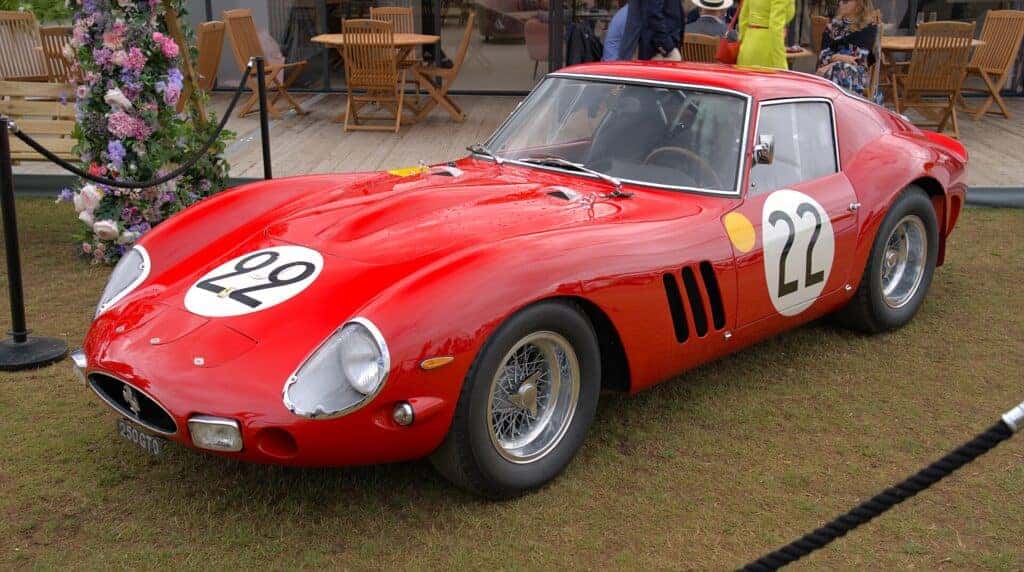
Chassis 3765 is the only GTO run by the works Scuderia Ferrari team rather than a factory-supported privateer. Built as a 4.0-liter 330 LM, it took a class win at the Nürburgring 1000km in 1962 with Mike Parkes and Willy Mairesse, then retired at Le Mans that year with overheating.
In November 2023 it sold at RM Sotheby’s New York for $51,705,000 — still the most expensive Ferrari ever sold in a public auction.
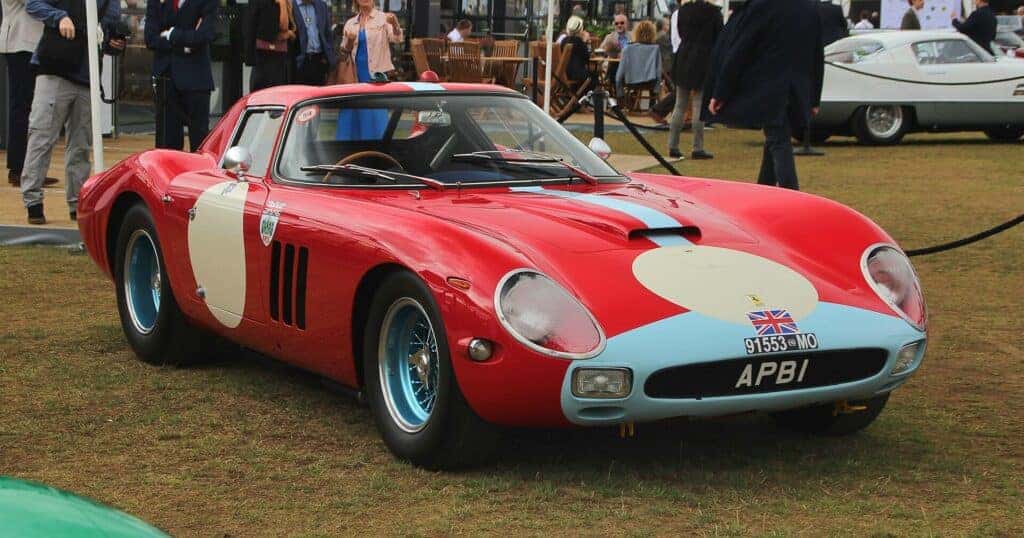
The 250 GTO has held the title of world’s most valuable car for most of the last two decades. No other model has seriously challenged it.
Three factors drive the number. Only 36 exist, every car has documented period racing history, and almost all sit in long-term collections that rarely release them.
| Category | Value |
|---|---|
| Original MSRP (1962, US) | ~$18,000 |
| Typical Market Range | ~$38,000,000 – $52,000,000 |
Chassis 3765 — the only GTO run by the works Scuderia Ferrari team, built as a 4.0-liter 330 LM — sold at RM Sotheby’s New York in 2023. The one-of-one Bianco Speciale, chassis 3729GT, followed at $38,500,000 at Mecum Kissimmee in early 2026 after 27 years in the Jon Shirley collection, its Classiche-built replacement engine likely accounting for the gap.
Private treaty sales place the model’s absolute peak higher, at around $70 million.
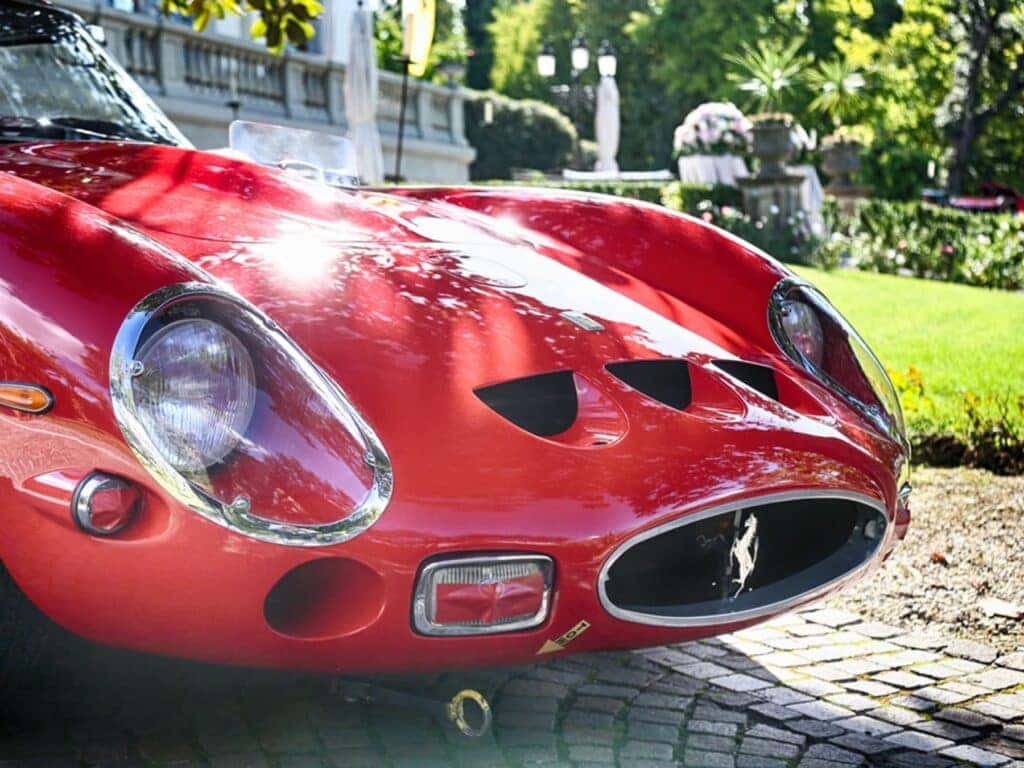
Ferrari has used the GTO name three times. The 1962 250 GTO and the 1984 288 GTO are separated by 22 years and two entirely different ideas of what homologation meant.
| Feature | Ferrari 250 GTO (1962–64) | Ferrari 288 GTO (1984–87) |
|---|---|---|
| Engine | 3.0L Naturally Aspirated V12 | 2.85L Twin-Turbo V8 |
| Horsepower | 296 hp | 400 hp |
| 0–60 mph | ~5.4 sec | ~4.9 sec |
| Top Speed | ~174 mph | 189 mph |
| Dry Weight | ~1,940 lb | ~2,557 lb |
| Production | 36 units | 272 units |
| Homologation class | FIA Group 3 GT | FIA Group B |
| Raced in period | Yes | No |
← Scroll to compare →
The distinction that matters is the last row. The 250 GTO earned its name on track across three championship seasons.
The 288 GTO was built for a category cancelled before it could compete — which is precisely why it launched the modern halo lineage that runs through the Ferrari F40 and beyond, while the 250 GTO closed out Ferrari’s racing era.
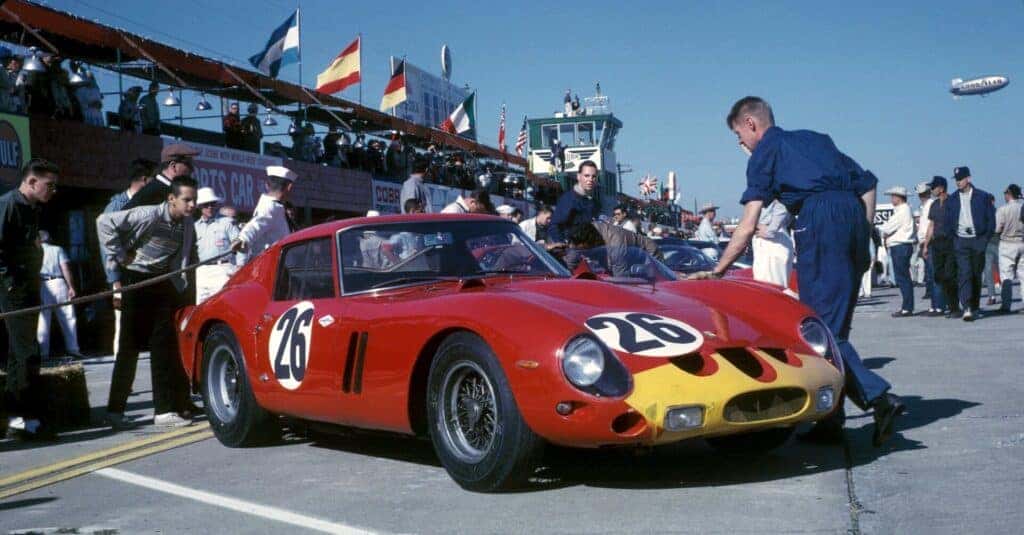
Most 250 GTOs are valued between $38 million and $52 million. The public auction record is $51,705,000, set by chassis 3765 at RM Sotheby’s in November 2023. Value turns on period racing history, original bodywork, and whether the car keeps its numbers-matching engine.
Ferrari built 36 between 1962 and 1964 — 33 with Series I bodywork and three with Series II bodywork, plus four Series I cars later rebodied to Series II specification.
GTO stands for Gran Turismo Omologato, Italian for “grand touring homologated,” indicating a car built to meet FIA homologation requirements for GT racing.
Only 36 exist, every car has documented period competition history, and the model won three consecutive FIA GT championships. Almost all sit in long-term private collections, so open-market supply is close to zero.
Yes. The 250 GTO was homologated as a grand touring car and delivered road-registered, though it was equipped for competition — most cars left the factory without a speedometer.
Giotto Bizzarrini led the engineering and aerodynamic development before leaving Ferrari in 1961. Mauro Forghieri completed the program, and Sergio Scaglietti built the aluminum bodywork.
The 250 GTO is a 1962 front-engined V12 racing berlinetta built for FIA Group 3, of which 36 were made. The 288 GTO is a 1984 twin-turbocharged V8 supercar built for Group B, of which 272 were made. They share only the name and the homologation intent.
All 36 are believed to survive, which is exceptionally unusual for a car raced this hard. Several have been rebuilt after period accidents, and Ferrari Classiche documentation is the standard reference for verifying originality.
Gearing was specified per circuit, so top speed varied between cars. Le Mans-configured examples were the fastest, at roughly 174 mph.
Yes. 250 GTOs regularly appear at historic events including the Goodwood Revival, the Le Mans Classic, and the GTO Tour, where owners run the cars as intended.
Official Ferrari Dealer and Classiche-authorized workshop, serving collectors nationwide.