
Home > Blog > Ferrari Model Showcase > Ferrari Daytona (365 GTB/4): Specs, Value & the Fastest Car of Its Era
Share this post:
The Ferrari Daytona is the unofficial name for the 365 GTB/4, a front-engined V12 grand tourer built from 1968 to 1973. It replaced the 275 GTB/4 and was Ferrari’s flagship road car until the mid-engined 365 GT4 Berlinetta Boxer arrived.
The name is not Ferrari’s. The press applied it after Ferrari’s 1-2-3 finish at the 1967 24 Hours of Daytona, and it stuck despite the factory never using it officially.
It should not be confused with the Ferrari Daytona SP3, a limited-series Icona model built more than fifty years later.
The Daytona answered the mid-engined Lamborghini Miura with a conventional front-engine layout and simply more power — and it worked.
| Category | Specification |
|---|---|
| Engine | 4.4L (4,390 cc) Colombo Tipo 251 V12 |
| Valvetrain | DOHC, four camshafts |
| Induction | Six Weber 40 DCN carburetors |
| Horsepower | 352 hp @ 7,500 rpm |
| Torque | ~318 lb-ft @ 5,500 rpm |
| Transmission | 5-Speed Manual Transaxle |
| 0–60 mph | ~5.4 seconds |
| Top Speed | 174 mph |
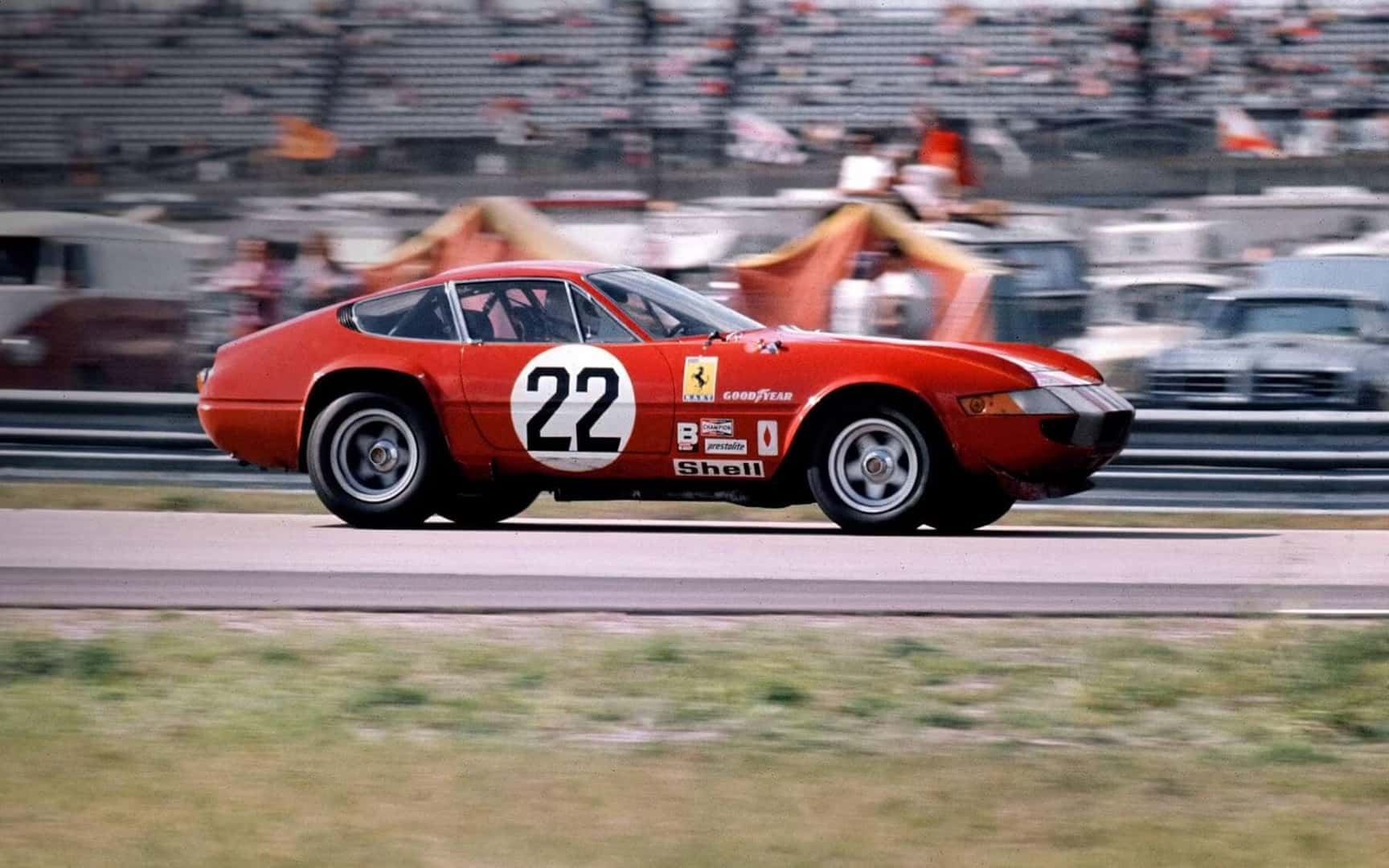
Ferrari never raced the Daytona itself. Every result the car achieved came from privateer teams — Charles Pozzi in France, Luigi Chinetti’s North American Racing Team in the US, and Ecurie Francorchamps in Belgium.
A Competizione was still good enough to finish 2nd overall and win the GTO class at the 24 Hours of Daytona in 1979, eleven years after the model launched.
The road car built its own legend separately: in 1971, Brock Yates and Dan Gurney drove a Daytona from New York to Los Angeles in the first Cannonball Run, covering the country in 35 hours and 54 minutes.
Leonardo Fioravanti designed the Daytona at Pininfarina, and Scaglietti built the bodies. The result broke completely from the curved 275 that preceded it.
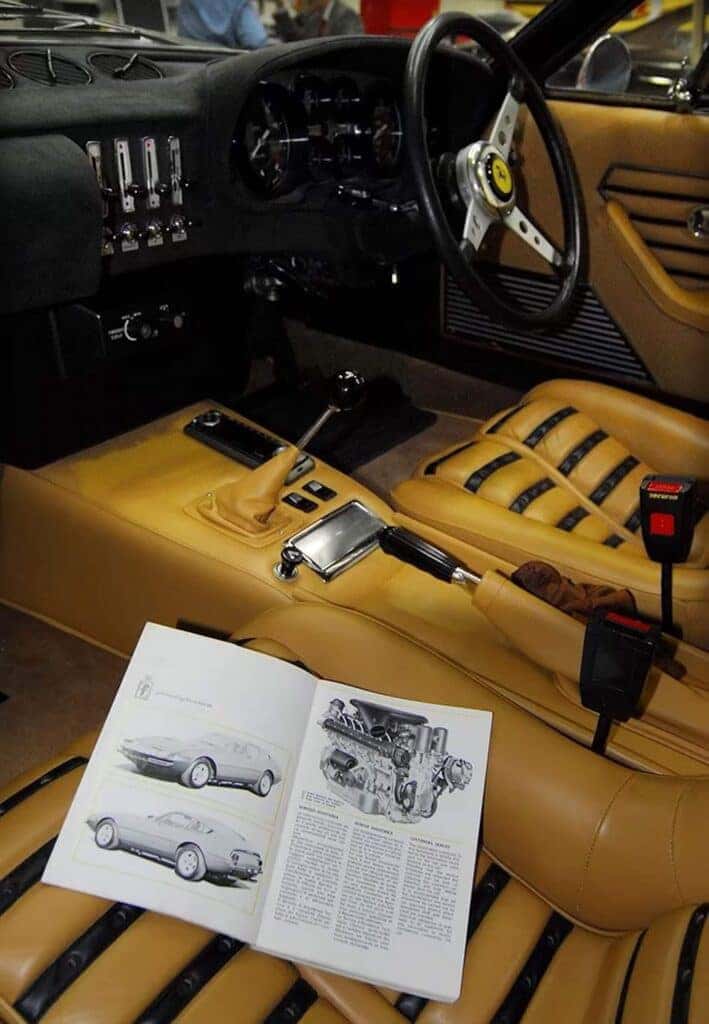
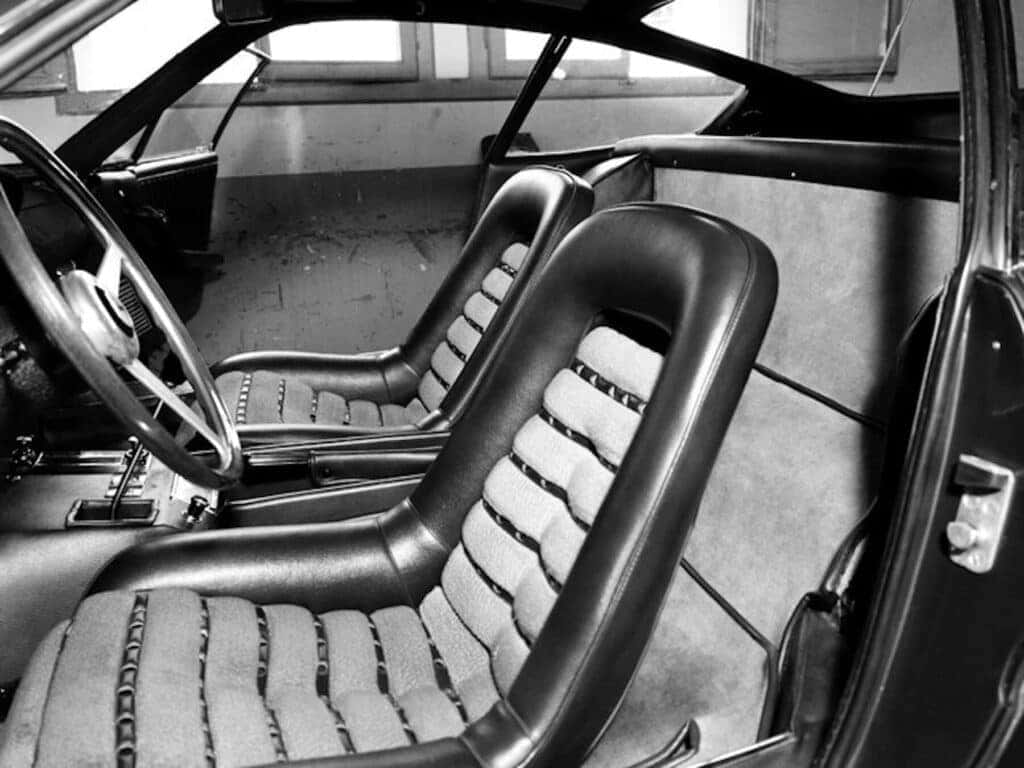
Inside, the Daytona is a genuine grand tourer rather than a stripped competition car. Leather seats, full instrumentation, and real luggage space sit behind a gated shifter and a Colombo V12.
The plexiglass-nose cars are the ones collectors chase. US regulations killed the design after roughly three years, making the early examples both rarer and, to most eyes, better looking.
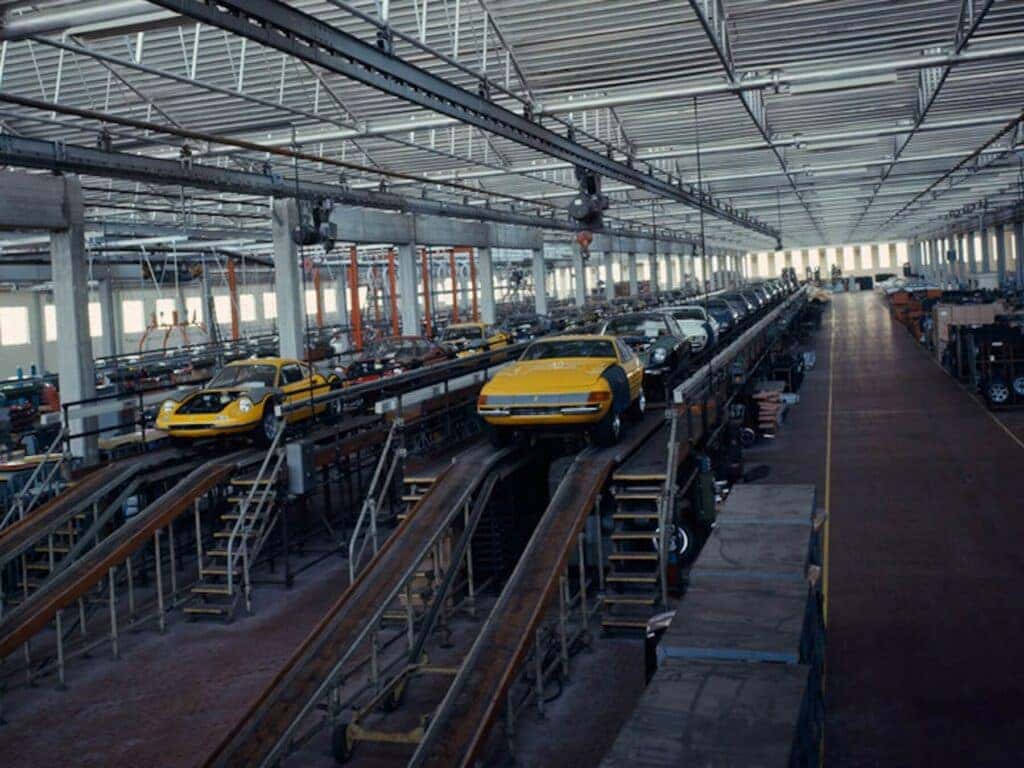
Ferrari built 1,406 Daytonas between 1968 and 1973, making it far more accessible than the marque’s competition specials — and the reason a Daytona remains an attainable V12 Ferrari today.
| Variant | Units Produced |
|---|---|
| 365 GTB/4 Berlinetta | 1,284 |
| 365 GTS/4 Spider | 122 |
| Total production | 1,406 |
Of the total, 156 Berlinettas were built in right-hand drive for the UK, and only seven Spiders.
The Spider is the rarest road-going Daytona, with just 122 built at the factory.
It is also the last factory-built open Ferrari to use a Colombo V12 — an engine lineage running back to 1947. That combination of rarity and finality is why Spiders trade at roughly four times Berlinetta money.
Converting the Berlinetta to open bodywork was not a matter of removing the roof. Scaglietti replaced the coupe’s fiberglass inner fenders and rear bulkhead with steel counterparts and reworked the rear deck, adding structural rigidity to compensate for the missing roof.
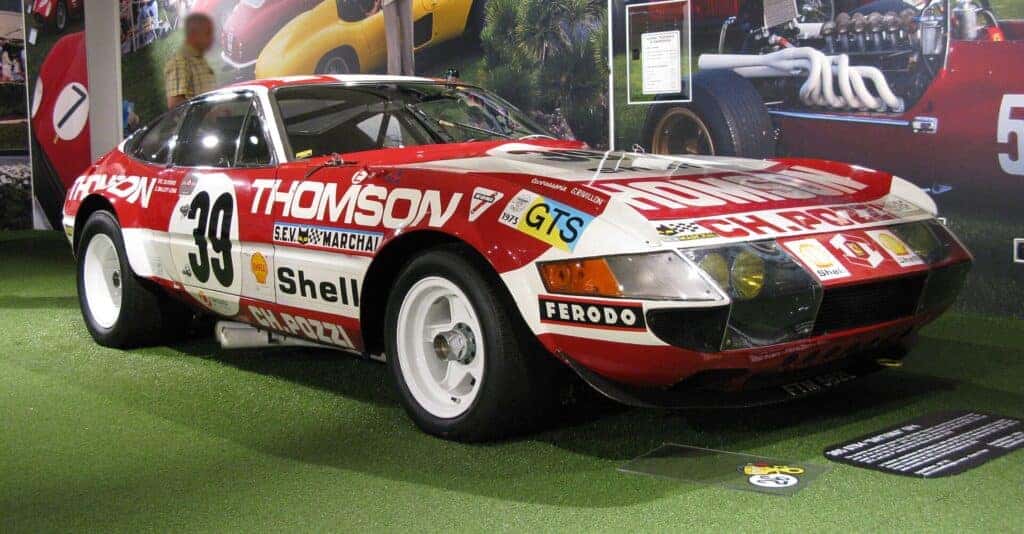
The Competizione is the factory racing Daytona, built in three series of five cars between 1971 and 1973.
| Series | Year | Built | Power |
|---|---|---|---|
| S1 | 1971 | 5 | ~402 bhp |
| S2 | 1972 | 5 | ~430 bhp |
| S3 | 1973 | 5 | ~450 bhp |
A Berlinetta typically trades between $600,000 and $900,000, which makes the Daytona one of the most attainable V12 Ferraris with genuine competition history.
The three variants occupy completely separate markets. A Spider costs several times a Berlinetta, and a Competizione several times a Spider.
| Variant | Value |
|---|---|
| Original MSRP (1971, US) | ~$19,500 |
| Berlinetta | ~$600,000 – $900,000 |
| Spider | ~$2,200,000 – $3,600,000 |
| Competizione | ~$5,000,000 – $8,100,000 |
A 1973 Daytona Competizione Series III, sold in August 2025. Among road cars, the highest Spider result stands at $3,635,000 and the highest Berlinetta at $2,315,000 — the latter a 1968 prototype rather than a series production car.
Condition spread on Berlinettas is unusually wide. Cars have traded as low as $309,000, which makes inspection and documentation more consequential here than on rarer models.
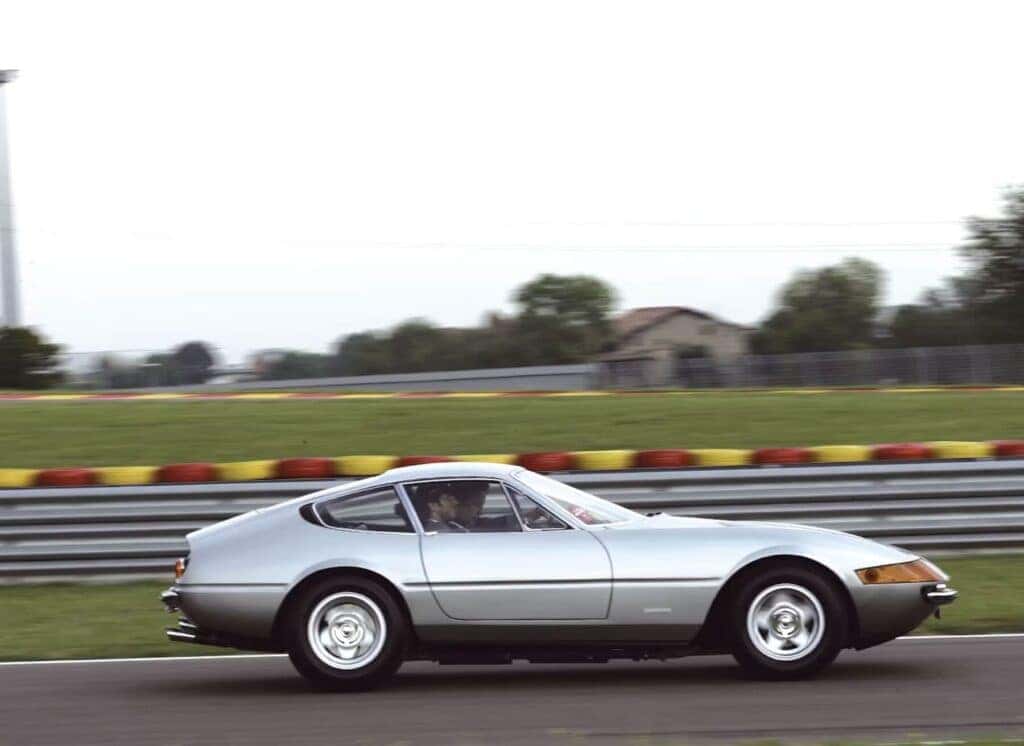
The two road-going Daytonas share a drivetrain and almost nothing else commercially. This is the decision most buyers actually face.
| Feature | 365 GTB/4 Berlinetta | 365 GTS/4 Spider |
|---|---|---|
| Body | Fixed-roof coupe | Factory convertible |
| Production | 1,284 | 122 |
| Right-hand drive | 156 | 7 |
| Typical value | ~$600,000 – $900,000 | ~$2,200,000 – $3,600,000 |
| Conversion risk | None | High — verify factory provenance |
| Availability | Trades regularly | Rarely offered |
← Scroll to compare →
The Berlinetta is the car to buy if you intend to drive it. The Spider is the one to buy if you intend to keep it, and the premium reflects scarcity rather than any mechanical difference between them.
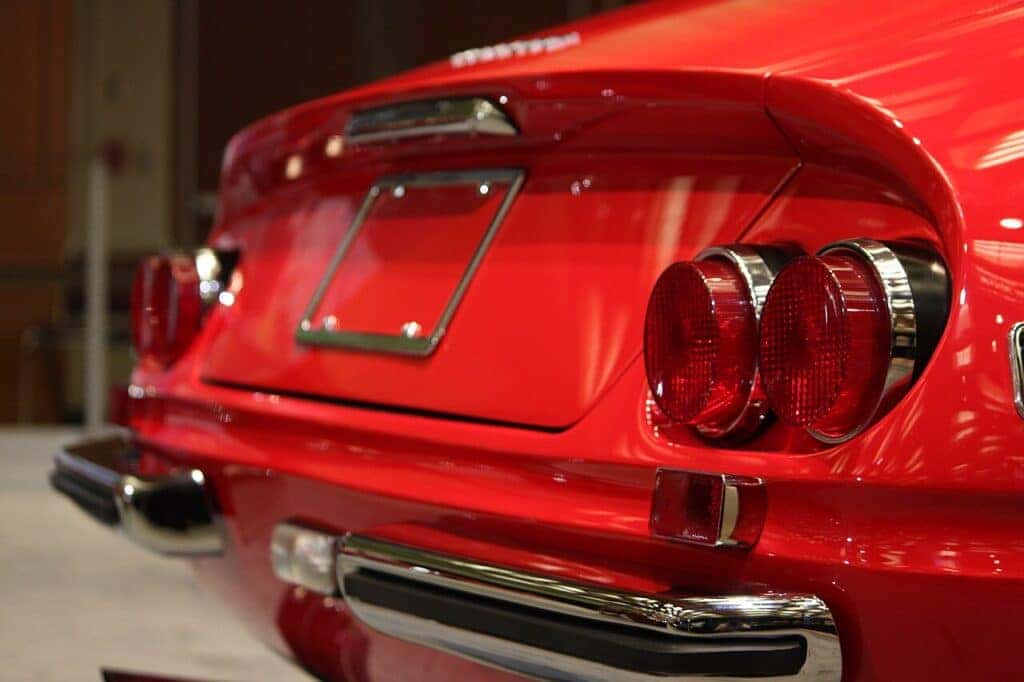
The name came from the press, not the factory. It followed Ferrari’s 1-2-3 finish at the 1967 24 Hours of Daytona, and Ferrari never officially adopted it — the car’s real designation is 365 GTB/4.
A Berlinetta typically trades between $600,000 and $900,000. Spiders run roughly $2.2 million to $3.6 million, and factory Competizione cars have reached $8,145,000.
Ferrari built 1,406 between 1968 and 1973 — 1,284 Berlinettas and 122 factory Spiders, including 15 Competizione racing cars.
The Daytona reaches 174 mph and covers 0–60 mph in roughly 5.4 seconds. At launch it was the fastest production car in the world.
The Daytona is the 365 GTB/4, a front-engined V12 grand tourer built from 1968 to 1973. The Daytona SP3 is a modern limited-series Icona model with a mid-mounted V12, introduced more than fifty years later. They share only a name.
Cars built between 1968 and 1971 used a full-width plexiglass nose panel. US lighting regulations forced the switch to pop-up headlights from 1971, and the earlier cars now carry a premium.
Not directly. All competition Daytonas were run by privateer teams including Charles Pozzi, Luigi Chinetti’s North American Racing Team, and Ecurie Francorchamps.
Berlinetta values have been comparatively stable while rarer variants have appreciated faster. Condition, matching numbers, and Ferrari Classiche certification drive most of the spread between examples.
The mid-engined 365 GT4 Berlinetta Boxer replaced it in 1973, ending Ferrari’s run of front-engined V12 flagships until the 550 Maranello arrived in 1996.
The Daytona closed one era and set the template for another.
From 1960s competition berlinettas to the latest hybrid flagships, our model showcase covers the cars that built the marque.
Official Ferrari Dealer and Classiche-authorized workshop, serving collectors nationwide.