
Home > Blog > Ferrari Model Showcase > Ferrari Halo Cars: The Big 6 Flagship Hypercars Explained
Share this post:
The Ferrari Big 6 is Ferrari’s lineage of flagship halo hypercars — six cars, built across four decades, each one the most advanced road car Ferrari could produce at the time.
The lineage runs from the 1984 288 GTO to the 2025 F80. Until the F80 arrived, collectors called it the Ferrari Big 5.
The Ferrari Big 6:
Every decade or so, Ferrari builds a car that resets what a Ferrari can do. The Big 6 traces that arc from analog twin-turbo supercars to hybrid machines built on endurance-racing technology.
| Model | Years | Top Speed / 0–62 MPH | Production |
|---|---|---|---|
| Ferrari 288 GTO | 1984–1987 | 189 mph / 4.9 sec | 272 units |
| Ferrari F40 | 1987–1992 | 201 mph / 4.1 sec | 1,311 units |
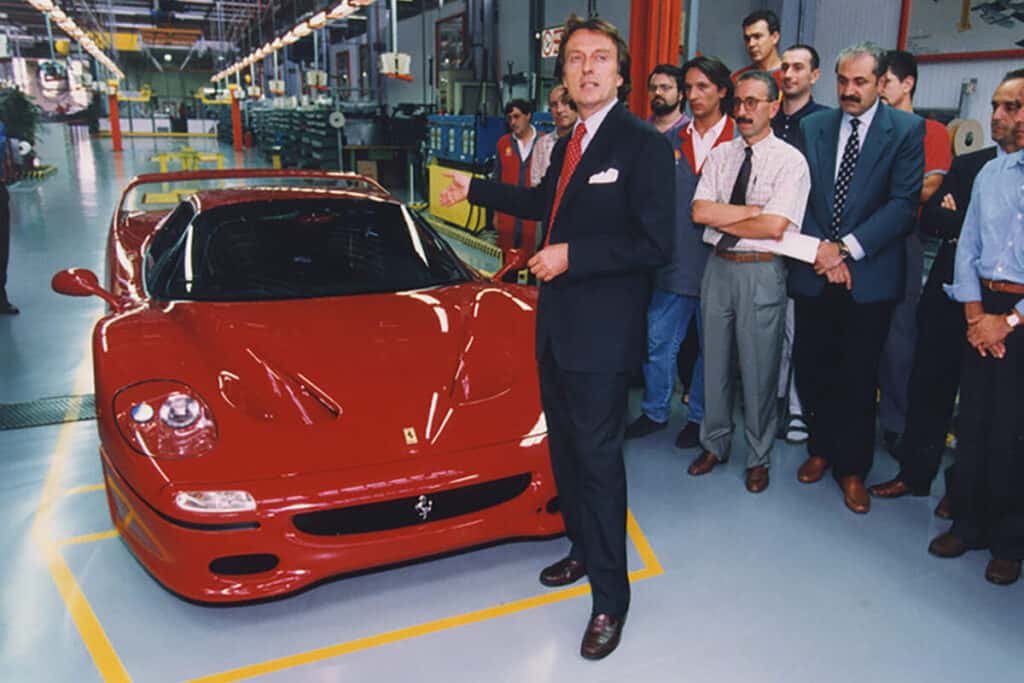
| Ferrari F50 | 1995–1997 | 202 mph / 3.87 sec | 349 units |
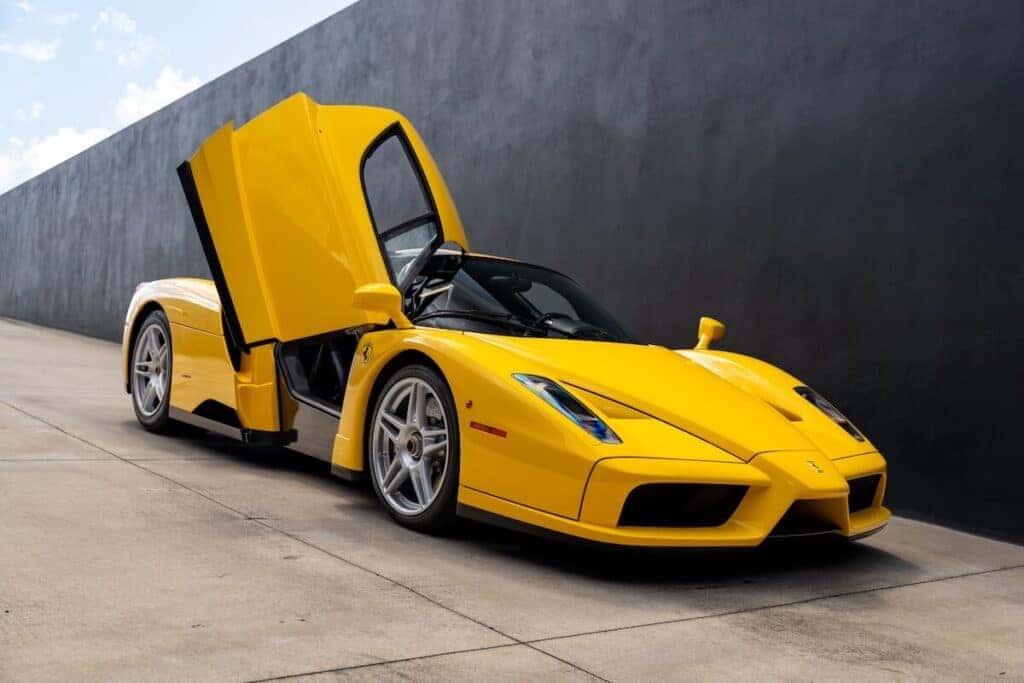
| Ferrari Enzo | 2002–2004 | 217+ mph / 3.65 sec | 400 units |
| Ferrari LaFerrari | 2013–2016 | 217+ mph / < 3.0 sec | 499 Coupes |
| Ferrari F80 | 2025+ | 217 mph / 2.15 sec | 799 units |
One number tells the story better than the horsepower column: top speed effectively stopped moving after 2002. The Enzo reached 217 mph, and neither the LaFerrari nor the F80 beat it. Ferrari stopped chasing terminal velocity and put the engineering into acceleration and lap time instead — the F80 reaches 62 mph in 2.15 seconds, less than half the 288 GTO’s time.
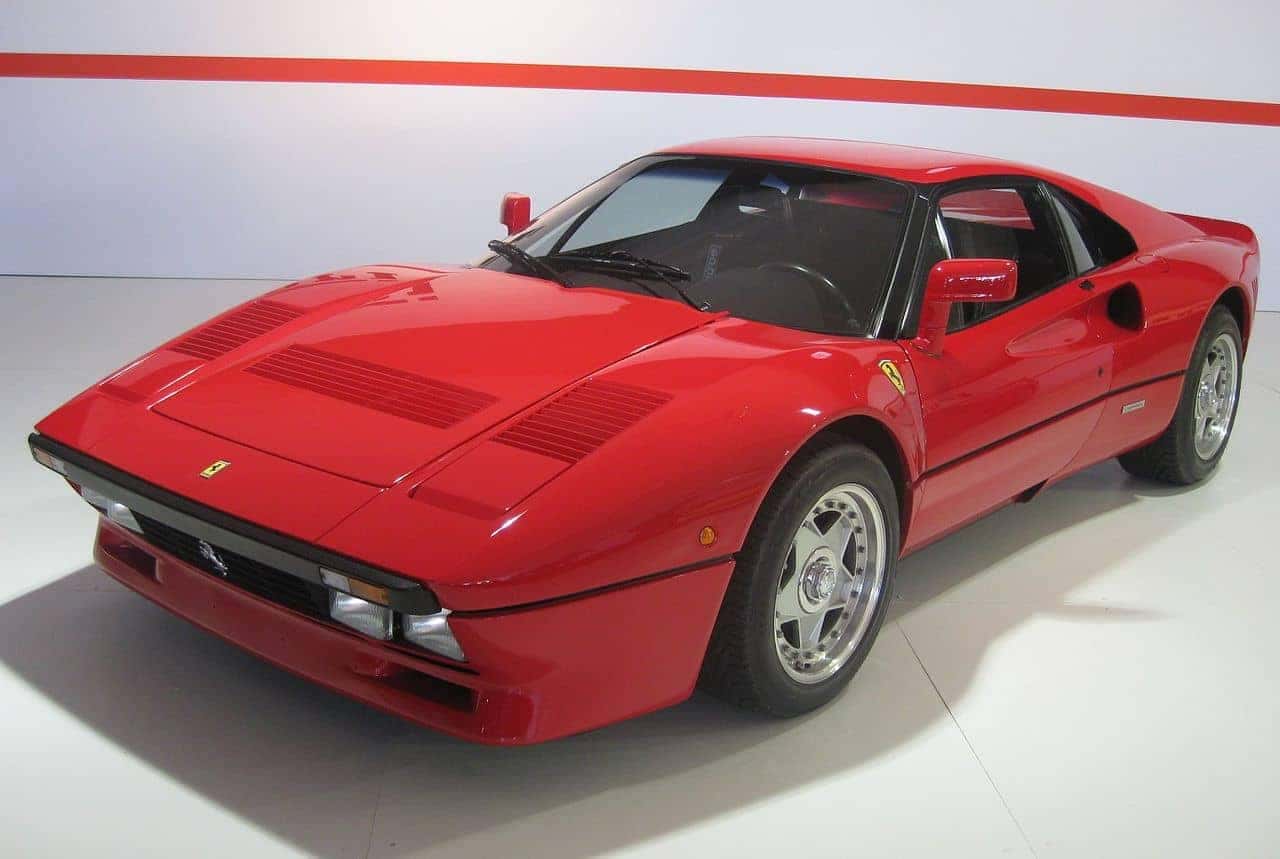
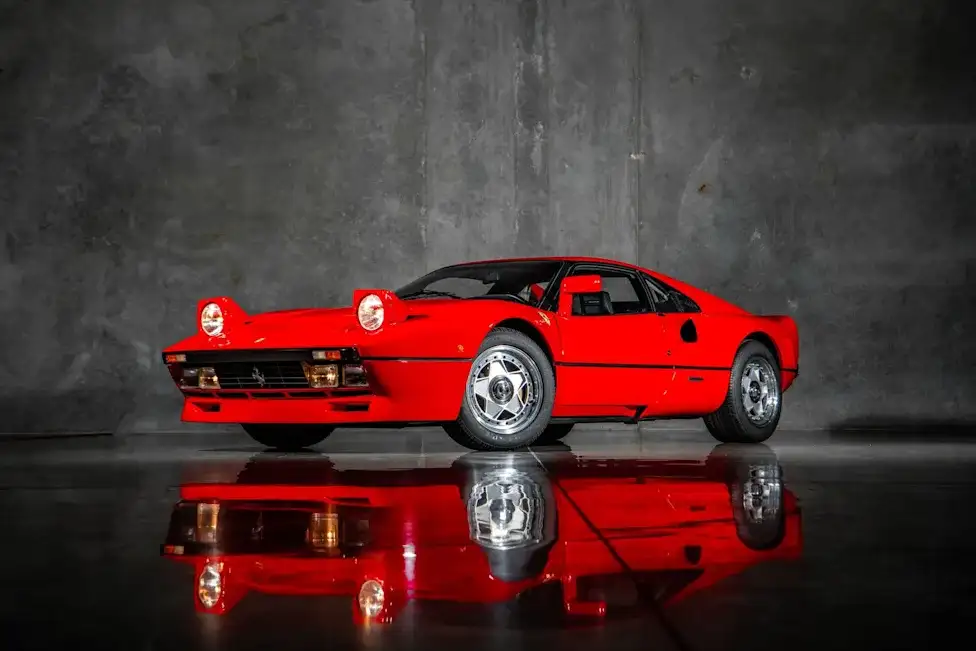
Originally developed for FIA Group B homologation, the Ferrari 288 GTO established the blueprint for Ferrari’s modern halo-car lineage. Although the racing category was canceled before the car could compete, the 288 GTO became one of Ferrari’s most important performance milestones.
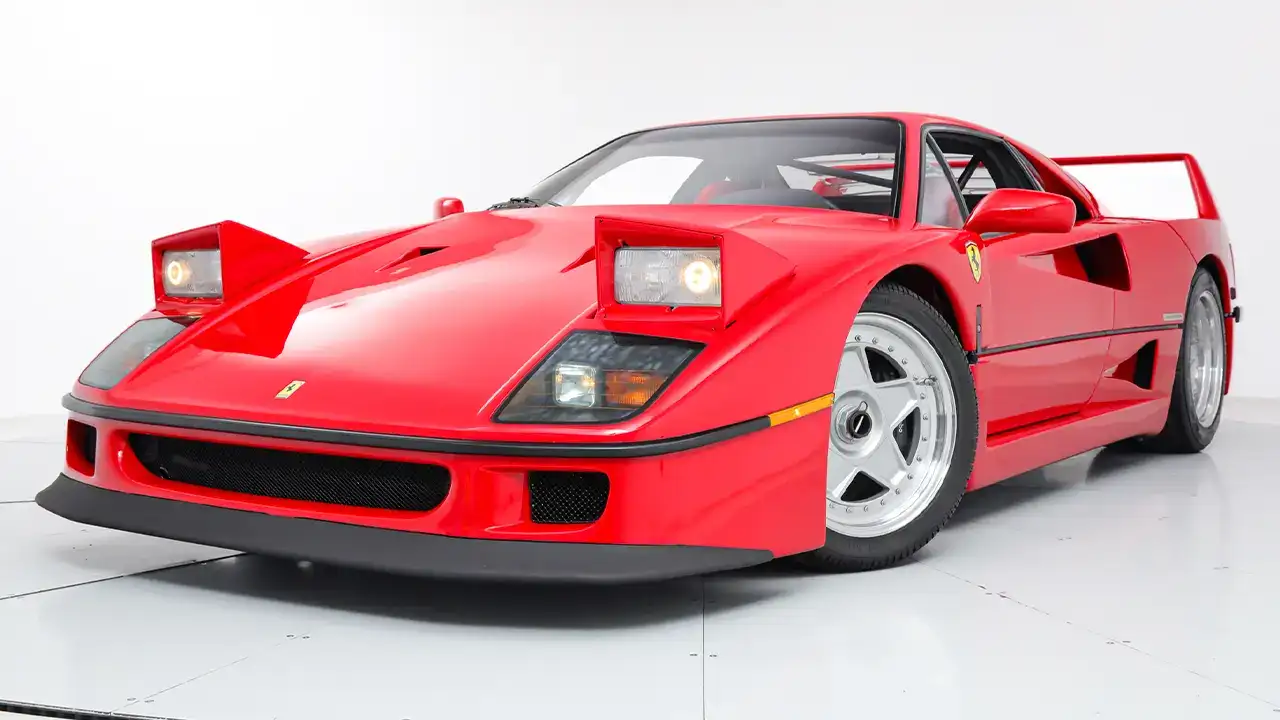
Built to celebrate Ferrari’s 40th anniversary, the Ferrari F40 became one of the most iconic analog supercars ever created. Designed with minimal electronic intervention and extreme lightweight construction, the F40 prioritized raw driver engagement above everything else.
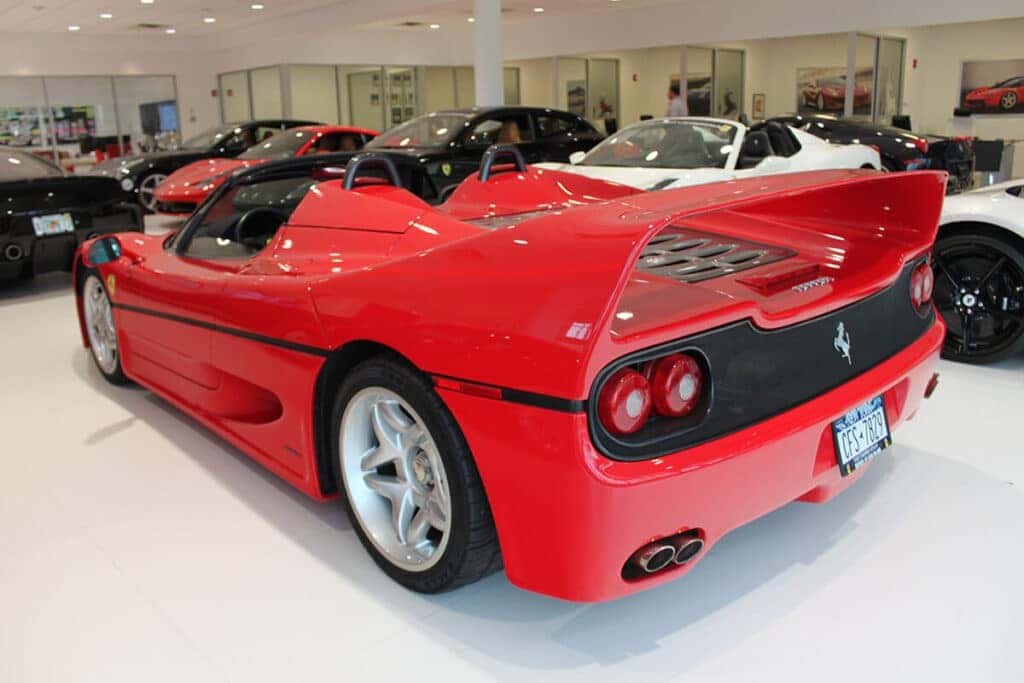
Created to celebrate Ferrari’s 50th anniversary, the Ferrari F50 brought Formula 1-inspired engineering directly to the road. Combining a naturally aspirated V12 with a carbon-fiber chassis and open-top driving, the F50 remains one of Ferrari’s purest driving experiences.
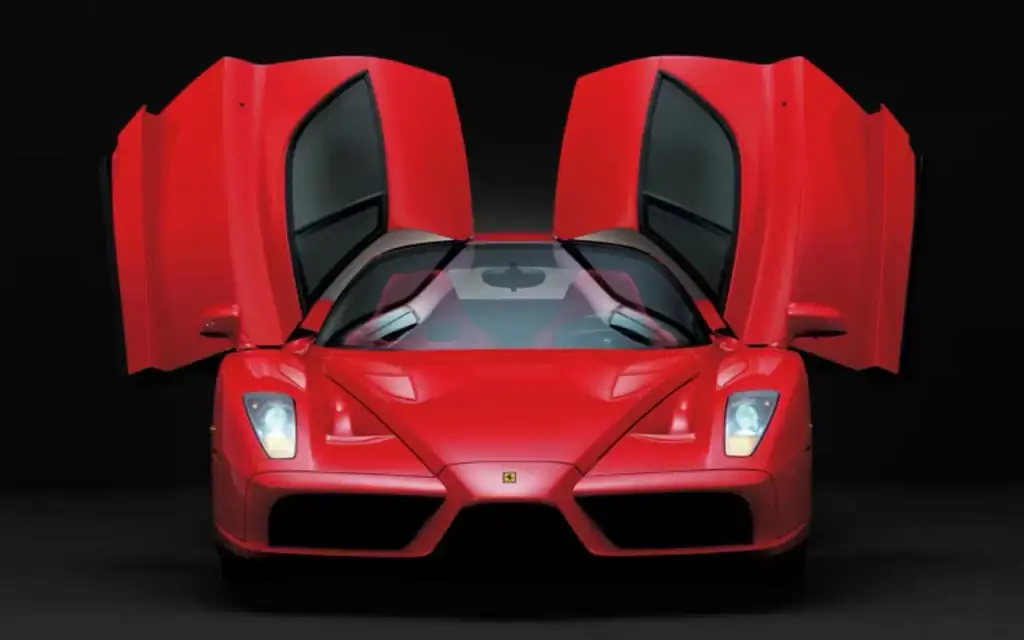
Named after Ferrari’s legendary founder, the Ferrari Enzo introduced a new era of Formula 1-inspired technology and aerodynamic engineering. Developed during Ferrari’s dominant early-2000s Formula 1 period, the Enzo became one of Ferrari’s defining modern hypercars.
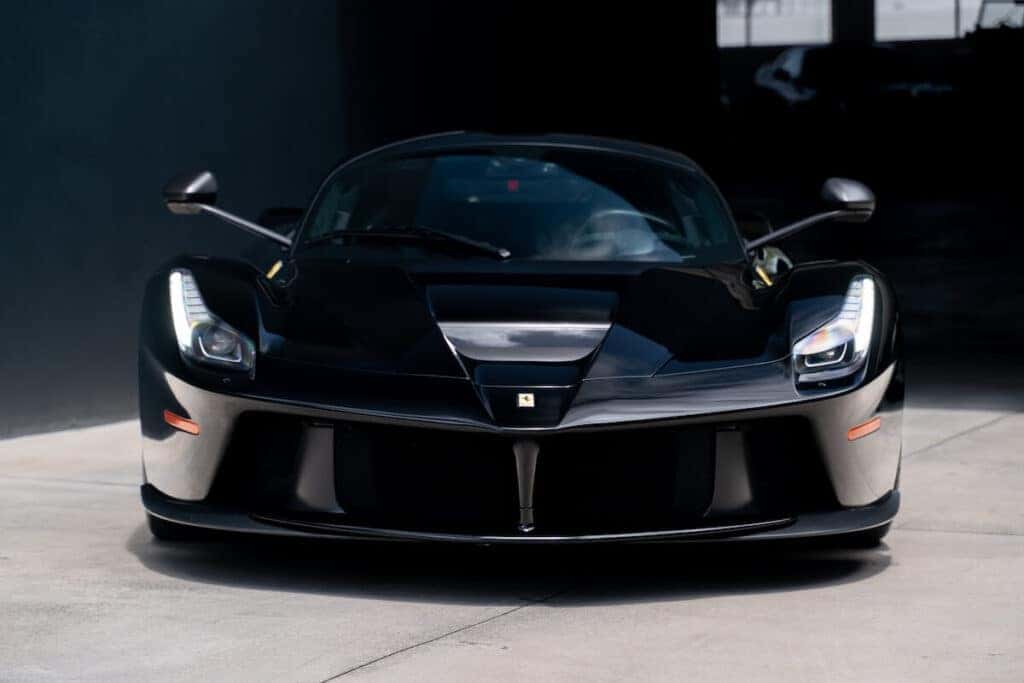
The Ferrari LaFerrari introduced hybrid technology into Ferrari’s halo-car lineage, combining a naturally aspirated V12 with Formula 1-inspired HY-KERS electrification. It is one of the three cars collectors call the Holy Trinity — the LaFerrari, McLaren P1, and Porsche 918 Spyder, all launched within months of each other and all proving hybrid systems could make a car faster rather than just cleaner.
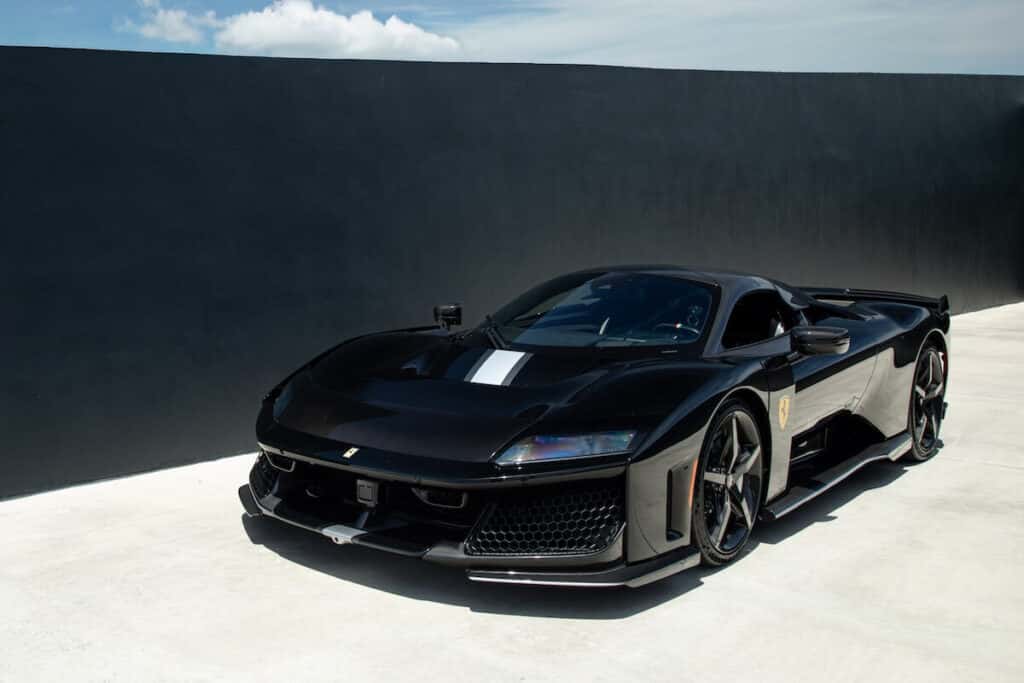
The Ferrari F80 introduces a new era of Ferrari performance built directly from modern endurance racing technology. Utilizing a Le Mans-derived hybrid powertrain, advanced aerodynamics, and intelligent e-4WD systems, the F80 represents Ferrari’s most technologically advanced road car to date.
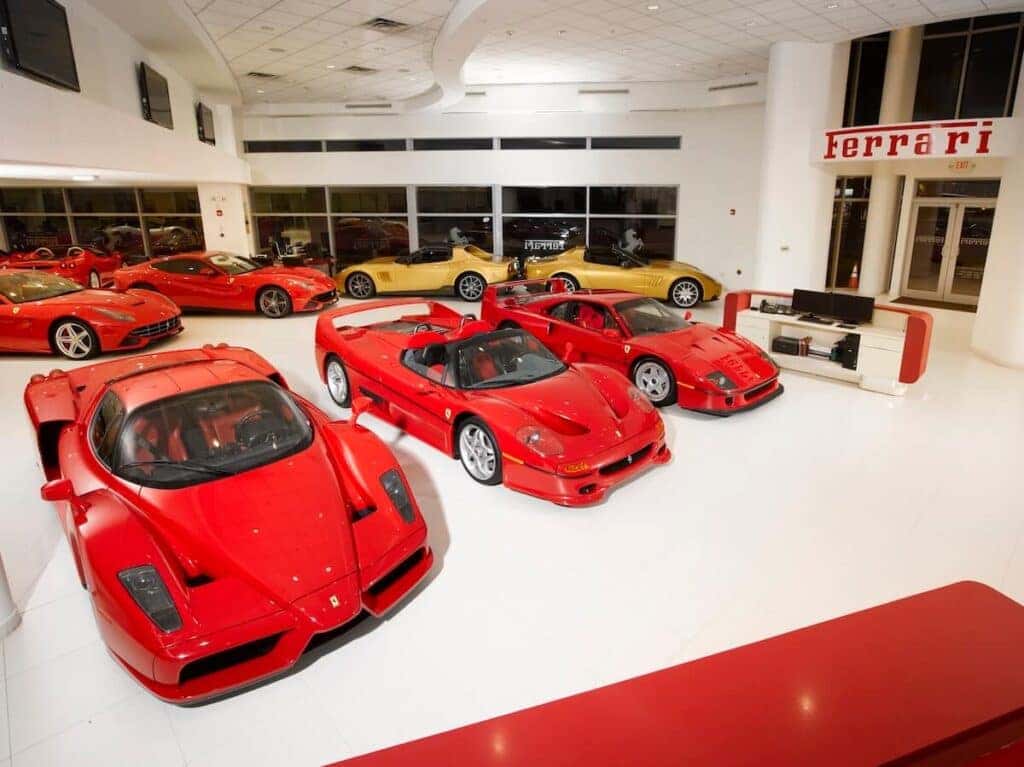
Values across the Big 6 span an enormous range, and they do not track performance. The slowest car in the lineage is worth more than three of the faster ones.
| Model | Typical Market Range (2026) | Auction Record |
|---|---|---|
| Ferrari 288 GTO | ~$4.5M – $7.0M | $10.9M (€9,117,500) |
| Ferrari F40 | ~$2.5M – $4.5M | $6,600,000 (road car) |
| Ferrari F50 | ~$5.8M – $9.1M | $12,210,000 |
| Ferrari Enzo | ~$4.0M – $8.0M | $17,875,000 |
| Ferrari LaFerrari | ~$3.5M – $5.5M (Coupe) | $6,710,000 (Coupe) |
| Ferrari F80 | ~$5.8M – $7.5M | Not yet publicly auctioned |
Scroll for more →
Highest Big 6 Sale on Record
$17,875,000
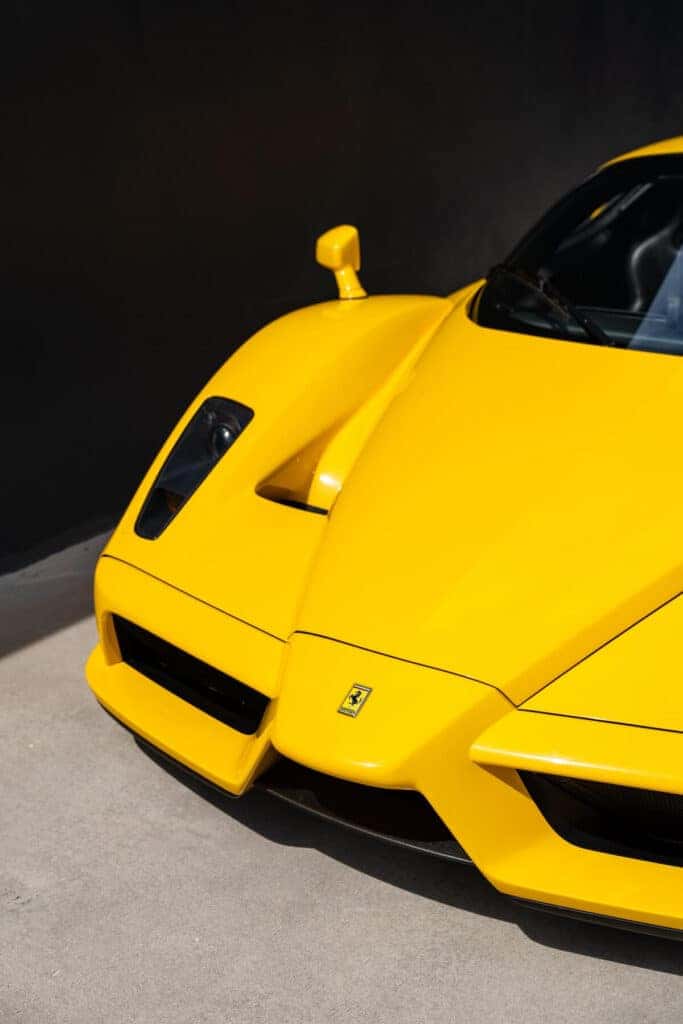
A 649-mile Giallo Modena Ferrari Enzo from the Phil Bachman Collection, sold at Mecum Kissimmee in January 2026 — more than triple the previous Enzo record.
That auction reset records for five of the six models in a single day. The F50 reached $12.21M, the LaFerrari Aperta $11M, the 288 GTO $8.525M, and a 458-mile F40 $6.6M. Days later in Paris, a 1984 288 GTO broke the model record again at €9,117,500 — the first ever to pass $10 million.
If you own a Big 6 Ferrari or another collector car, our specialists can value your car or discuss consignment.
Not everyone accepts the sixth car. The objections: a V6 instead of a V8 or V12, 799 units against the 288 GTO’s 272, and all-wheel drive and active suspension in a lineage built on taking things away.
The case for it is stronger.
Ferrari has never used either term. Big 5 and Big 6 are collector language, and the F80’s inclusion is now the consensus.
Defining the edges matters as much as the list itself. Four categories of Ferrari sit close to the Big 6 without belonging to it.
The test is consistent: a Big 6 car is a purpose-built flagship, derived from Ferrari’s current racing program, produced in a single limited run, and never repeated.
Each generation of the Big 6 introduced technology that the rest of the industry adopted afterward.
The through-line is that Ferrari’s flagships have never been about maximum numbers. They are about moving racing technology onto the road first, and letting the numbers follow.
Big 6 models rarely reach the open market, and the newest are allocation-only. Our specialists assist collectors with sourcing and allocation inquiries, and can advise on Ferrari Classiche certification for the earlier cars.
The Ferrari Big 6 is Ferrari’s flagship halo-car lineage: the 288 GTO, F40, F50, Enzo, LaFerrari, and F80. Each was the most advanced road car Ferrari could build at the time, produced in a single limited run and derived from Ferrari’s racing program.
The Big 6 adds the Ferrari F80 to the original five. Collectors used “Big 5” until the F80’s 2024 reveal made the lineage six cars. Ferrari has never officially used either term.
The Ferrari Enzo holds the highest public auction result in the lineage at $17,875,000, set at Mecum Kissimmee in January 2026 for a 649-mile Giallo Modena example. By typical market range, the F50 is the most valuable at roughly $5.8 million to $9.1 million.
The 288 GTO, with 272 road cars — fewer than any other model in the lineage and roughly one for every five F40s.
The F80 accelerates from 0 to 62 mph in 2.15 seconds, faster than any other Ferrari road car. On top speed the lineage is level: the Enzo reached 217 mph in 2002 and no Big 6 car has exceeded it since.
The 288 GTO, launched in 1984 to homologate Ferrari for FIA Group B. The category was cancelled before it ever raced.
The F50, Enzo, and LaFerrari. The 288 GTO and F40 use twin-turbocharged V8s, and the F80 uses a twin-turbo hybrid V6 derived from Ferrari’s 499P Le Mans car.
Yes. The F80 is the sixth and current car in the lineage, and its inclusion is the consensus position among collectors despite its V6 engine and 799-unit production run.
The F40 was the last production Ferrari personally approved by Enzo Ferrari and the first road car to exceed 200 mph. It is also the most-produced car in the lineage at 1,311 units, which is why it remains the most attainable of the six.
The Ferrari F80, revealed in 2024 and delivered from 2025.
No. The 250 GTO predates the lineage and was built as a racing car for privateer teams rather than as a road-going flagship. It gave the 288 GTO its name and its Gran Turismo Omologata badge.
Every model in the lineage has appreciated substantially, but they have not moved together. The 288 GTO and F50 have risen fastest over the past five years, driven by rarity and by collector demand for analog cars. The F40, as the most-produced model, remains the most accessible entry point. Value within any single model varies more by mileage, originality, and Ferrari Classiche certification than by model choice.
These cars rarely reach the open market, and the newest are allocation-only. Our specialists work them privately.