
Home > Blog > Ferrari Model Showcase > Ferrari F40: The First 200 MPH Production Car
Share this post:
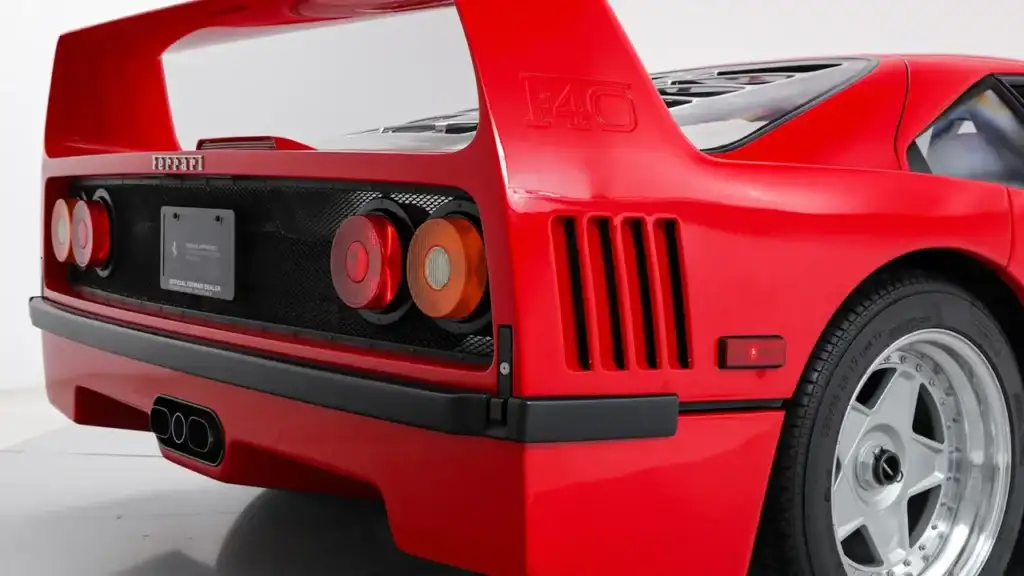
The Ferrari F40 is a mid-engine supercar built from 1987 to 1992 to mark Ferrari’s 40th anniversary. It was the last car personally approved by Enzo Ferrari, and the first production car to officially exceed 200 mph. A 2.9-liter twin-turbo V8 produces 471 hp with no driver aids of any kind.
It is the second car in Ferrari’s halo lineage, following the 288 GTO and preceding the F50, Enzo, LaFerrari, and F80.
The F40 was built as a race car with license plates. Ferrari stripped it to 2,425 lb dry, gave it no traction control or ABS, and let the turbos do the rest.
| Category | Specification |
|---|---|
| Engine | 2.9L Twin-Turbocharged V8 |
| Horsepower | 471 hp |
| Torque | 426 lb-ft |
| Transmission | 5-Speed Manual |
| 0–60 mph | ~4.1 seconds |
| Top Speed | 201 mph |
| Fiorano Lap | 1:29.6 |
| Dry Weight | 2,425 lb (1,100 kg) |
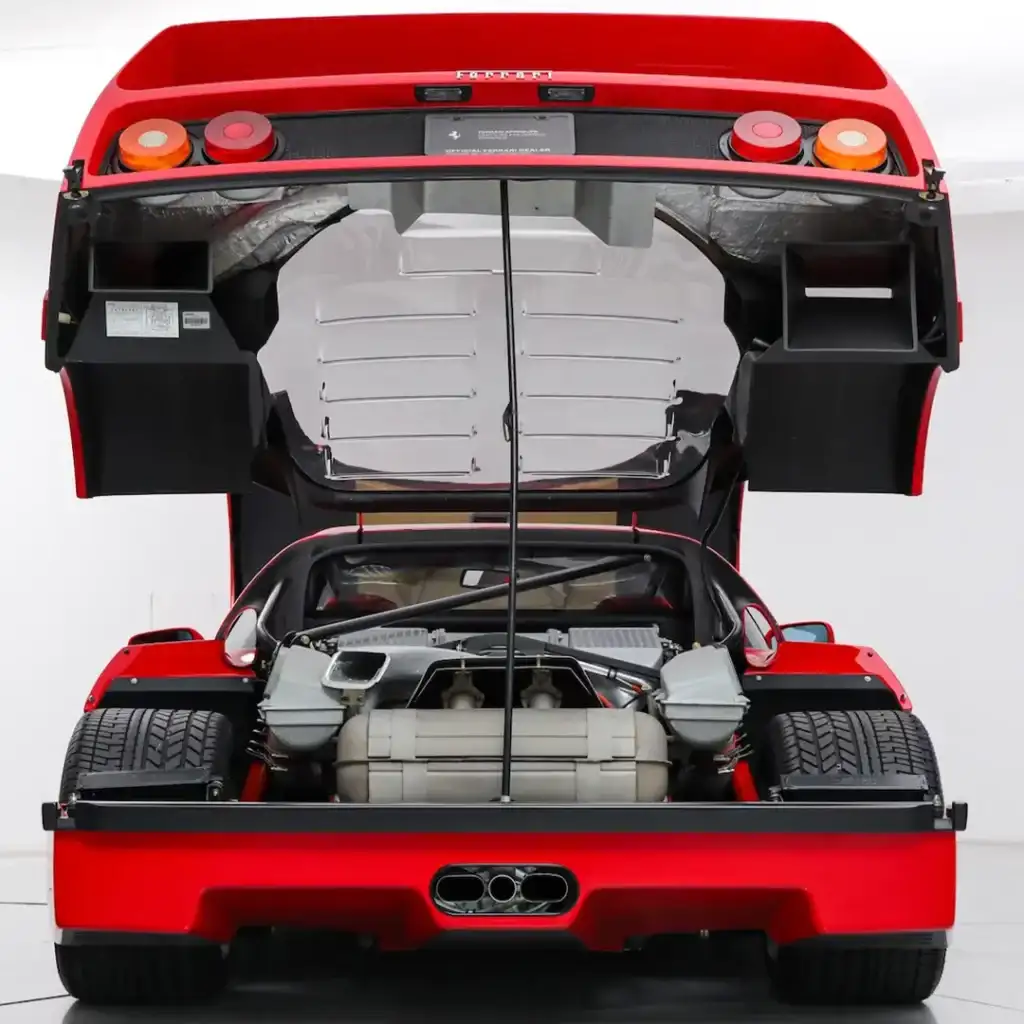
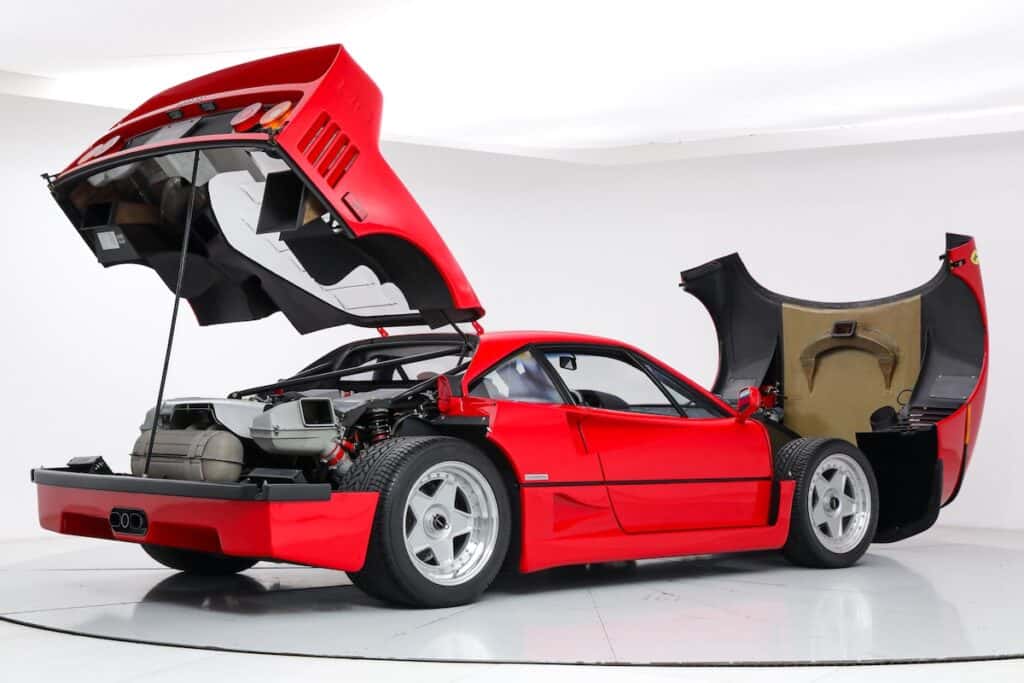
The 2.9-liter V8 is a development of the 288 GTO’s engine, enlarged and fitted with twin IHI turbochargers. Ferrari kept displacement low deliberately — the engine was derived from Group B homologation rules that capped turbocharged displacement — and made the power with boost rather than capacity.
The F40 is the most attainable of Ferrari's six halo cars, but condition varies more widely than any of them. Our specialists can help with sourcing inquiries.
The F40 gives you nothing between your inputs and the car’s response. That was the point.
Nothing is filtered, boosted, or corrected on your behalf. Every car Ferrari has built since has moved further away from this, which is exactly why the F40 is the one people talk about.
The F40 cabin is the clearest statement of what the car is. Ferrari removed everything that did not make it faster, and then stopped.
Early cars had no adjustment of any kind. Later production added wind-up windows and adjustable dampers, and those cars are generally easier to live with — though the earliest, most stripped examples are what collectors chase.
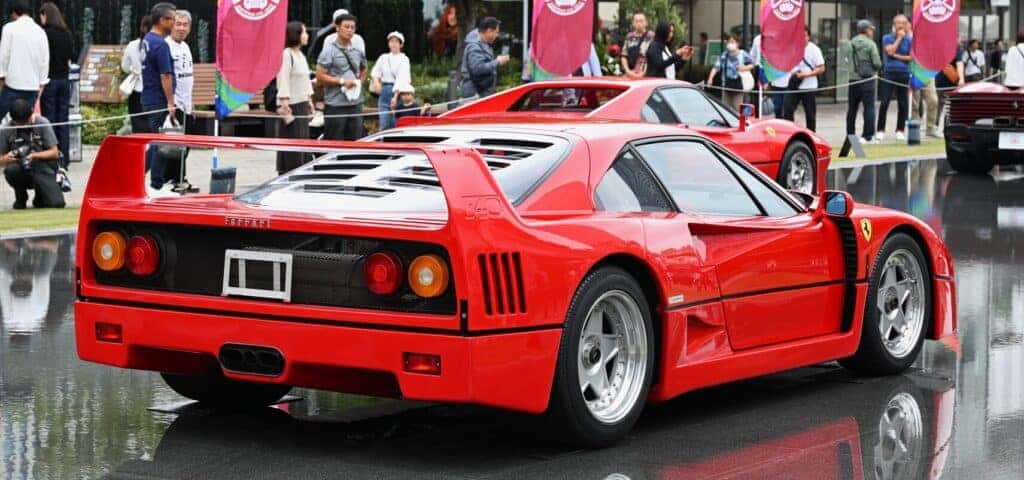
The F40 listed at $399,150 in the US in 1989. Enzo Ferrari’s death in 1988 turned it into a speculative asset almost overnight, and prices collapsed with the early-1990s market before recovering into the millions.
| Category | Value |
|---|---|
| Original MSRP (US, 1989) | $399,150 |
| Typical Market Range | ~$2,500,000 – $4,000,000 |
| Exceptional Examples | ~$4,000,000 – $6,000,000+ |
Highest F40 Sale on Record
$11,005,000
A 1993 F40 LM — one of just 43 competition cars among 1,311 F40s built, upgraded to GTC specification and roughly 760 hp — sold at RM Sotheby's in August 2025.
Road cars trade well below that. The ex-Alain Prost F40 at $3,886,250 is the benchmark for a standard example with exceptional provenance.
If you own an F40 or another collector Ferrari, our specialists can value your car or discuss consignment.
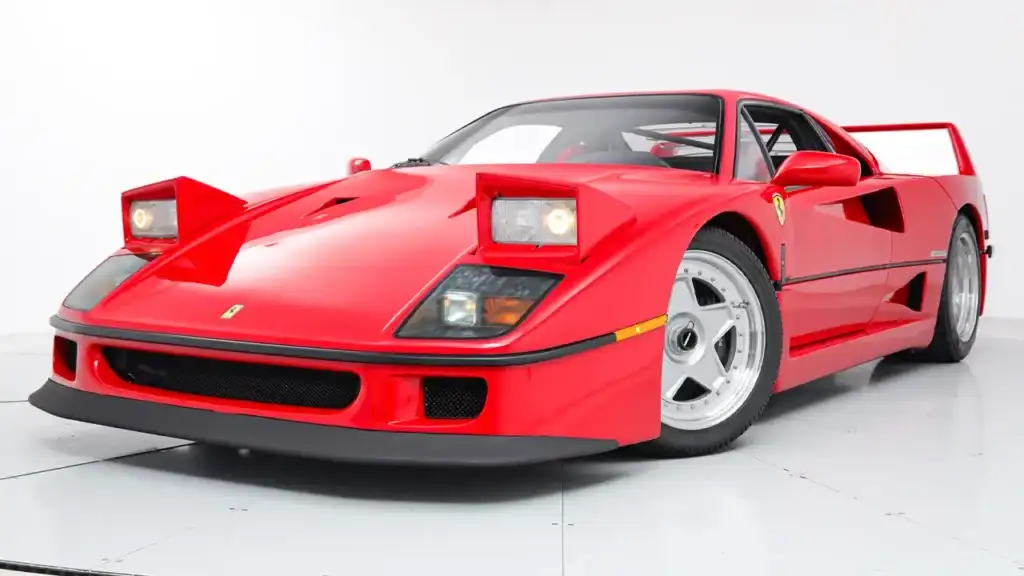
Ferrari built 1,311 F40s between 1987 and 1992 — far more than any other car in the halo lineage, and the only one to pass a thousand units.
Demand was the reason. Ferrari planned 400, then kept building as orders arrived and speculators pushed deposits up. That volumse is why the F40 is the most attainable of the six, and why it also has the widest condition spread — many were driven.
| Variant | Production |
|---|---|
| Road Cars | 1,268 |
| of which US-spec | 213 |
| Racing variants | 43 |
| LM, Competizione, GTE | — |
| Total Production | 1,311 |
Michelotto built and converted the racing F40s across overlapping designations, and counts differ between sources. Two of the ten Competizione cars were originally badged F40 LM, and the seven GTEs were conversions of existing LMs rather than new builds.
Michelotto built the competition F40s on Ferrari’s behalf, and they are the reason the model holds the family auction record.
The Competizione designation came from customer demand. Ten cars were built to order — the first two badged F40 LM, the remaining eight renamed because Ferrari felt the LM tag was too restrictive for series outside Le Mans.
A further seven cars became the F40 GTE, converted by Michelotto from existing LMs for BPR competition with an enlarged engine.
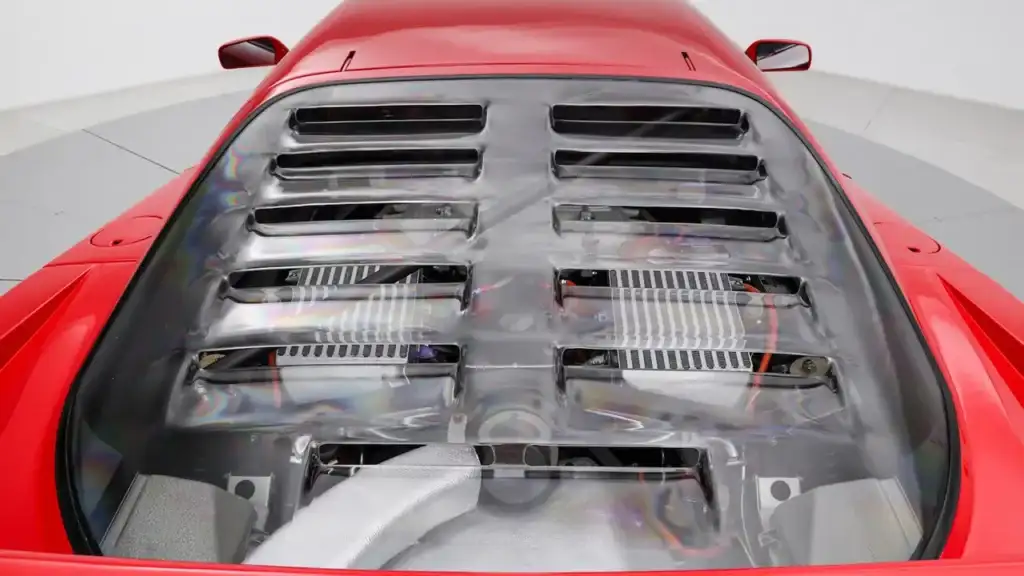
The F40 sits between the car that invented the formula and the car that perfected it. The 288 GTO before it was the first Ferrari built to homologate a race car it never got to race. The F50 after it swapped turbos for a Formula 1-derived V12.
| Feature | Ferrari 288 GTO (1984–1987) | Ferrari F40 (1987–1992) | Ferrari F50 (1995–1997) |
|---|---|---|---|
| Engine | 2.9L Twin-Turbo V8 | 2.9L Twin-Turbo V8 | 4.7L Naturally Aspirated V12 |
| Horsepower | 400 hp | 471 hp | 512 hp |
| Torque | 366 lb-ft | 426 lb-ft | 347 lb-ft |
| Transmission | 5-Speed Manual | 5-Speed Manual | 6-Speed Gated Manual |
| 0–60 mph | ~4.9 sec | ~4.1 sec | ~3.7 sec |
| Top Speed | 189 mph | 201 mph | 202 mph |
| Fiorano Lap | 1:36.0 | 1:29.6 | 1:27.0 |
| Production | 272 Units | 1,311 Units | 349 Units |
Scroll for more →
In 2026, Ferrari F40 prices typically range between $2.5 million and $4 million, depending on condition, mileage, and provenance. Exceptional, low-mileage examples with complete documentation have sold for $4M–$6M or more.
Ferrari produced approximately 1,311 F40s between 1987 and 1992 — around 1,268 standard road cars, plus a small number of LM, GTE, and Competizione racing variants built and converted by Michelotto.
$399,150 when new in 1987. Ferrari planned 400 cars, then built 1,311 as demand and speculation drove deposits far above list.
Yes. The F40 was the last Ferrari personally approved by Enzo Ferrari before his death in 1988. It remains historically significant as his final vision for the brand.
The F40 uses a 471-hp twin-turbo V8 and a 5-speed manual; the F50 uses a 512-hp naturally aspirated V12 derived from Formula 1 with a 6-speed gated manual. The F40 is the rawer car, the F50 the rarer one — 1,311 built against 349.
The F40 uses a 2.9L twin-turbocharged V8 producing 471 hp and 426 lb-ft of torque, paired with a 5-speed manual transmission.
1:29.6 — 6.4 seconds faster than the 288 GTO it replaced, which remains the largest single generational gain in Ferrari’s halo-car history.
The F40 combines Enzo Ferrari’s final approved design, a fully analog driving experience, and the distinction of being the first production car to exceed 200 mph.
Yes. The F40 is widely credited as the first street-legal production car to officially exceed 200 mph, reaching a top speed of approximately 201 mph.
The F40 sits in the middle of a lineage that runs forty years.
From 1960s competition berlinettas to the latest hybrid flagships, our model showcase covers the cars that built the marque.
1,311 were built and many were driven, so condition and documentation separate a $2.5M car from a $6M one. Official Ferrari Dealer and Classiche-authorized workshop, serving collectors nationwide.