
Home > Blog > Ferrari Model Showcase > Ferrari 288 GTO: Specs, Price & Ferrari’s First Turbocharged Flagship
Share this post:
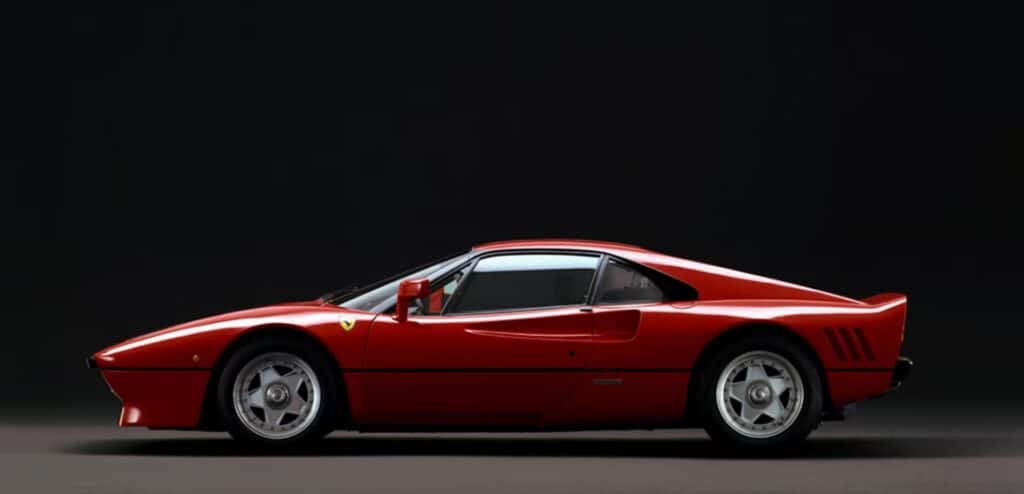
The Ferrari 288 GTO is a limited-production supercar built between 1984 and 1987 to homologate Ferrari for FIA Group B competition. Powered by Ferrari’s first twin-turbocharged V8 and built from Kevlar, carbon fiber, and Nomex, it was the fastest production car in the world when it debuted at the 1984 Geneva Motor Show.
It is the first car in Ferrari’s halo lineage, preceding the F40, F50, Enzo, LaFerrari, and F80. Every flagship Ferrari since has followed the formula it established.
The 288 GTO made its performance the hard way — a small, heavily boosted V8 in a car that weighed less than a modern Miata.
| Category | Specification |
|---|---|
| Engine | 2.9L Twin-Turbocharged V8 |
| Horsepower | 400 hp |
| Torque | 366 lb-ft |
| Transmission | 5-Speed Manual |
| 0–60 mph | ~4.9 seconds |
| Top Speed | 189 mph |
| Fiorano Lap | 1:36.0 |
| Dry Weight | 2,557 lb (1,160 kg) |
Only 272 were built, and they reach the open market a few times a year. Our specialists can help with 288 GTO sourcing inquiries.
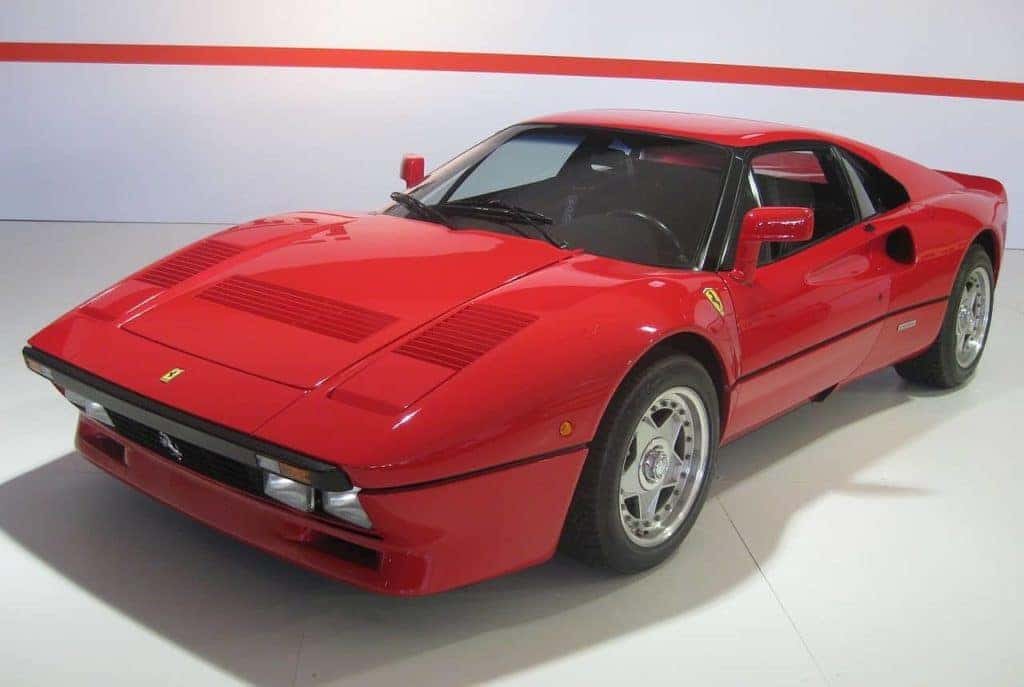
The name is a specification, not a marketing exercise. 288 is 2.8 liters and 8 cylinders.
GTO stands for Gran Turismo Omologata — “grand touring, homologated.” Ferrari had used that badge exactly once before, on the 1962 250 GTO, and does not reuse it casually.
The displacement itself came from the rulebook. Group B applied a 1.4x equivalency factor to turbocharged engines against a 4,000cc class ceiling, so Ferrari worked backward: 2,855cc × 1.4 = 3,997cc. Three cubic centimeters under the limit.
The 288 GTO exists because of a rulebook. Group B required 200 road-legal cars to homologate a competition version, and Ferrari announced the project in September 1983 with exactly that number in mind.
After a series of fatalities in Group B rallying, the FIA suspended the category before the circuit series Ferrari was aiming at ever ran. Ferrari was left with the most advanced road car it had ever built and nowhere to race it.
That turned out to be the more valuable outcome. The 288 GTO proved there was a market for a Ferrari costing several times what a 308 did — the commercial premise behind every flagship Ferrari since.
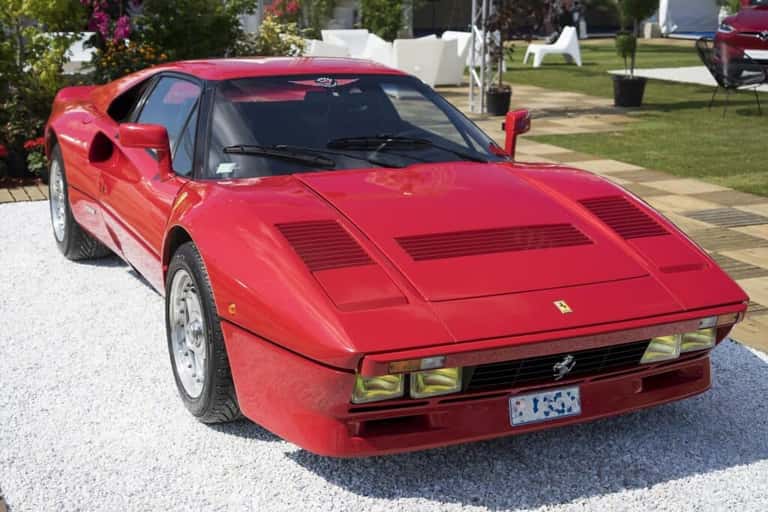
The 288 GTO looks like a widened 308. Mechanically it shares almost nothing with one, and the reason is a single decision: Ferrari rotated the engine.
The 308 GTB carried its V8 transversely, sitting across the car. The 288 GTO turned it 90 degrees to sit longitudinally, making room for two turbochargers and their intercoolers behind the cabin.
Rotating the engine is also why the car is longer. The wheelbase grew from the 308’s 92.1 inches to 96.5 inches — a 4.3-inch stretch the widened bodywork exists to disguise. Ferrari kept that exact wheelbase for the F40.
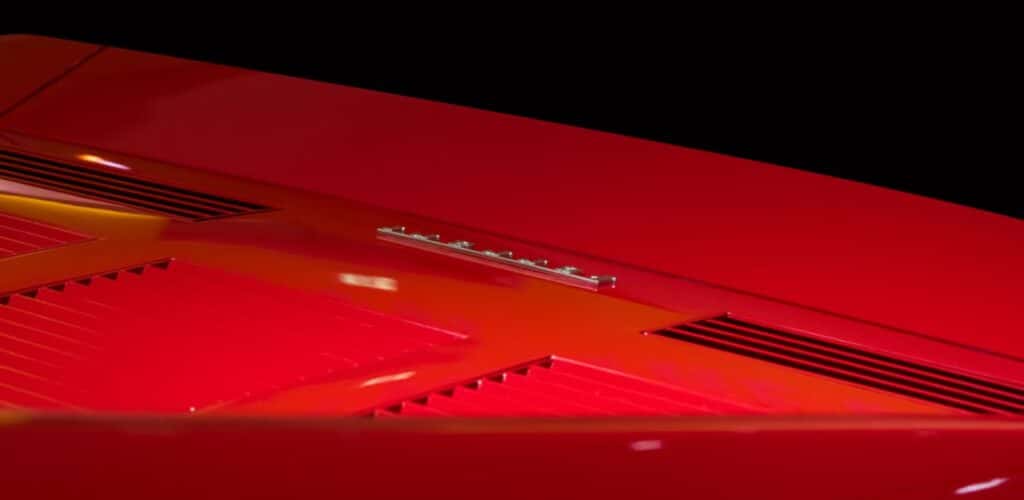
Pininfarina designed the 288 GTO under Leonardo Fioravanti, and almost nothing on the body is decorative.
Unlike the F40 that followed, the 288 GTO was not stripped out. Air conditioning, power windows, and leather trim were all fitted. It is the last Ferrari flagship built to be driven somewhere rather than endured.
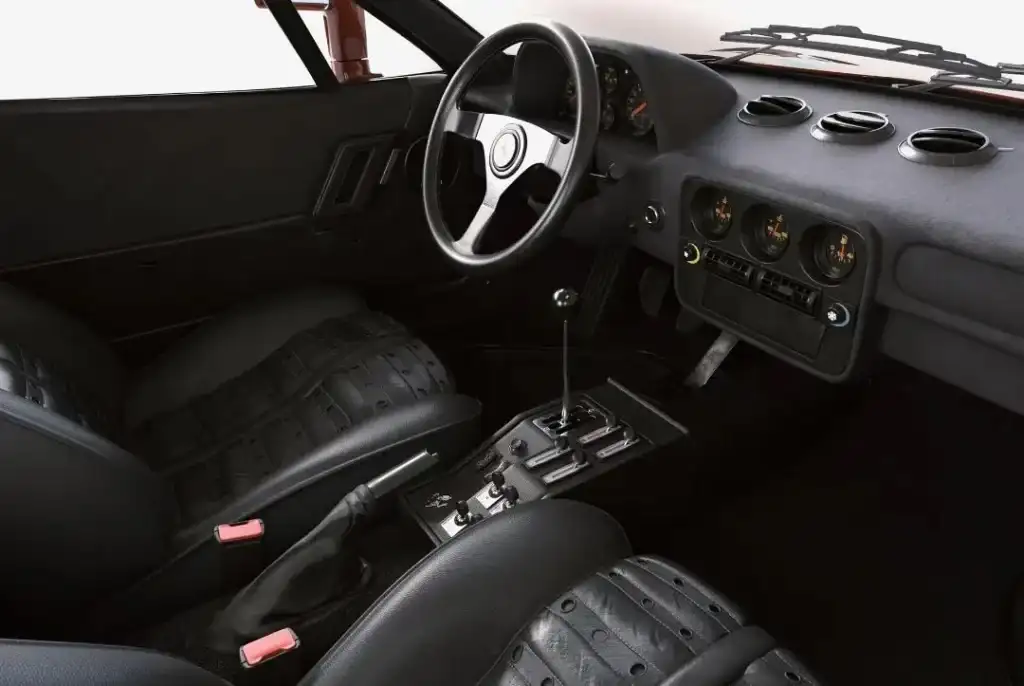
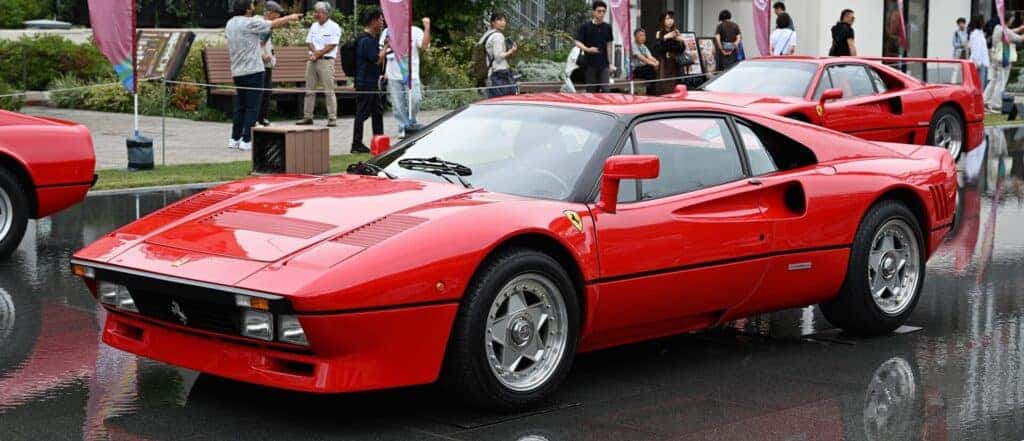
Ferrari built 272 Ferrari 288 GTOs between 1984 and 1987 — 200 to satisfy Group B homologation, and 72 more for clients Ferrari did not want to turn away.
| Variant | Production |
|---|---|
| Pre-Production Prototypes | 7 |
| Group B Homologation Requirement | 200 |
| additional client cars | 72 |
| 288 GTO Evoluzione | 5 |
| Total Road Cars | 272 |
Seven pre-production prototypes came first. Production formally ended in October 1985, with one final car completed in March 1986 — widely documented as having been built for Niki Lauda.
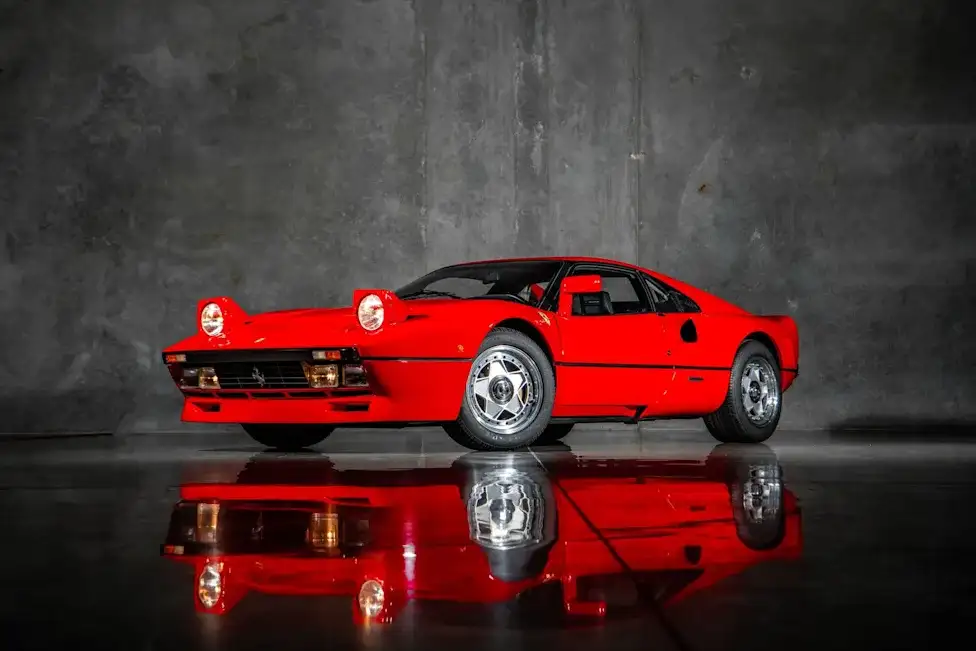
The Ferrari 288 GTO Evoluzione was the Group B race car the 288 GTO was built to homologate — and the direct engineering prototype for the F40.
Ferrari reworked the same 2,855cc V8 with larger turbochargers, revised cams, and far more boost, producing roughly 650 horsepower. Stripped to a tubular frame, aluminum floor, and full composite body, it weighed about 2,072 lb — some 500 lb less than the road car with 250 more horsepower.
When Group B was cancelled, Ferrari wound the boost back down and put the result into a road car. That car was the Ferrari F40.
For most of its life the 288 GTO traded at a discount to the F40 — the sensible one, the softer one, the one that wasn’t on anybody’s bedroom wall.
That has fully reversed. The F40 is rare; the 288 GTO is nearly five times rarer. Only four 288 GTOs had ever passed $5 million at auction before 2026. Three cleared $8.5 million in the eight months since January.
| Category | Value |
|---|---|
| Original List Price (1984) | ~$83,400 |
| Driver-Grade Cars | ~$6,000,000 – $7,000,000 |
| Typical Market Range (2026) | ~$7,000,000 – $9,000,000 |
| Exceptional Examples | ~$10,900,000 – $11,600,000 |
Highest 288 GTO Sale on Record
$11,555,000
A 958-mile 1985 car — chassis 99 of 272, and one of six or fewer sub-1,000-mile examples believed to survive — sold at RM Sotheby's Monterey in August 2026. Ferrari Classiche Red Book certified with matching-numbers engine and gearbox.
It surpassed the €9,117,500 (~$10.9M) paid at Gooding Christie's Paris in January 2026. The US record before Monterey was $8,525,000 at Mecum Kissimmee. Driver-grade cars remain well below: a 14,000-mile example traded at $6,825,000 in July 2026.
If you own a 288 GTO or another collector Ferrari, our specialists can value your car or discuss consignment.
Ferrari never federalized the 288 GTO. The entire run was built to European specification, with no official North American allocation.
A handful were federalized individually by the North American importer. Everything else arrived grey-market — or never arrived at all. Some American buyers collected their cars in Maranello and left them in Europe on tourist plates.
Forty years later the problem solved itself. Under the 25-year rule, any 288 GTO can now be imported and registered in the US without an emissions or safety fight.
A 288 GTO is a 40-year-old turbocharged car with composite bodywork. It needs a specialist, not a general exotic shop.
Ferrari of Fort Lauderdale is a factory-authorized dealer with a dedicated vintage Ferrari service department and an on-site Ferrari Classiche program.
The 288 GTO started the lineage. The F40 is what happened when Ferrari stopped compromising, and the F50 is what happened when it went back to a V12.
| Feature | Ferrari 288 GTO (1984–1987) | Ferrari F40 (1987–1992) | Ferrari F50 (1995–1997) |
|---|---|---|---|
| Engine | 2.9L Twin-Turbo V8 (2,855 cc) | 2.9L Twin-Turbo V8 (2,936 cc) | 4.7L Naturally Aspirated V12 |
| Horsepower | 400 hp | 471 hp | 512 hp |
| Torque | 366 lb-ft | 426 lb-ft | 347 lb-ft |
| Transmission | 5-Speed Manual | 5-Speed Manual | 6-Speed Gated Manual |
| 0–60 mph | ~4.9 sec | ~4.1 sec | ~3.7 sec |
| Top Speed | 189 mph | 201 mph | 202 mph |
| Fiorano Lap | 1:36.0 | 1:29.6 | 1:27.0 |
| Production | 272 Units | 1,311 Units | 349 Units |
Scroll for more →
The F40 and F50 beat the 288 GTO on every number in that table. The F40 is still worth less — Ferrari built roughly one 288 GTO for every five F40s, and rarity has outrun performance.
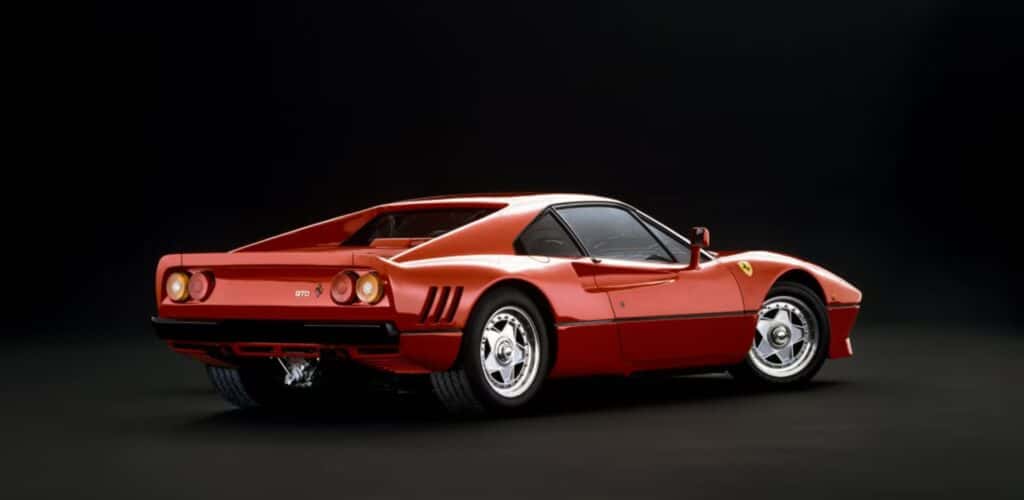
288 refers to its 2.8-liter displacement and eight cylinders. GTO stands for Gran Turismo Omologata — “grand touring, homologated” — a designation Ferrari had previously used only on the 1962 250 GTO. The 2,855cc displacement was chosen so Group B’s 1.4x turbo equivalency factor would land the car at 3,997cc, just under the class limit.
Most 288 GTOs trade between $7 million and $9 million, with driver-grade cars closer to $6.8 million. The auction record is $11,555,000, set at RM Sotheby’s Monterey in August 2026. Mileage, Ferrari Classiche certification, and original paint account for most of the spread.
Ferrari built 272 road cars between 1984 and 1987, following seven pre-production prototypes. Group B homologation required only 200; the extra 72 were built for client demand. Five Evoluzione prototypes were built separately.
Yes. It used a 2,855cc twin-turbocharged V8, making it the first turbocharged Ferrari road car. The F40 used a developed version of the same engine.
No. The resemblance is deliberate, but the 288 GTO rotated its V8 from transverse to longitudinal to fit the turbochargers, requiring a wheelbase 4.3 inches longer than the 308’s. It also used a different chassis, composite bodywork, and a bespoke engine.
The FIA suspended Group B circuit racing at the end of 1986 following fatalities in Group B rallying. Ferrari received homologation in June 1985, but the series the car was built for never ran. The program instead became the development path for the F40.
Every 288 GTO left the factory in Rosso Corsa. A number were later repainted, several by Pininfarina. Original-paint Rosso Corsa cars command a premium today.
Not officially. Ferrari never federalized the 288 GTO, so no US-specification version existed. A small number were individually federalized by the North American importer; most American cars arrived grey-market or later under the 25-year rule.
The Evoluzione was the Group B competition version, of which five were built. It produced roughly 650 horsepower, weighed about 2,072 lb, and was estimated to exceed 225 mph. Its engineering carried directly into the Ferrari F40.
No. The F40 makes 471 hp to the 288 GTO’s 400, reaches 60 mph roughly eight-tenths quicker, and tops out at 201 mph against 189. The 288 GTO is worth more anyway — it came first, and Ferrari built roughly one for every five F40s.
The 288 GTO wrote the formula every Ferrari flagship has followed since.
From 1960s competition berlinettas to the latest hybrid flagships, our model showcase covers the cars that built the marque.
Only 272 were built, none were federalized, and Classiche certification now separates the top of this market from the rest. Official Ferrari Dealer and Classiche-authorized workshop, serving collectors nationwide.