
Home > Blog > Ferrari Model Showcase > Ferrari LaFerrari: Specs, Value & The Blueprint for Modern Hypercars
Share this post:
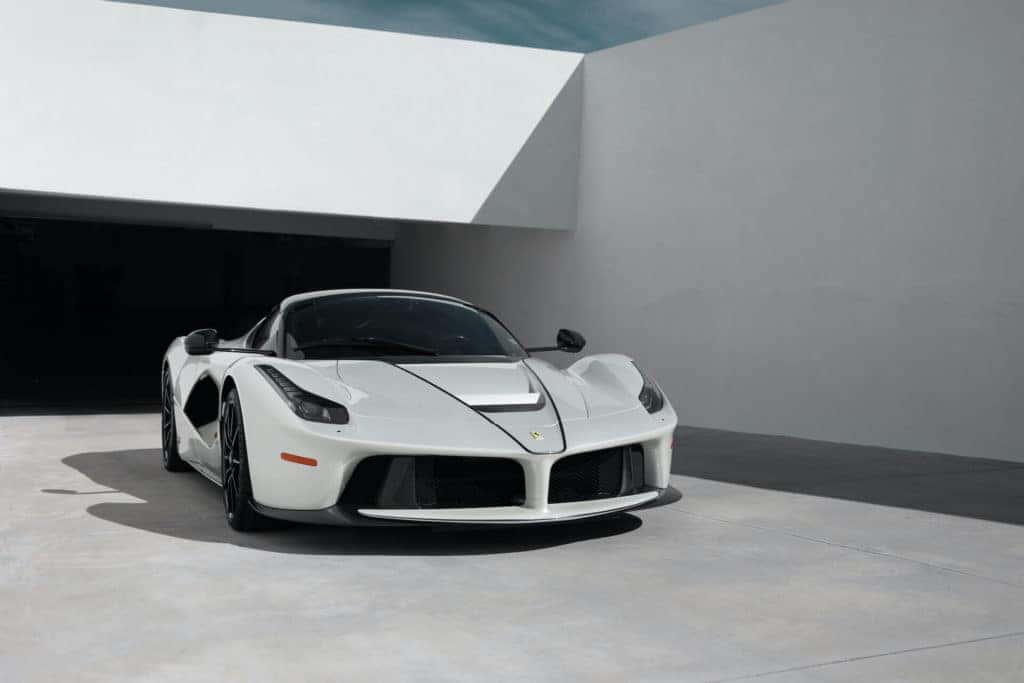
The Ferrari LaFerrari is a limited-production hybrid hypercar introduced in 2013 as the successor to the Ferrari Enzo. As Ferrari’s first hybrid halo car, it pairs a naturally aspirated 6.3-liter V12 with the HY-KERS system for a combined 950 hp — the fifth car in Ferrari’s Big 6 lineage that began with the 288 GTO.
It also marks an ending. The LaFerrari is the last Ferrari flagship built around a naturally aspirated engine. Its successor, the F80, runs a twin-turbo V6.
The LaFerrari paired Ferrari’s last naturally aspirated flagship V12 with an electric motor built to add power rather than save fuel. At launch it was the quickest road car Ferrari had ever produced.
| Category | Specification |
|---|---|
| Engine | 6.3L Naturally Aspirated Hybrid V12 |
| Horsepower | 950 hp Combined |
| Torque | 664 lb-ft |
| Transmission | 7-Speed Dual-Clutch |
| 0–60 mph | ~2.4 seconds |
| Top Speed | 217+ mph |
| Fiorano Lap | 1:19.7 |
| Curb Weight | 3,495 lb (1,585 kg) |
The LaFerrari rarely reaches the open market — only 710 were built, and allocation was invitation-only. Our specialists can help with sourcing inquiries.
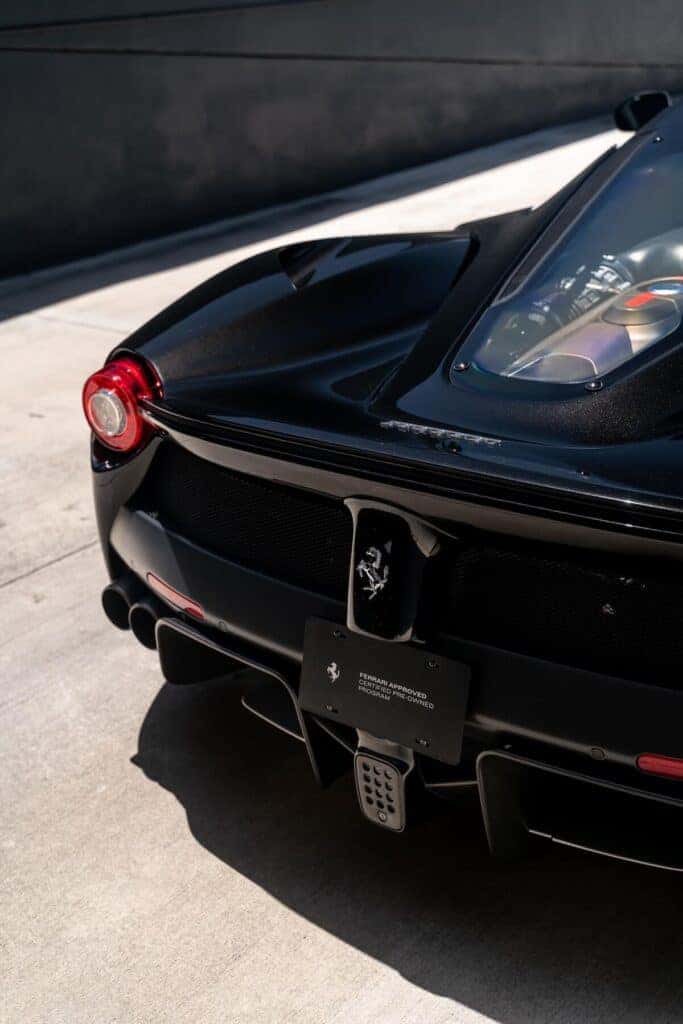
HY-KERS came out of Ferrari’s Formula 1 energy-recovery program, and the logic is inverted from every other hybrid on the road: it exists to add power, not to save fuel. There is no plug and no electric-only mode.
That architecture became Ferrari’s template. The hybrid lineage from LaFerrari to the F80 runs directly through this car, and the same performance-first thinking now reaches production models like the 296 GTB.
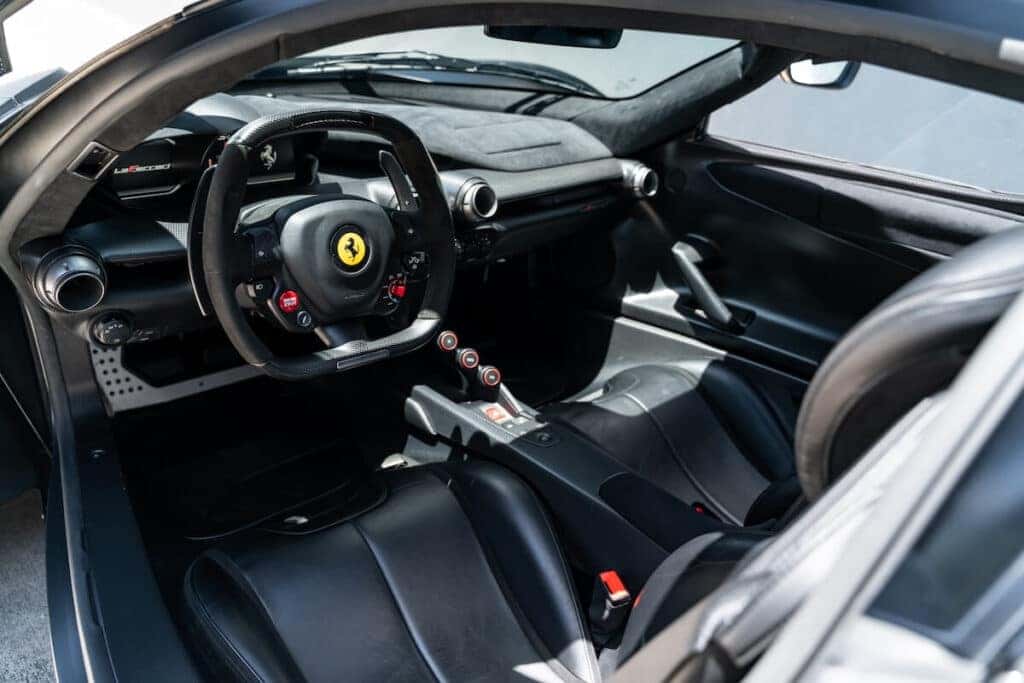
The LaFerrari was designed in-house under Flavio Manzoni — the first Ferrari flagship not styled by Pininfarina — with cockpit input from Fernando Alonso and Felipe Massa.
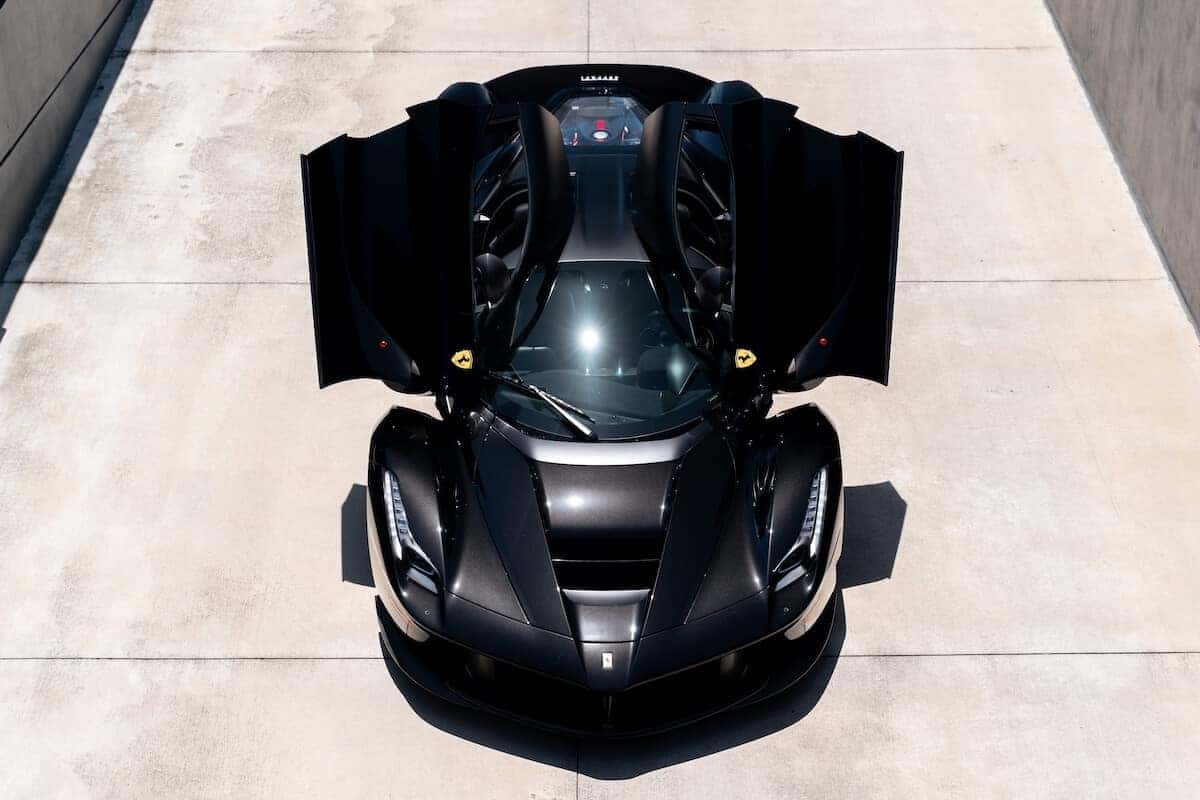
Outside, active aero deploys front and rear, and the butterfly doors open up and forward.
Ferrari capped the coupe at 499 — one fewer than the 500 Enzos built — to make it rarer than the car it replaced. It then built a 500th for charity. Allocation was invitation-only. Ferrari selected from existing multi-car collectors, and no amount of money bought a place in line.
| Variant | Units Produced |
|---|---|
| LaFerrari Coupe | 499 |
| Charity Coupe | 1 |
| LaFerrari Aperta | 209 |
| Charity Aperta | 1 |
| Total Production | 710 |
Two cars were built outside the standard run. The 500th coupe supported 2016 Italy earthquake relief. The final Aperta benefited Save the Children.
Both wore unique liveries, neither was available to order, and both sit well above market value as a result.
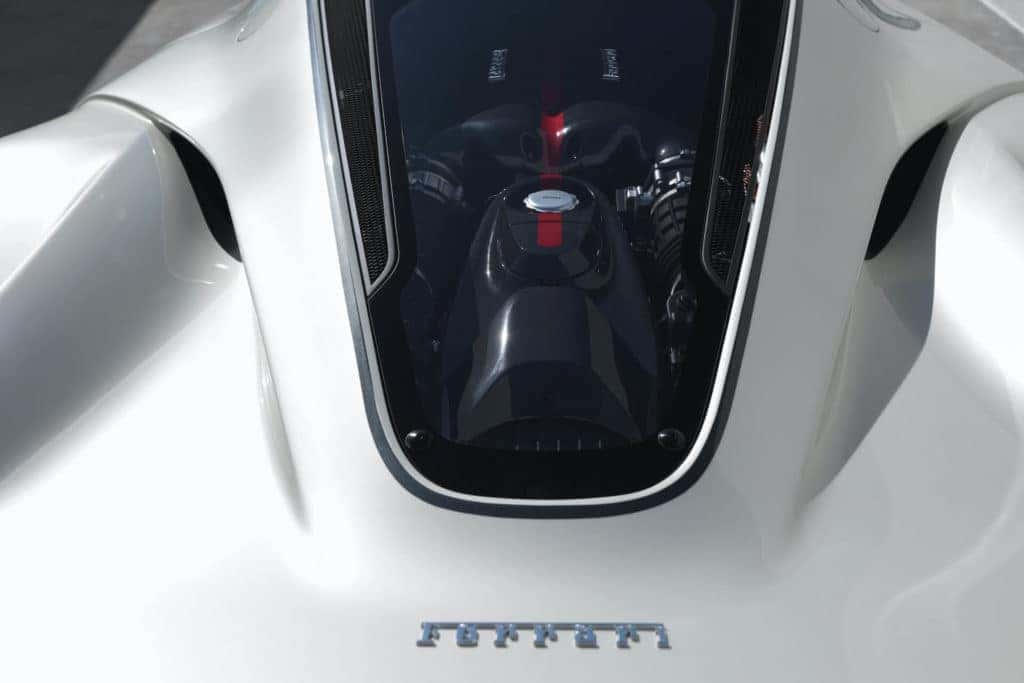
The Aperta arrived in 2016 for Ferrari’s 70th anniversary — an open-top LaFerrari with a removable carbon roof and a soft-top option.
It was not a roof-off conversion. Performance is essentially identical to the coupe, and with 210 built against the coupe’s 500, the Aperta is the rarer and consistently more valuable car.
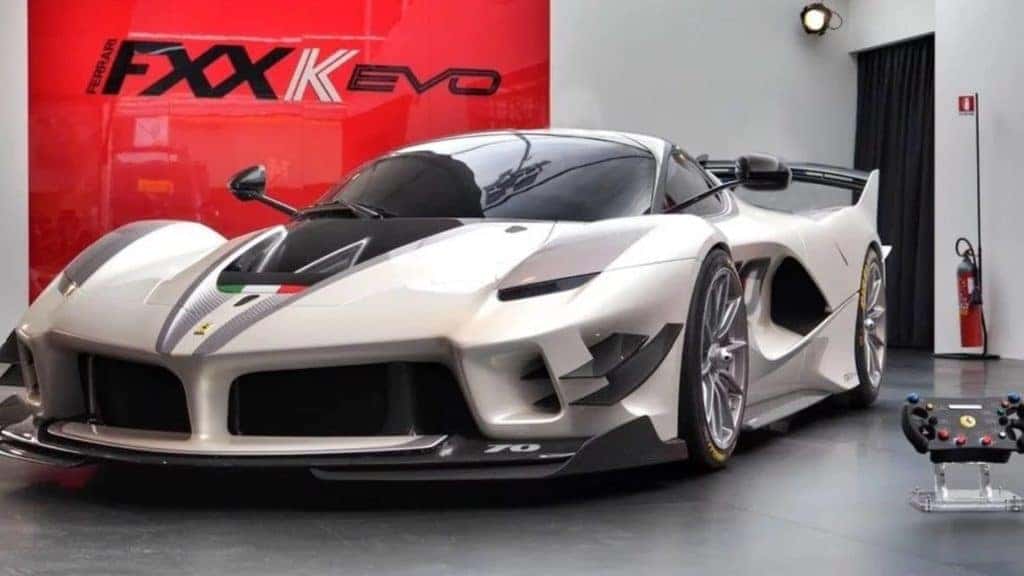
Ferrari turned the LaFerrari into the FXX K in 2014 — a track-only car for the Corse Clienti programme, not road legal in any market.
The arrangement started with the Enzo-based FXX and continues today. A low-mileage FXX K sold for $4,281,250 in 2026, and an FXX K Evo for €5.18 million — track cars trading at coupe money despite never being road legal.
Coupes have appreciated roughly three to six times over original MSRP. Apertas have done better still.
Cars with original paint, factory-documented history, and low miles sit at the top; repainted or higher-mileage examples sit well below.
| Category | Value |
|---|---|
| Original MSRP — Coupe (2013) | ~$1,400,000 |
| Original MSRP — Aperta (2016) | ~$2,200,000 |
| Coupe Market Range | ~$3,700,000 – $5,250,000 |
| Aperta Market Range | ~$5,400,000 – $6,700,000 |
| FXX K (track only) | ~$4,300,000+ |
Highest LaFerrari Sale on Record
$11,000,000
A Giallo Triplo Strato 2017 Aperta showing 96 miles, sold from the Phil Bachman Collection at Mecum Kissimmee in January 2026. It surpassed the previous benchmark of $9.98 million — the one-off charity Aperta built for Ferrari's 70th anniversary and auctioned for Save the Children in 2017.
Neither charity car is a market comparable — the 500th coupe and the final Aperta were one-off builds sold at benefit auctions. Original paint, documented history, and low mileage set where a standard car lands within its range.
If you own a LaFerrari or another collector Ferrari, our specialists can value your car or discuss consignment.
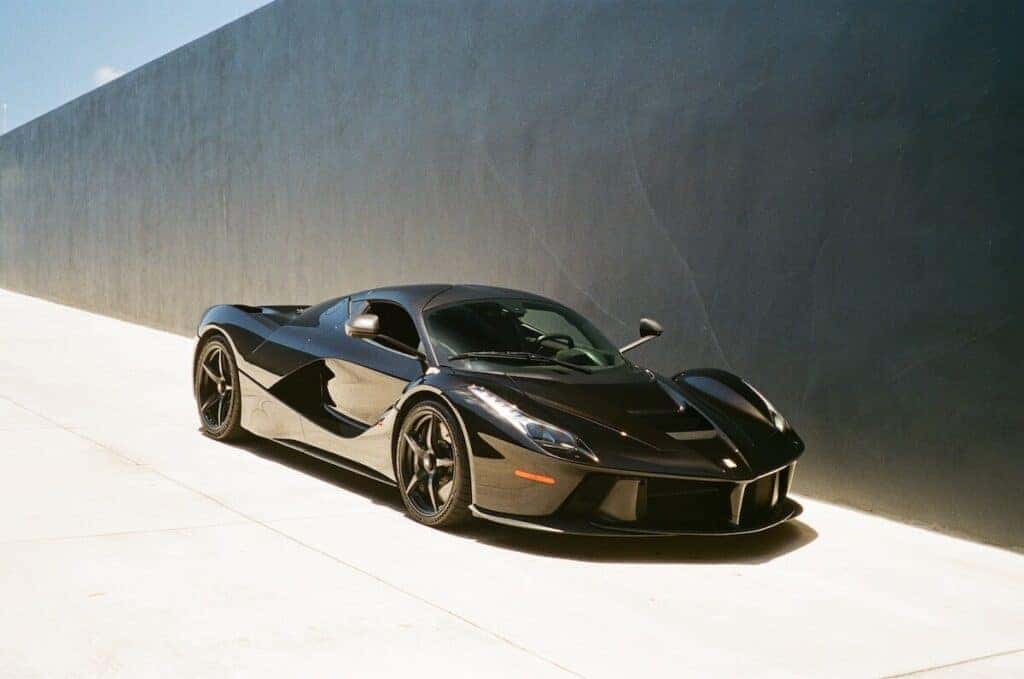
The LaFerrari sits at the hinge point of Ferrari’s flagship history — the last naturally aspirated one, and the first electrified one.
| Feature | Ferrari Enzo (2002–2004) | Ferrari LaFerrari (2013–2016) | Ferrari F80 (2025+) |
|---|---|---|---|
| Engine | 6.0L Naturally Aspirated V12 | 6.3L Naturally Aspirated Hybrid V12 | 3.0L Twin-Turbo Hybrid V6 |
| Horsepower | 651 hp | 950 hp | 1,184 hp |
| Electrification | None | Hybrid Assist | Hybrid e-4WD |
| Transmission | 6-Speed Automated Manual | 7-Speed Dual-Clutch | 8-Speed Dual-Clutch |
| 0–60 mph | ~3.3 sec | ~2.4 sec | ~2.1 sec |
| Top Speed | 217 mph | 217+ mph | 217+ mph |
| Fiorano Lap | 1:24.9 | 1:19.7 | 1:15.3 |
| Production | 400 Units | 710 Units | 799 Units |
Scroll for more →
The Enzo is a car people buy for its engine. The F80 is a lap-time instrument. The LaFerrari is the only one that is both — and the last Ferrari flagship built around a naturally aspirated engine. Its successor, the F80, runs a twin-turbo V6.
Most LaFerrari coupes trade between roughly $3.7 million and $5.25 million, with Apertas running $5.4 million to $6.7 million. The record is $11 million, set by a 96-mile Aperta in January 2026.
Ferrari produced 499 LaFerrari coupes and 210 LaFerrari Apertas, including special charity examples.
Yes. The LaFerrari was Ferrari’s first hybrid production hypercar, combining a naturally aspirated V12 with Ferrari’s HY-KERS electric motor system.
“LaFerrari” translates directly to “The Ferrari” in Italian, emphasizing its role as Ferrari’s ultimate flagship model at launch.
Yes. The LaFerrari accelerates significantly quicker than the Enzo thanks to its hybrid system and increased power output, reaching 0–60 mph in roughly 2.4 seconds.
The LaFerrari uses a naturally aspirated 6.3-liter V12 paired with an electric motor, producing a combined 950 horsepower.
The LaFerrari was designed in-house by Centro Stile Ferrari under Flavio Manzoni, making it Ferrari’s first flagship model not designed by Pininfarina.
Yes. The Holy Trinity refers to the three hybrid hypercars launched within months of each other in 2013 — the LaFerrari, the McLaren P1, and the Porsche 918 Spyder. All three paired combustion engines with electric assist, and they are still compared as a group.
The LaFerrari Aperta is the open-top version of the LaFerrari, introduced in 2016 for Ferrari’s 70th anniversary. It retained the same 950-horsepower hybrid powertrain while adding removable roof options and revised aerodynamic engineering.
No. Unlike some modern plug-in hybrids, the LaFerrari does not feature a fully electric driving mode. Its HY-KERS system works alongside the V12 engine strictly to enhance performance.
Yes. Ferrari developed dedicated factory support programs for the LaFerrari’s HY-KERS battery system, including the Ferrari Power extended warranty program for long-term hybrid system maintenance.
The LaFerrari sits at the hinge point of Ferrari’s flagship history.
From 1960s competition berlinettas to the latest hybrid flagships, our model showcase covers the cars that built the marque.
Allocation was invitation-only and only 710 were built, so these move by relationship rather than listing. Official Ferrari Dealer and authorized workshop, serving collectors nationwide.