
Home > Blog > Ferrari Model Showcase > Ferrari Testarossa: The Definitive 1980s Supercar Icon
Share this post:
The Ferrari Testarossa is a mid-engine flat-12 supercar produced from 1984 to 1991 as the successor to the 512 BBi. Its wide side strakes, 390-hp flat-12, and starring role in Miami Vice made it the defining Ferrari of the 1980s.
The name has since returned. Ferrari revived it in 2025 for the 849 Testarossa, a twin-turbo hybrid V8 with no mechanical relationship to the original. This page covers the 1984–1996 flat-12 cars.
| Category | Specification |
|---|---|
| Engine | 4.9L (4,943 cc) Tipo F113 180° V12 |
| Horsepower | 390 hp |
| Torque | 361 lb-ft |
| Transmission | 5-Speed Manual |
| 0–60 mph | ~5.2 seconds |
| Top Speed | 180 mph |
The Ferrari Testarossa has a top speed of approximately 180 mph and can accelerate from 0 to 60 mph in around 5.2 seconds. While not as fast as modern Ferraris, its performance was highly competitive for its era.
Ferrari called it a flat-12. Strictly, it isn’t one.
A true boxer gives every piston its own crankpin, so opposing pistons move outward together. The Testarossa’s share crankpins — making this a 180-degree V12. Ferrari used the flat-12 name anyway, and it stuck.
The distinction shaped the whole car.
Laying the V12 flat put the engine's mass lower in the chassis than any upright V12 could manage.
The engine was too wide for a nose-mounted cooling package, so the radiators moved to the flanks.
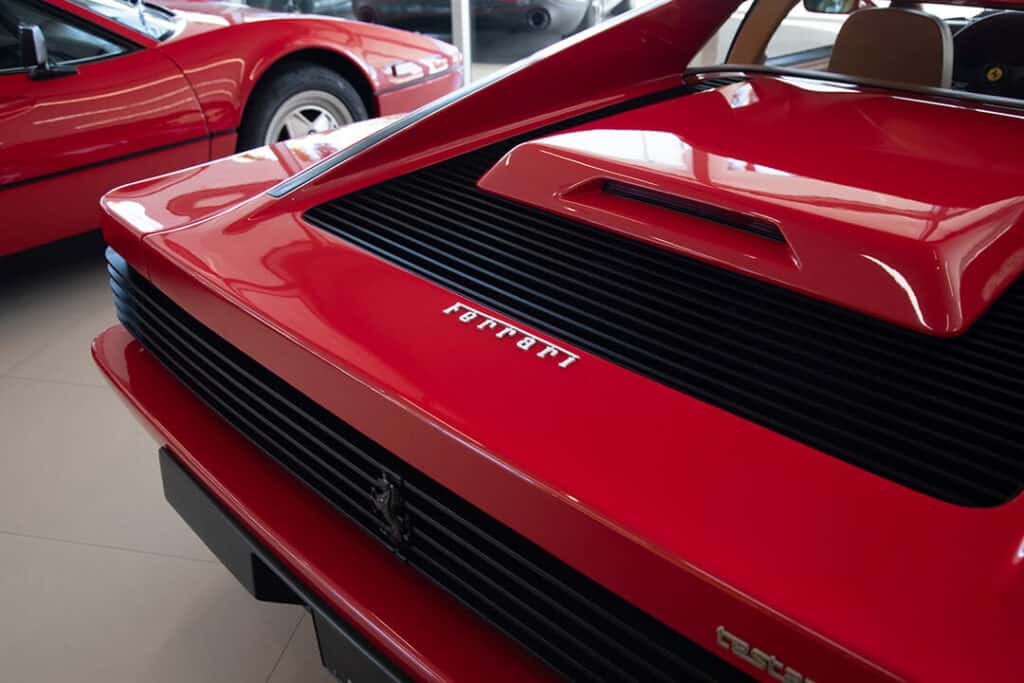
Air had to reach those side radiators. The strakes are ducting first and styling second — and they made the car unmistakable.
The Testarossa was the last mass-produced mid-engine 12-cylinder Ferrari. Nothing after it used this layout.
The car in the first two seasons wasn’t a Ferrari. It was a black replica built on a Corvette chassis, and Ferrari objected to it appearing on screen.
The resolution became television history. Ferrari supplied two white Testarossas for the 1986 season, the replica was written out, and the white car became one of the most recognizable vehicles of the decade — which is why white examples still draw a premium at auction.
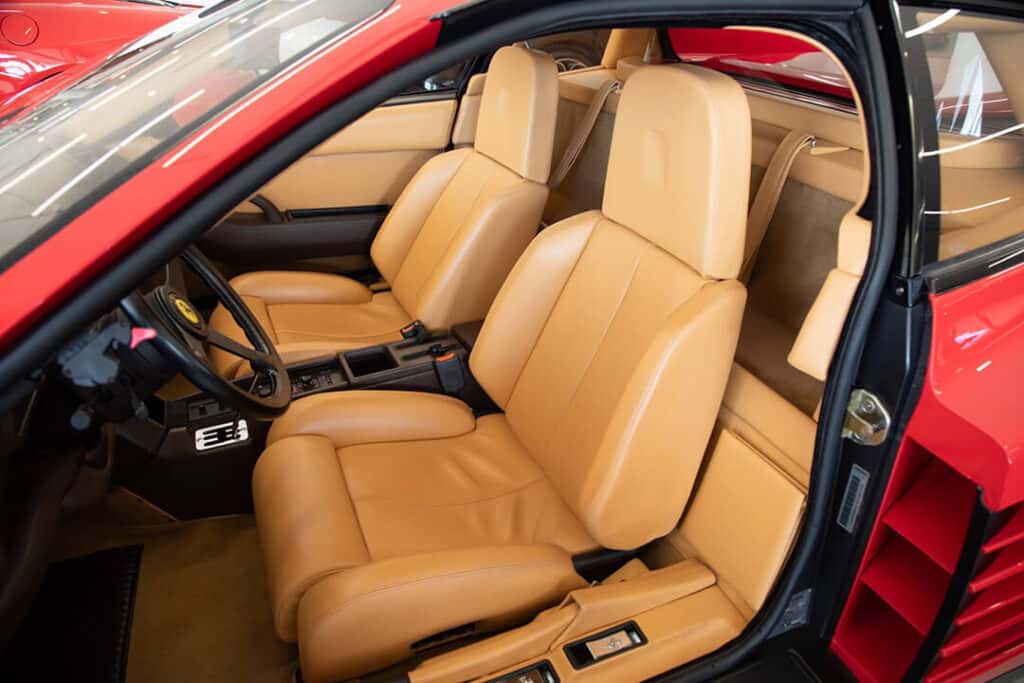
The Ferrari Testarossa combined supercar performance with a more spacious grand touring cabin than many earlier Ferraris, balancing high-speed capability with long-distance comfort.
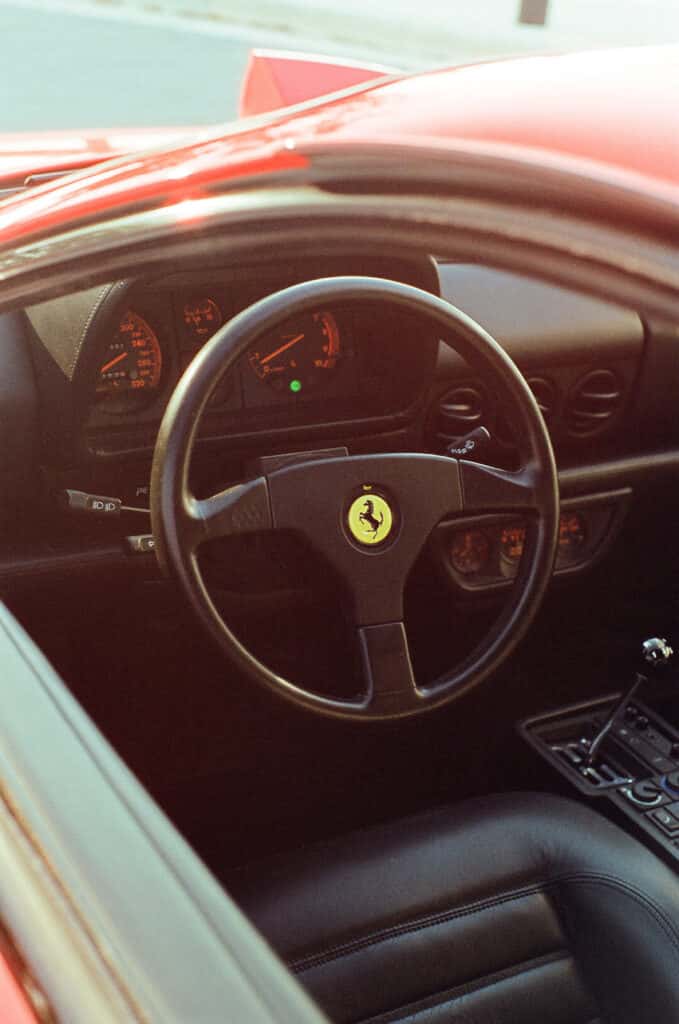
The mechanical, analog driving experience feels distinctly different from modern performance cars.
Designed by Diego Ottina, Leonardo Fioravanti, Ian Cameron, Guido Campoli, and Emanuele Nicosia at Pininfarina (with Pietro Camardella later leading the 512 TR’s styling), the Testarossa’s signature side strakes were designed to channel air toward side-mounted radiators — necessary because the flat-12 engine was wider than in previous Ferrari models — while meeting international safety regulations.
The Testarossa family was one of Ferrari’s most successful 12-cylinder lineups, with nearly 10,000 cars produced from 1984 to 1996. Production was spread across three generations, each with different levels of rarity today.
| Model | Years | Units Produced |
|---|---|---|
| Testarossa | 1984–1991 | 7,177 |
| 512 TR | 1991–1994 | 2,261 |
| F512 M | 1994–1996 | 501 |
| Total | 1984–1996 | ~9,939 |
The original Testarossa is the most common, while the F512 M is the rarest by a wide margin. Early single-mirror “Monospecchio” cars and other low-production variants are especially sought after by collectors today.
The 512 TR arrived in 1991 as a comprehensive revision rather than a facelift. Ferrari lowered the engine, revised the chassis, and reworked the intake and exhaust for 428 hp — a 38-hp gain over the original.
Most owners consider it the best-driving car of the three. It corrected the original’s heavy low-speed steering without losing the flat-12 character.
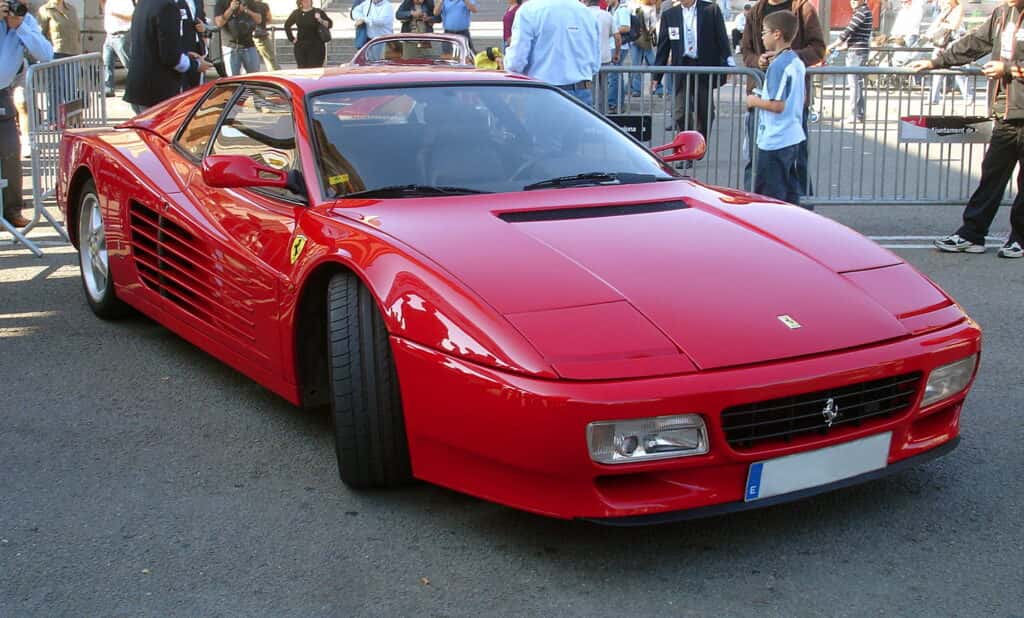
The F512 M — Modificata — closed the line in 1994. It is the last mid-engine production Ferrari built around the horizontally opposed 12-cylinder engine.
Rarity has made it the most valuable of the three by a wide margin. Read more in our F512 M model guide.
Ferrari built exactly one factory Testarossa Spider, delivered to Fiat chairman Gianni Agnelli in 1986. Every other open Testarossa is an aftermarket conversion, which makes factory provenance the deciding question on any open car offered for sale.
The earliest cars carry a single high-mounted door mirror — monospecchio — and single-nut center-lock wheels, or monodado. Roughly the first 1,000 cars wore both. They are the most sought-after original Testarossas today.
Looking for a Testarossa?
With nearly 10,000 built across the three generations, the Testarossa family is among the more attainable classic Ferraris to own — and one we see regularly.
View Pre-Owned Inventory
Ferrari Testarossa values have risen in recent years, with prices varying by model, condition, mileage, and service history. Well-kept examples are often far more desirable than neglected cars with deferred maintenance.
| Model | Market Range (2026) |
|---|---|
| Testarossa | ~$130,000 – $200,000 |
| Testarossa — Monospecchio / Classiche | ~$250,000 – $350,000 |
| 512 TR | ~$250,000 – $775,000 |
| F512 M | ~$400,000 – $1,210,000 |
Highest Price Paid — Testarossa Family
$2,226,875
A 1993 Ferrari 512 TR Spider, sold in November 2023. Among closed cars, the record belongs to a 1995 F512 M at $1,210,000 in January 2026 — the strongest result the platform has produced.
Figures are drawn from public auction results across the family. Condition, mileage, and service history set where a given car lands within its band.
Our factory-trained technicians handle engine-out service and Ferrari Classiche certification for period cars. If you own one, our specialists can value your car or discuss consignment.
The Testarossa family evolved significantly over time, with each version offering a different balance of analog character, performance, and collectibility.
| Model | Personality | Horsepower | Top Speed | Best For |
|---|---|---|---|---|
| Testarossa | Original icon | 385–390 hp | 180 mph | 1980s collectors |
| 512 TR | Driver’s choice | 428 hp | 195 mph | Performance enthusiasts |
| F512 M | Rare finale | 440 hp | 196 mph | Serious collectors |
The original Testarossa is the most iconic, while the 512 TR delivers sharper performance and the F512 M offers the rarest final evolution of the platform.
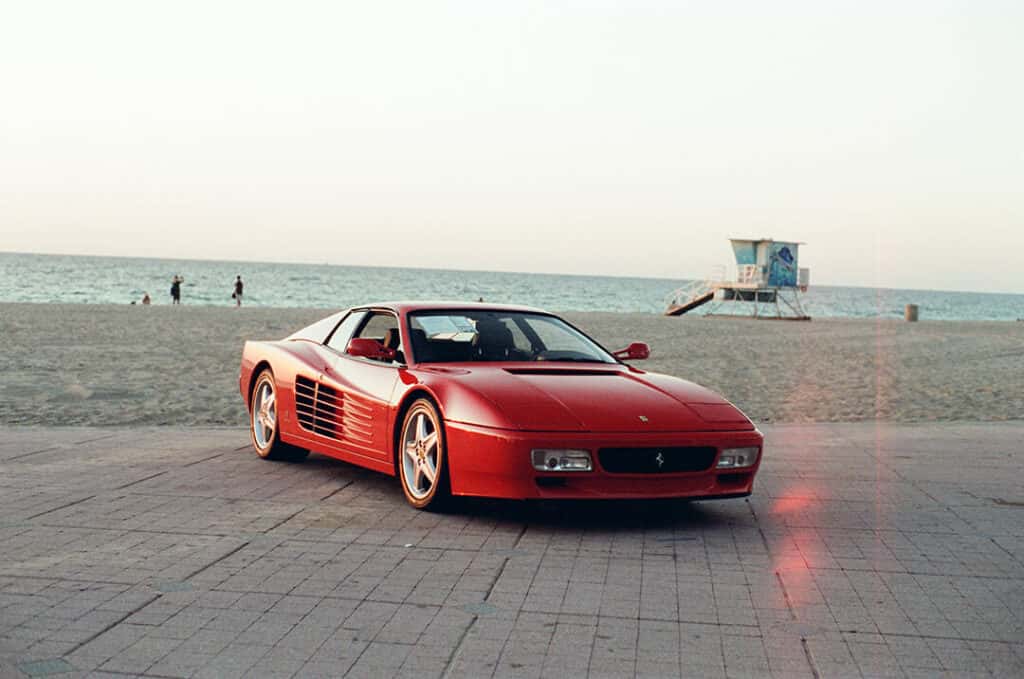
“Testarossa” translates to “red head” in Italian, referring to the red-painted camshaft covers on its flat-12 engine — a nod to Ferrari’s Testa Rossa racing cars of the 1950s, whose name it revived.
Prices range from about $140,000 for a standard Testarossa up to $900,000+ for a rare F512 M, depending on condition and mileage.
The Testarossa is the original 1980s icon, the 512 TR adds more power and sharper handling, and the F512 M is the rarest and most refined final version.
Nearly 10,000 combined — 7,177 Testarossas, 2,261 512 TRs, and 501 F512 Ms.
Only by name. The 849 Testarossa is a 2025 twin-turbo hybrid V8, while the original was a naturally aspirated flat-12 built from 1984 to 1991. They share no mechanical architecture.
No. Opposing cylinders share crankpins, which makes it a 180-degree V12 rather than a true horizontally opposed engine. Ferrari marketed it as a flat-12 regardless.
The earliest cars used a single high-mounted door mirror, which collectors call monospecchio. Roughly the first 1,000 cars had it, and they carry a premium today.
The Testarossa closed one chapter and its name opened another.
From 1960s competition berlinettas to the latest hybrid flagships, our model showcase covers the cars that built the marque.
Every flat-12 needs an engine-out cam-belt major — the service that sets what a car is worth. Official Ferrari Dealer and Classiche-authorized workshop, serving collectors nationwide.