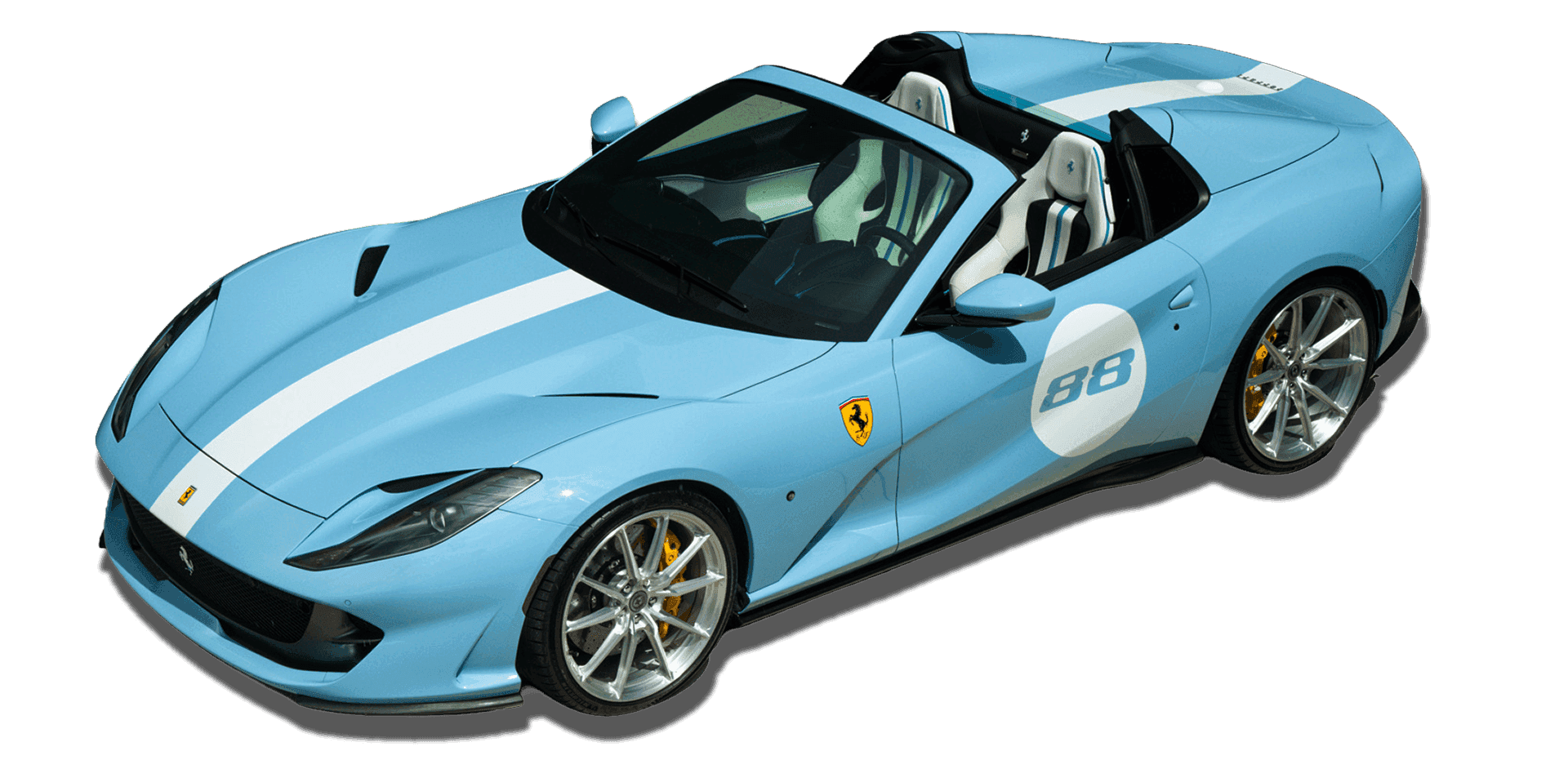
800 cv makes it the most powerful production convertible on the market
1
Design
A v12 Spider 50 Years After
Engine
V 12
Specific Output
0cv/l
0-100 km/h
0 sec
Maximum power
0 cv
718 Nm of torque guarantees impressive acceleration virtually on a par with that of the 812 Superfast while the heady 8900 rpm rev limit means that sporty driving is undiminished.
The shape of the torque curve reveals that torque distribution was not sacrificed to boost power. A significant 80% of maximum torque is available at just 3500 rpm, improving both flexibility and pick-up at lower revs.
2
Engine
HEAR THE V12
What is the Sound of Freedom?
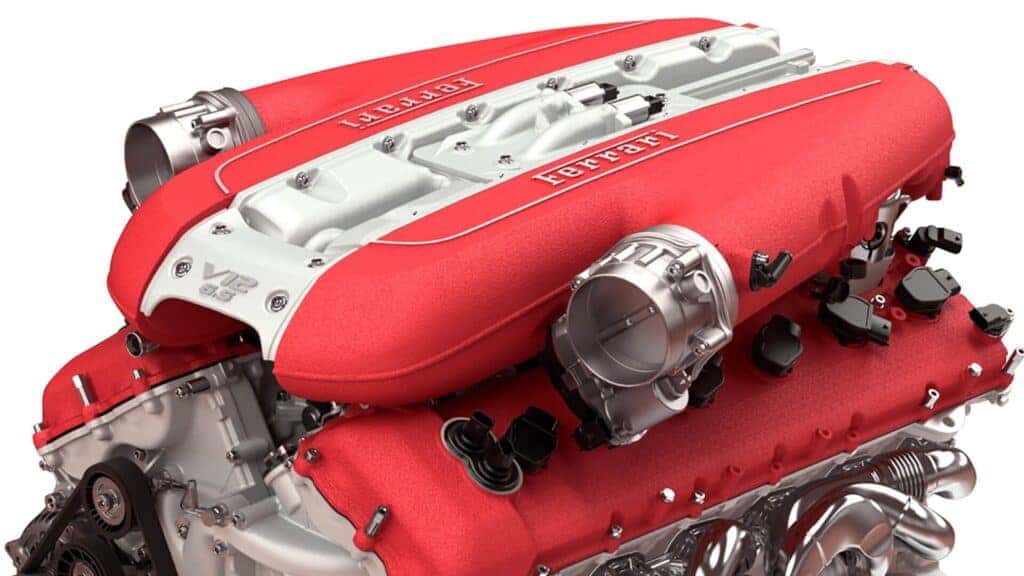
The heart of the 812 GTS, a 6.5-litre V12 that delivers 789 horsepower and an unforgettable soundtrack all the way to 8,900 rpm.
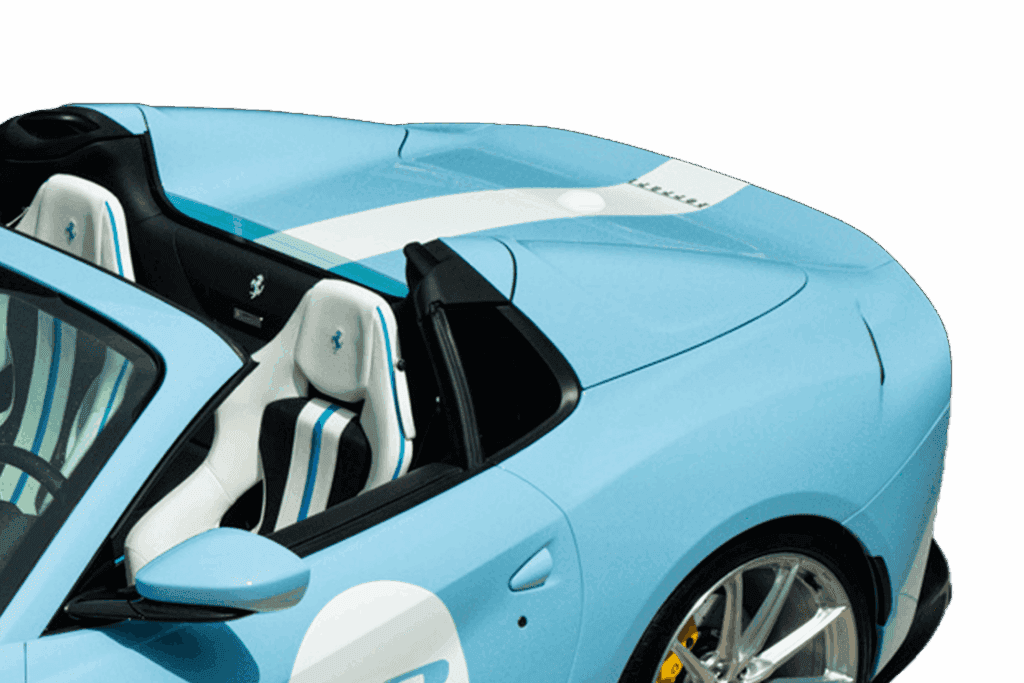
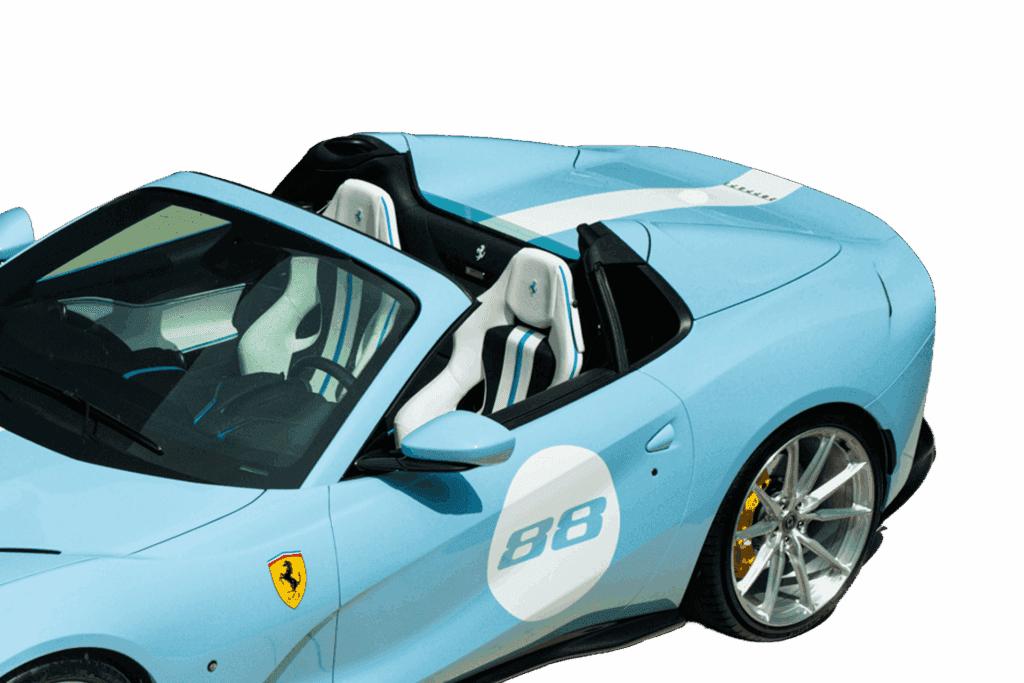
The starting point for the 812 GTS design was to remain as faithful as possible to the 812 Superfast’s signature styling. The Ferrari Styling Centre’s meticulous crafting of the tonneau area, with its twin buttresses flowing back from the cabin, has integrated the retractable hard top seamlessly with the rest of the car. That achievement is all the more remarkable because the RHT stows without sacrificing the luggage space of the berlinetta. The front-mid V12 thus remains the star of the show, its long bonnet and sculpted lines on full display whether the RHT is deployed or retracted.
THE COCKPIT
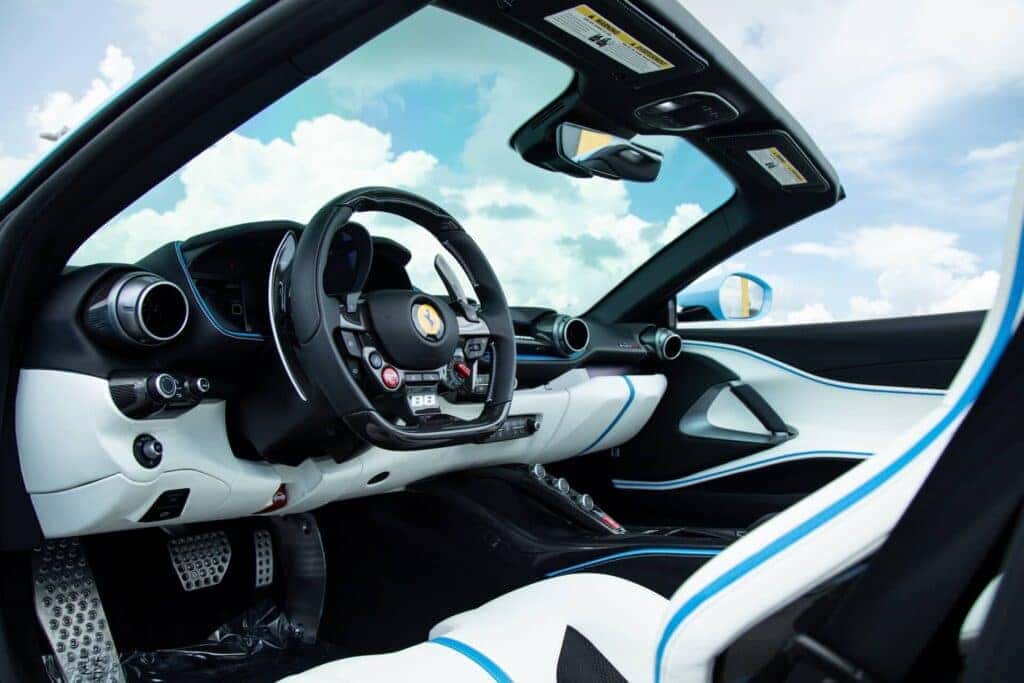
Inside, the cabin follows Ferrari’s racing-bred “eyes on the road, hands on the steering wheel” approach, which guides both its layout and its design. Everything is arranged around the driver, with the most important controls always close at hand.
At the heart of the instrument panel sits a classic analogue rev counter, with a configurable TFT screen on either side showing vehicle data, navigation and infotainment. True to Ferrari’s Formula 1 heritage, the steering wheel houses the manettino, engine start button, indicators and lights, keeping the driver’s hands where they belong. For the passenger, an optional dashboard display brings them into the action with live readouts of speed, revs and more.
The central bridge carries simple buttons for reverse, automatic mode and launch control, while shifts through the F1 dual-clutch gearbox are made using the paddles mounted behind the wheel.
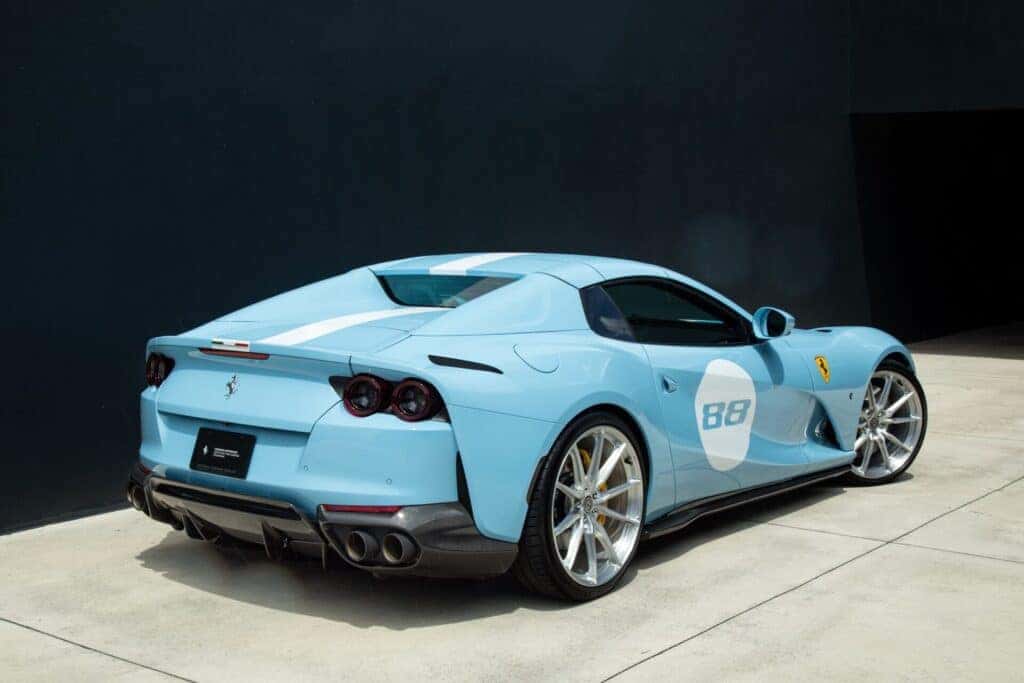
On the spider version of the 812 Superfast, the entire rear of the car – roof, tonneau cover and luggage compartment – has been redesigned. The idea was to lend the car a new blend of sleekness and balance, thanks to two buttresses beneath which the roof movement mechanism is stowed. The buttresses were designed to visually embody a sense of forward thrust and lend the side windows a signature look that would set the spider apart from the berlinetta. When the top is dropped, the roof panels disappear beneath the aforementioned tonneau cover.
The Flanks
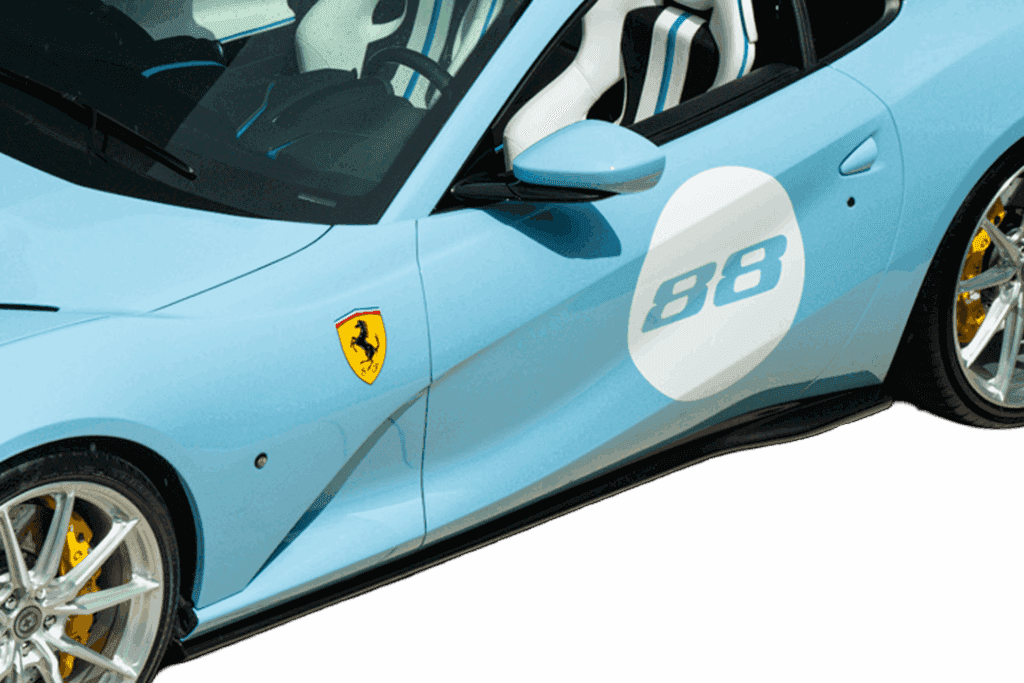
The draped design of the flanks visually shortens the tail and is characterised by sharply slanted crease lines and impressively muscular wheelarches that imbue it with the power and aggression warranted by its imposing V12.
Retractable hard top
The retractable hard top (RHT), which opens in just 14 seconds at speeds of up to 45 km/h, does not impinge upon the interior dimensions, thus maintaining the donor car’s roomy cockpit. The electric rear screen, which acts as a wind-stop, makes the car truly useable with the top down while, with the top up, it can be left open to allow occupants to continue to luxuriate in the naturally-aspirated V12’s unique soundtrack.
SUPErB SOUND
The 812 GTS is the spider version of the 812 Superfast, sharing its 6.5-litre V12, which delivers 800 cv at 8,500 rpm, the most powerful engine in its class. F1-derived technology, including 350 bar direct injection and variable-geometry intake tracts, gives strong pick-up even at low revs, while carefully calibrated Manettino settings keep power delivery smooth and progressive. Equal-length exhaust pipes bring out the engine’s combustion harmonics, creating a full-bodied V12 sound that’s best enjoyed with the roof down.
Front side
Meticulously detailed work went into guaranteeing an excellent standard of comfort on-board with the top down. There was huge focus on minimising both turbulence inside the cabin and aerodynamic noise to ensure occupants could converse undisturbed even at high speeds.
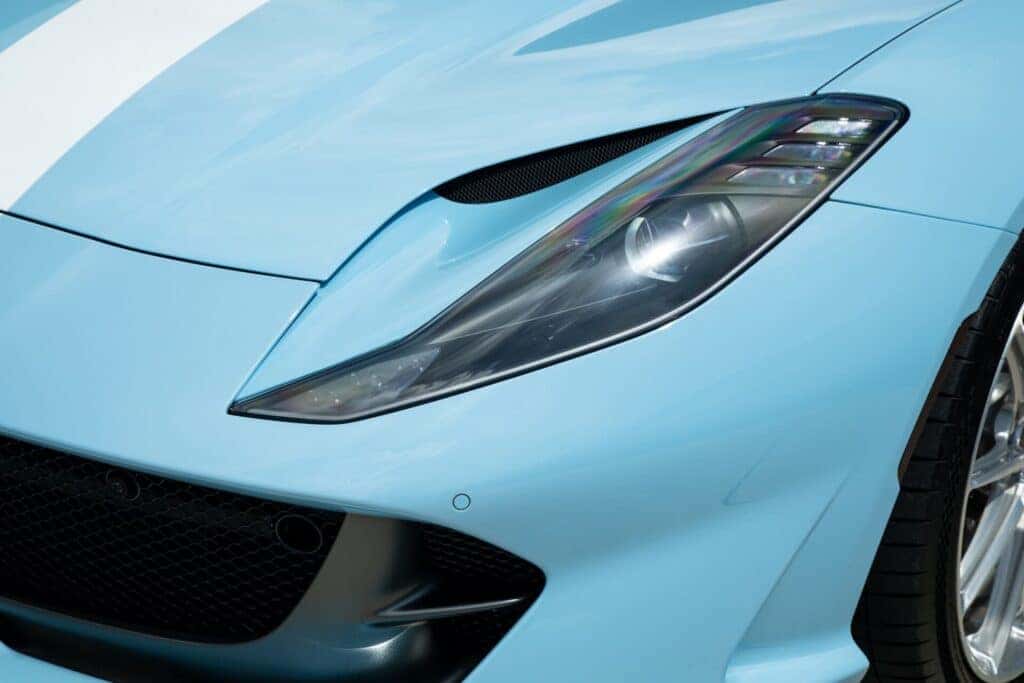
As with the LaFerrari Aperta, two small L-shaped flaps on the upper corners of the windscreen generate a coherent concentrated vortex that creates outwash in the velocity field immediately above the rear screen, thereby avoiding excess pressure behind the occupants’ heads.
Rear side
The 812 GTS posed two main aerodynamic challenges: matching the coupé’s performance with the top up while keeping passengers comfortable with the roof down.
Stowing the retractable hard top meant reshaping the rear of the car, which removed the 812 Superfast’s rear wheelarch by-pass duct and the downforce it created. To make up for it, the aerodynamicists carefully resculpted the tonneau cover and integrated a triplane wing into the rear diffuser to boost underbody suction.