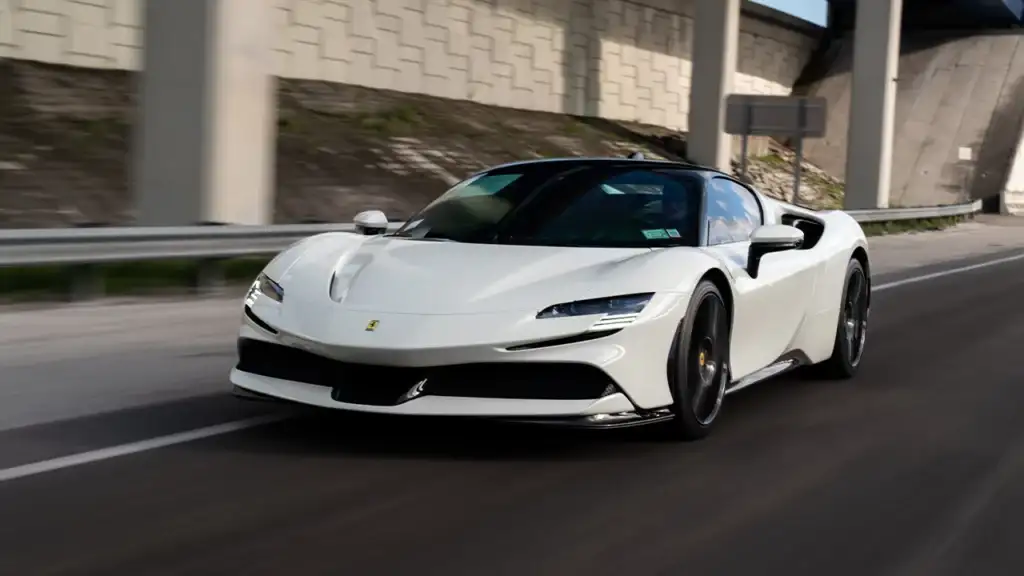
Ferrari Hybrid Cars: Every Hybrid Model, Explained
Home > Blog > Legacy > Ferrari Hybrid Cars: Every Hybrid Model, Explained
Author: Ferrari of Fort Lauderdale
June 8, 2026
Share this post:
Facebook
Twitter
LinkedIn
Email
Table of Contents
A Ferrari hybrid is a road car that pairs a Ferrari combustion engine with one or more electric motors to increase power, sharpen throttle response and, on turbocharged models, remove lag. Ferrari has built hybrids since the LaFerrari in 2013, and every mid-engine Ferrari sold today is electrified.
Ferrari has produced thirteen distinct hybrid variants across five model families. Below is every one of them, in order of debut.
A 499P-derived V6 and three motors make 1,184 hp, more than any V12 Ferrari built. All 799 sold out before the reveal.
How Ferrari Hybrid Technology Works
System
What It Does
Torque Infill
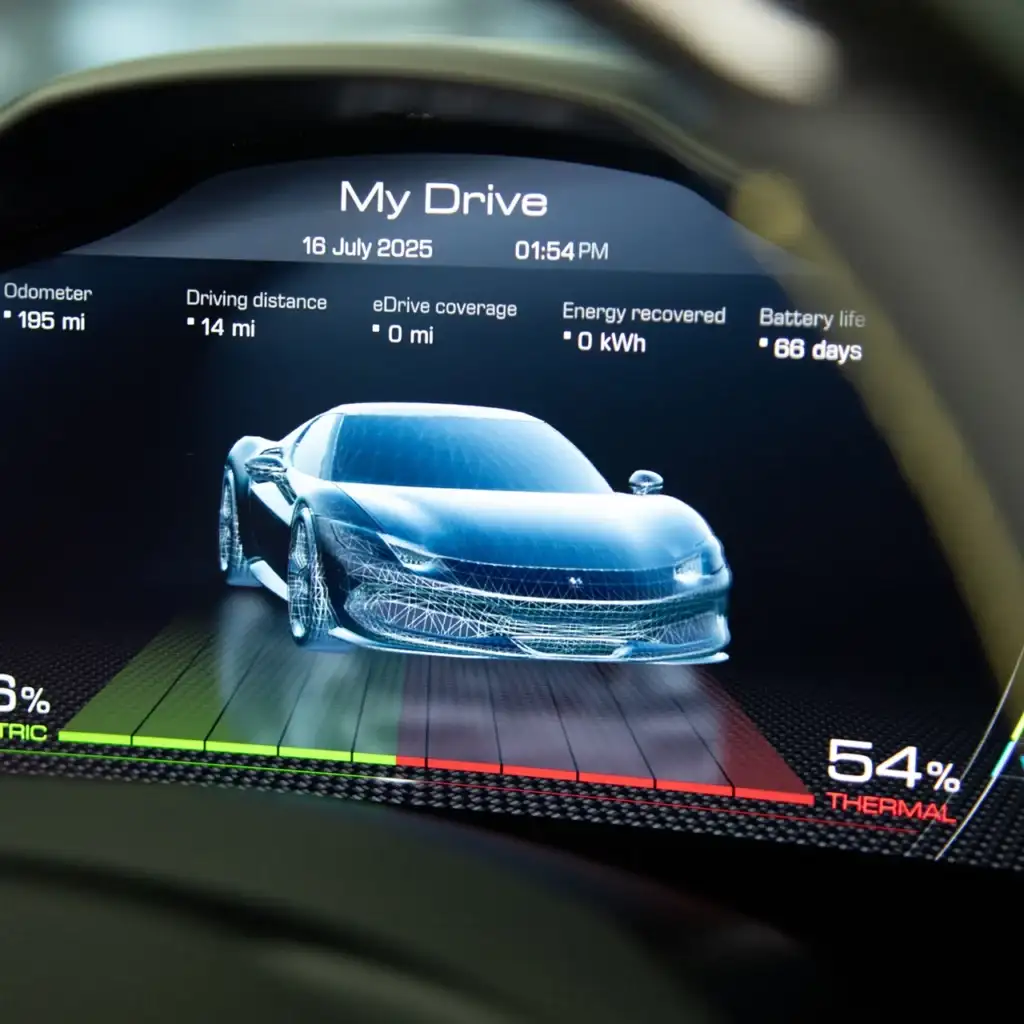
Electric motors supply torque before the turbos spool, removing lag.
Energy Recuperation
Braking energy is captured and redeployed as power.
e4WD
Front electric motors add traction and torque vectoring.
eManettino
Switches the system between eDrive, Hybrid, Performance and Qualify.
Performance first, efficiency second. Ferrari adopted these systems because they make the cars faster and more responsive. Better fuel economy is a side effect, not the goal.
It came from racing. The road-car systems descend from Formula 1 KERS, and the F80’s V6 comes from the 499P Le Mans Hypercar that won at Le Mans in 2023, 2024 and 2025.
The Ferrari 849 Testarossa
The 849 Testarossa succeeds the SF90 as Ferrari’s series-production hybrid flagship, rebuilding the plug-in system around a reworked 4.0L twin-turbo V8 and three electric motors.
Ferrari’s hybrid development continues along three lines: lighter high-voltage batteries, more sophisticated torque vectoring, and platforms shared with the brand’s first electric models. The Ferrari Luce marks the fully electric step, but hybrid V6, V8 and V12 powertrains remain central to the range rather than being phased out.
Thirteen Ferrari variants are hybrid: the LaFerrari, LaFerrari Aperta, SF90 Stradale, SF90 Spider, SF90 XX Stradale, SF90 XX Spider, 296 GTB, 296 GTS, 296 Speciale, 296 Speciale A, F80, 849 Testarossa and 849 Testarossa Spider.