The Sound of Ferrari: Engine Acoustics & Iconic Exhaust Notes
Home > Blog > Legacy > The Sound of Ferrari: Engine Acoustics & Iconic Exhaust Notes
Author: Ferrari of Fort Lauderdale
August 12, 2026
Share this post:
Facebook
Twitter
LinkedIn
Email
Table of Contents
Why Ferrari Engines Sound Different
Ferrari engine sound is not accidental—it is engineered through combustion rhythm, firing order, Formula 1 heritage, and decades of acoustic refinement.
Three specific engineering decisions produce the Ferrari sound. None of them are cosmetic.
01
Flat-Plane Crankshaft Design
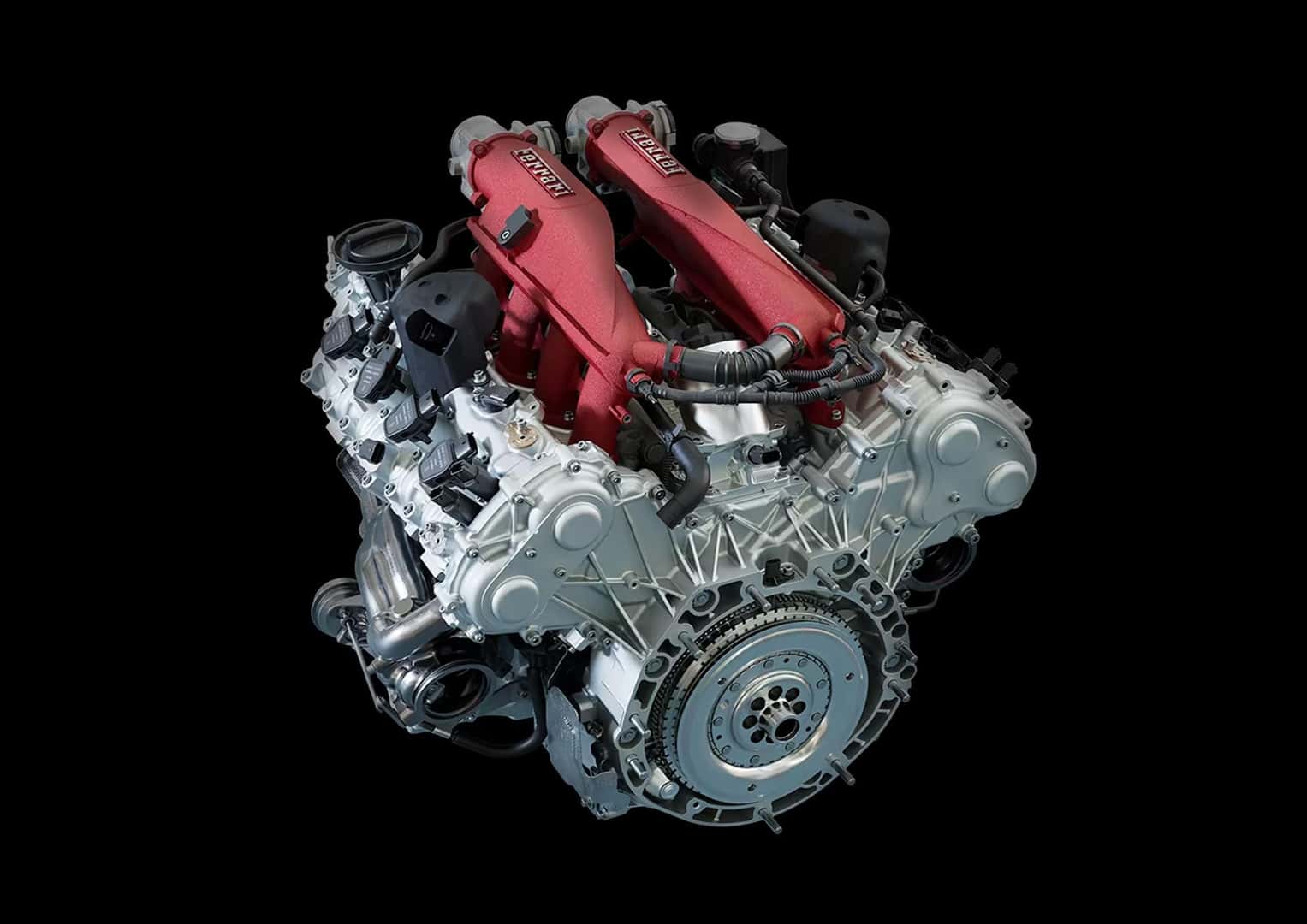
Ferrari V8s use a 180-degree crankshaft layout that allows faster engine speeds and produces a sharper exhaust cadence than traditional cross-plane V8s.
Most Ferrari engines rev beyond 8,000 RPM, generating the high-velocity mechanical wail associated with Ferrari Formula 1 racing.
Flat-Plane vs Cross-Plane: The Firing Order Explained
The difference between a Ferrari V8 and an American V8 comes down to the crankshaft — specifically, where its connecting rod journals sit.
A cross-plane crank spaces those journals 90 degrees apart. Two cylinders on the same bank fire back-to-back, so exhaust pulses reach the tailpipe unevenly. That’s the loping burble of a muscle car.
A flat-plane crank spaces them 180 degrees apart. Firing alternates between banks, and pulses leave each side at regular intervals. That evenness is the Ferrari sound.
Cross-Plane
Most American V8s
Journals at 90° intervals
Two same-bank cylinders fire consecutively
Uneven exhaust pulse spacing
Heavier counterweights, lower redline
Low-frequency burble
Flat-Plane
Ferrari V8s
Journals at 180° intervals
Firing alternates bank to bank
Evenly spaced exhaust pulses
Less rotating mass, higher redline
High-frequency wail
Ferrari Engine Sound Library & Profiles
V6: The Tenor
Dino 206 GT, Dino 246 GT/GTS, 296 GTB. A lighter, lyrical wail — intimate and musical, proof that Ferrari’s soul was never about cylinder count alone.
V8: The Bark
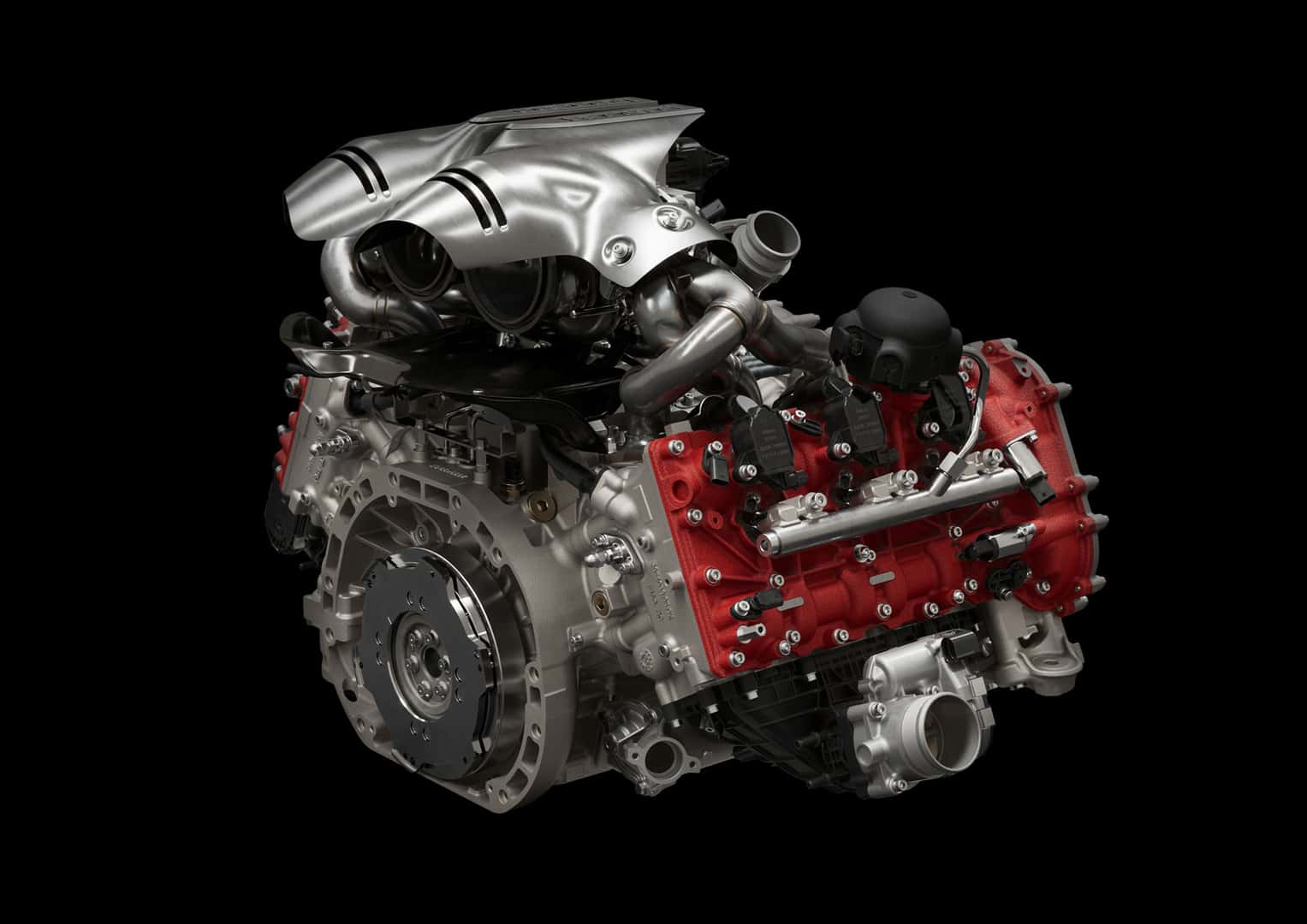
F40, Amalfi, 458 Italia, 488 Pista. Aggressive and metallic at idle, tearing into a rapid-fire scream under load.
V12: The Symphony
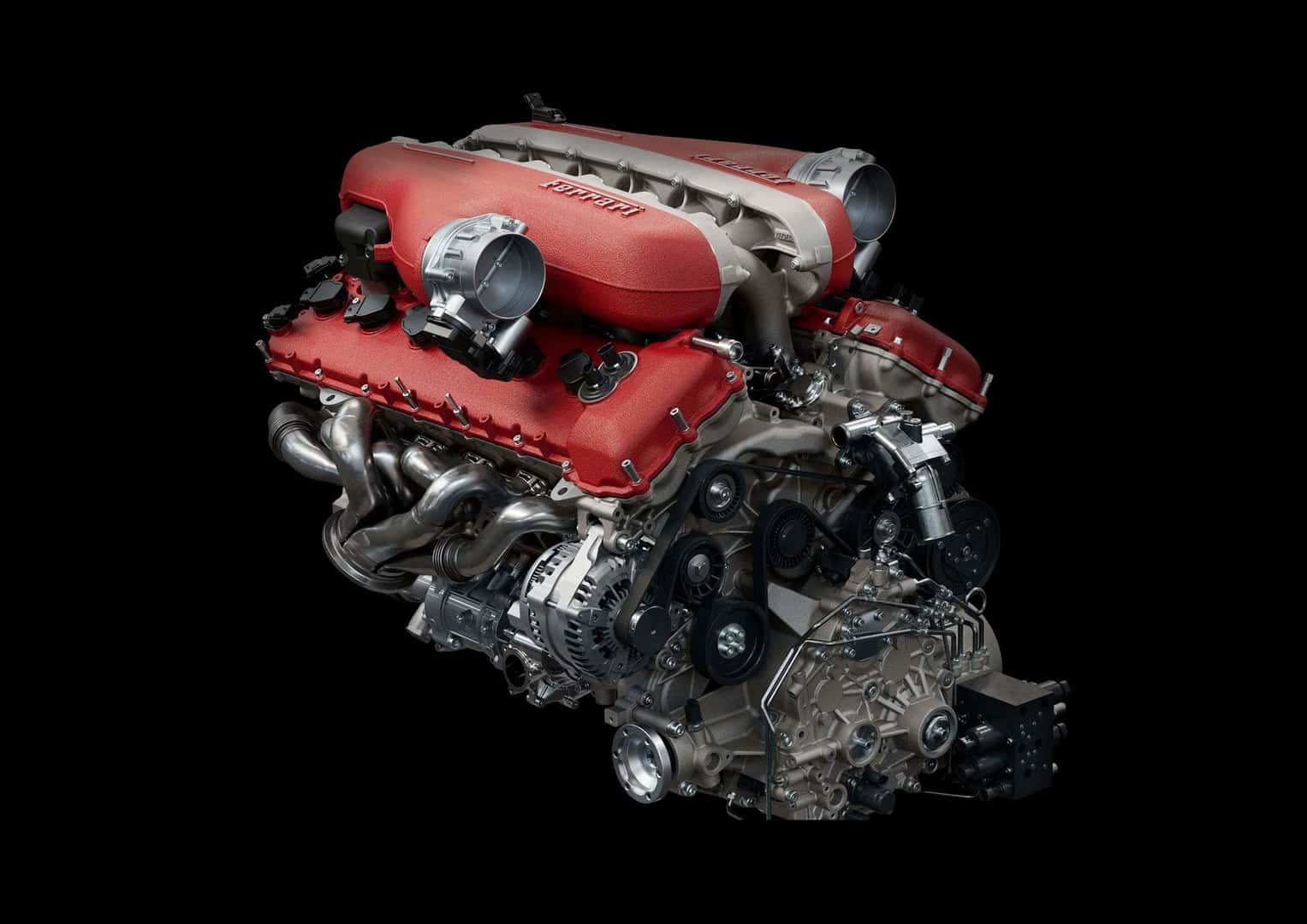
F50, Daytona SP3, 12Cilindri, Purosangue. A refined purr that builds into a piercing operatic crescendo past 9,000 RPM.
Hybrid: The Fusion
LaFerrari, 296 GTB, F80, 849 Testarossa. Electric torque and combustion acoustics blended so seamlessly you feel the transition before you hear it.
Previous
Next
The Evolution of Ferrari Sound
1940s – 2010s
Naturally Aspirated
No turbo choking the exhaust flow — the source of Ferrari's classic analog wail.
1980s, 2010s – Present
Turbocharged
Turbos return, but exhaust routing and wastegate tuning are engineered to keep the bark.
2010s – Present
Hybrid
Electric propulsion folds in without erasing the combustion signature.
2020s & Beyond
Electric
Real motor frequencies and chassis resonance stand in — no synthesized soundtrack.
The Turbocharger Problem
When Ferrari replaced the naturally aspirated 458 with the turbocharged 488 in 2015, the criticism was immediate — and it wasn’t about power. The 488 was quicker everywhere. It just didn’t sound like a 458.
The problem
A turbocharger sits in the exhaust stream and extracts energy from escaping gas.
Energy taken by the turbine no longer reaches the tailpipe as sound. Turbos also smooth the sharp pressure spikes that give a naturally aspirated engine its edge — muffling exactly the high-frequency content that defines the Ferrari note.
Wastegate routing engineered to preserve high-frequency content rather than damp it
Flat-plane crank kept — the firing order that creates the cadence never changed
Acoustic Tuning In The Cabin
Ferrari doesn’t pipe in a soundtrack. Every note you hear is mechanically sourced and engineered to reach you cleanly.
Sonal tubes — Patented mechanical tubes channel real intake and exhaust pressure waves from the engine bay directly into the cabin. No speakers, no digital processing.
Active bypass valves — The manettino controls exhaust valves that physically alter the sound path. Closed in Comfort for quiet cruising, wide open under throttle for a straight-pipe channel.
Cabin mapping — Rear glass angles and sound-dampening materials are tuned like an opera house — letting high-frequency engine notes fill the space without distortion.
Exhaust systems, valve actuation, and acoustic components are among the most commonly serviced systems on a Ferrari — and among the easiest to get wrong. Our factory-trained technicians handle powertrain and exhaust work on both current and period cars.
Ferrari engines use flat-plane crankshafts, equal-length exhaust manifolds, and extremely high engine speeds to create perfectly timed exhaust pulses and high-frequency acoustics.
Many enthusiasts consider naturally aspirated Ferrari V12 models—such as the Ferrari 12Cilindri—to produce the most dramatic and emotional exhaust notes.
Ferrari V12 engines combine high-RPM operation, symmetrical cylinder banking, and equal-length exhaust tuning to maximize acoustic projection and sound clarity.
Yes. Ferrari hybrid models preserve symmetrical combustion pulse timing and high-frequency engine acoustics while integrating electric torque delivery.
Future Ferrari EVs utilize genuine motor frequencies and structural chassis resonance to maintain authentic mechanical engagement without artificial digital soundtracks.
More Than Engine Noise
Sound is the one thing about a Ferrari you experience before you see it.
The engineering behind that sound is the same philosophy that’s driven Maranello since the first car left the factory — precision in everything, compromise in nothing.