
Home > Blog > Ferrari Service > Is Ferrari Maintenance Really Expensive?
Share this post:
Annual Ferrari maintenance typically costs $3,000–$8,000 after the included 7-year maintenance program expires. New models come with Ferrari Genuine Maintenance, covering all scheduled servicing for the first seven years at no additional cost.
The annual oil change accounts for $800–$1,500 of that. Beyond it, costs depend on the model, mileage, and whether wear items like tires or brake pads need replacement that year. Owners who follow a consistent service schedule typically spend far less than those who defer maintenance.
The most common service
A Ferrari oil change runs $800 to $1,500 at an authorized center, depending on model and fluid capacity. Inside the 7-Year Genuine Maintenance Program, it’s included at no cost.
If your car is still inside the 7-Year Genuine Maintenance Program, scheduled oil changes cost nothing. After that, budget $800 to $1,500 a year for the oil portion of your annual visit.

If you’re shopping pre-owned, the number that matters isn’t the factory maintenance program — it’s what you’ll actually pay out of pocket once that coverage has expired. Every model below has aged out of Ferrari’s 7-year program but remains a strong, active choice in the pre-owned and Certified Pre-Owned market.
If your Ferrari is still within its first seven years, these costs don't apply to you yet — here's what to expect once that coverage ends.
| Model | Annual Fluids & Service | Major Service / 5-Yr Event | Key Dealership Note |
|---|---|---|---|
| F430 / Spider | $1,500–$2,000 | No Belt (Timing Chain) | Highly sought-after modern classic. Check F1 clutch wear percentage and inspect for cracked exhaust manifolds. |
| 458 Italia / Spider | $1,500–$2,200 | No Belt (Timing Chain) | The last naturally aspirated V8. Completely out of the 7-year program; requires annual dual-clutch fluid checks. |
| 488 GTB / Spider | $1,500–$2,500 | No Belt (Timing Chain) | Early production years are now out of factory coverage. Turbo auxiliary cooling lines require monitoring. |
| California / California T | $1,200–$1,800 | No Belt (Timing Chain) | High-volume entry-level pre-owned choice. Early hardtop roof mechanisms and HELE systems need periodic calibration. |
| F12berlinetta | $2,500–$3,500 | No Belt (Timing Chain) | Out-of-warranty naturally aspirated V12. High fluid capacities spike standard service costs. Monitor rear main seal leaks. |
| GTC4Lusso / T | $2,000–$3,000 | No Belt (Timing Chain) | Popular local daily driver. The V12 variant features a highly complex dual-gearbox 4RM-S AWD system requiring specialized fluid flushes. |
These ranges assume annual servicing at an authorized center. Deferred maintenance, track use, or high mileage can push costs higher.
Most Ferrari maintenance costs stay predictable when service is performed on schedule. The expenses that catch owners off guard almost always trace back to one of these items:
| Cost Driver | Typical Range | What to Know |
|---|---|---|
| Timing belt replacement | $4,000–$6,000 | Applies to 360 and earlier. Every 5 years, requires engine removal. |
| Tire replacement | $1,200–$2,800 / set | Ferrari-homologated Pirelli P Zeros. Rears wear faster on mid-engine models. |
| Brake pad & rotor replacement | $8,000–$15,000 / full set | Carbon-ceramic systems last longer, cost more when replacement is due. |
| Clutch replacement | $5,000–$10,000 | F1 single-clutch models only. Wear depends heavily on driving style. |
| Lapsed service history | Varies | Gaps in authorized service can mean extra inspections and catch-up work. |
F430 and California models use timing chains and dual-clutch (DCT) transmissions respectively — neither carries the belt or F1-clutch costs listed above. See the model table for what applies to your specific Ferrari.
The common thread: almost every “surprise” cost is either a scheduled item that was deferred or a wear item that depends on how the car is driven.
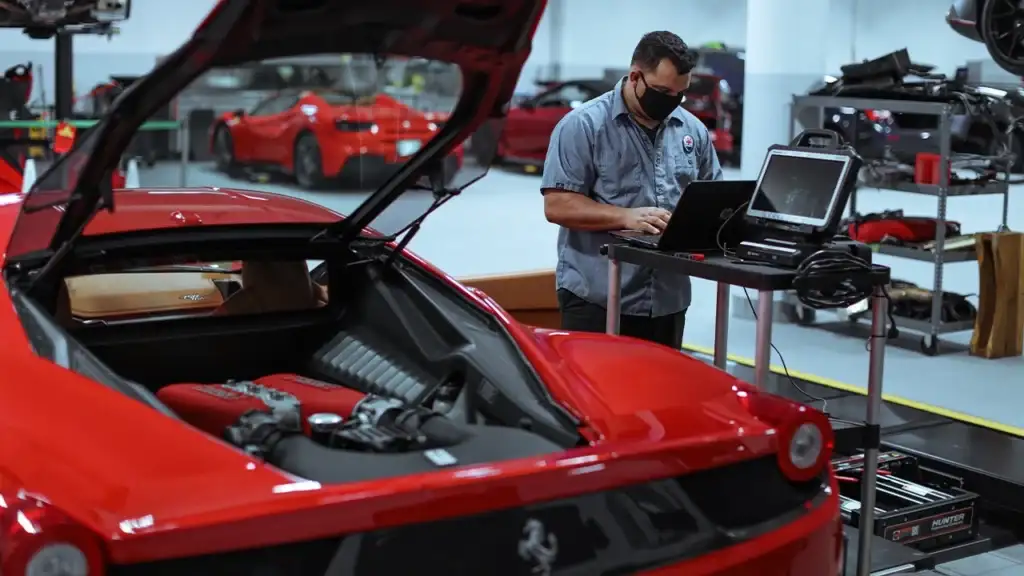
Ferrari maintenance runs on a calendar, not just an odometer. Fluids degrade and seals age over time — even on a car that barely gets driven.
Bottom line: a low-mileage Ferrari still needs its annual service. Skipping it because “it’s barely been driven” is a common — and costly — mistake.
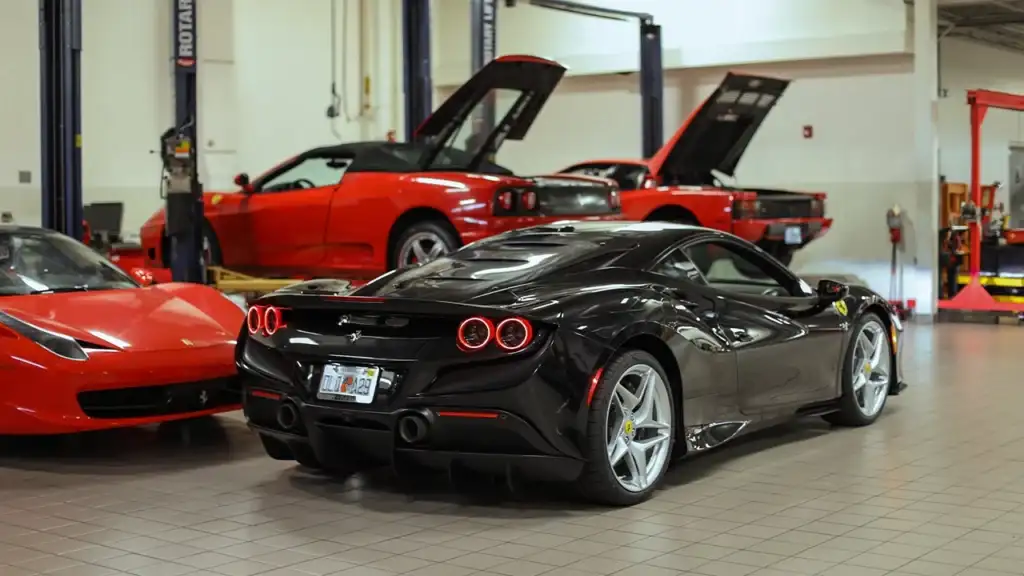
Ferrari maintenance is built around preventative service, factory diagnostics, fluid management, and documentation continuity.
| Service Area | What Is Performed |
|---|---|
| Engine oil & filter | Oil replacement using Ferrari-approved specifications |
| Brake system inspection | Wear measurement, fluid condition, hydraulic checks |
| Diagnostic scan & software | Factory diagnostics and software verification |
| Hybrid system evaluation | Battery and charging system analysis (applicable models) |
| Battery & electrical testing | Charging system and battery condition checks |
| Multi-point inspection | Tires, suspension, leaks, fluids, and overall system review |
For details on what a typical annual visit looks like, see our guide on what happens during a Ferrari annual service.
Hybrid models (SF90, 296 GTB, 296 GTS) add high-voltage battery oversight, software calibration, and electrical system monitoring to the standard service process.
Hybrid-specific service areas:
Despite the added complexity, hybrid Ferraris don’t necessarily cost more annually. The hybrid components are inspected as part of the standard visit, and the electric systems have fewer mechanical wear points. The main difference: hybrid service must be performed at an authorized center with certified equipment.
See the Hybrid Ferrari Recharge Guide for the full technical breakdown.
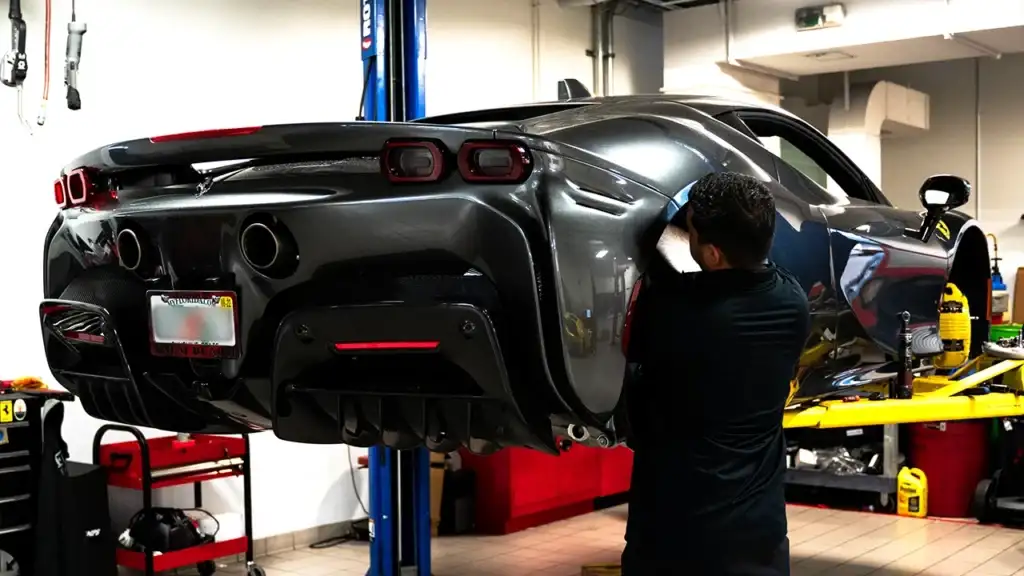
Authorized centers use factory diagnostics, proprietary software, and certified technicians. Independent shops may reduce short-term labor costs but lack access to Ferrari’s diagnostic and documentation infrastructure.
| Authorized Service | Independent Shops | |
|---|---|---|
| Diagnostics | Full factory access | Limited or none |
| Technicians | Ferrari-certified | Varies |
| Documentation | Global service record continuity | Independent records only |
| Hybrid capability | Full certification | Limited or none |
| Resale impact | Supports Ferrari Approved Pre-Owned | May affect provenance |
The cost difference between authorized and independent service is often recovered — and then some — at resale.
For a deeper comparison, see our guide to authorized service vs. independent shops.
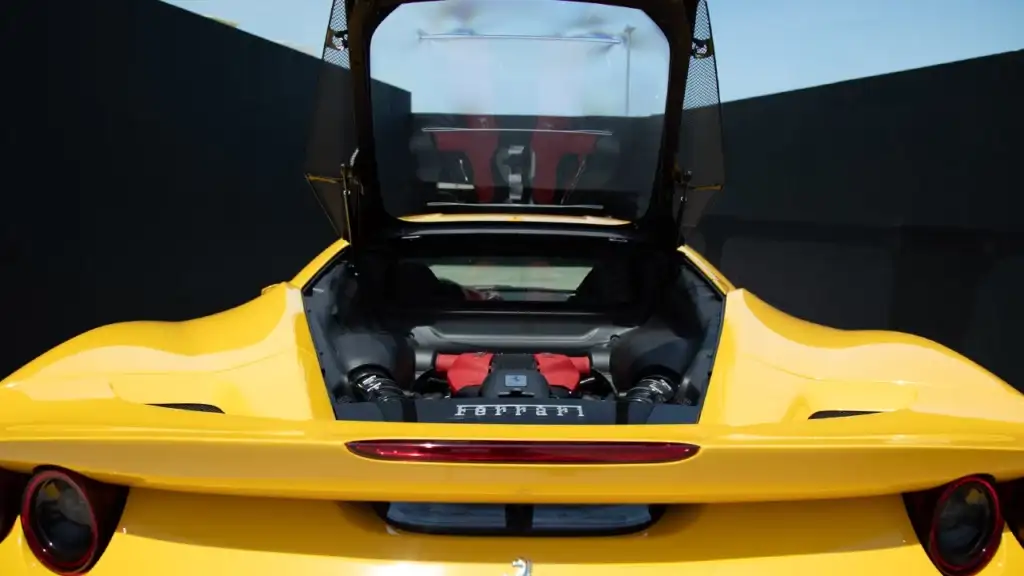
After the 7-year Genuine Maintenance program, most owners budget $3,000–$8,000 per year depending on model and mileage. Major service events like timing belt replacement can add $4,000–$6,000 in the year they occur.
Yes. Every new Ferrari includes the Ferrari Genuine Maintenance Program — 7 years of scheduled annual service at no cost. Wear items (tires, brakes, clutch) are not included.
Oil and filter changes, fluid services, multi-point inspections, diagnostic scans, and software updates. Wear items and damage repairs are excluded.
Current models like the Roma and Portofino M typically run $2,000–$4,000 annually. They use chain-driven engines (no belt service), have longer intervals between major services, and benefit from the latest diagnostic platforms. Among older models, the 458 Italia is often the most cost-effective — it was the first Ferrari to eliminate timing belt service.
Modern Ferrari platforms are engineered for structured service intervals and do not require legacy engine-out procedures common to earlier generations. Maintenance exposure is typically more predictable on newer vehicles, particularly within the initial coverage period.
Not always. Ferraris that sit unused for long periods can develop seal deterioration, battery issues, tire flat-spotting, and fluid-related problems. Regular use is often healthier for the car long term.
Authorized service ensures factory-trained technicians, genuine parts, diagnostic synchronization, and documented history. This protects performance integrity, Approved eligibility, and long-term resale confidence.
Yes. Breaking documentation continuity can reduce resale value, as buyers and certification programs prioritize complete factory service records.
Unexpected Ferrari maintenance costs often come from wear items, aging components, deferred service history, or low vehicle usage. Tires, carbon-ceramic brakes, batteries, hydraulic systems, and rubber seals can significantly increase ownership costs over time.
Ferrari hybrid batteries are engineered for long-term durability and are generally expected to last many years under normal use. Factory warranty coverage also helps protect major hybrid system components.
Ferrari maintenance is most predictable with consistent, factory-aligned care. Whether you’re exploring ownership or maintaining a current vehicle, our service team can help you plan ahead.
Browse our pre-owned Ferrari inventory or explore more on Ferrari ownership:
To ensure every vehicle receives the focused attention it deserves, all service is conducted by appointment. Contact our service team to schedule your next maintenance visit or technical consultation.