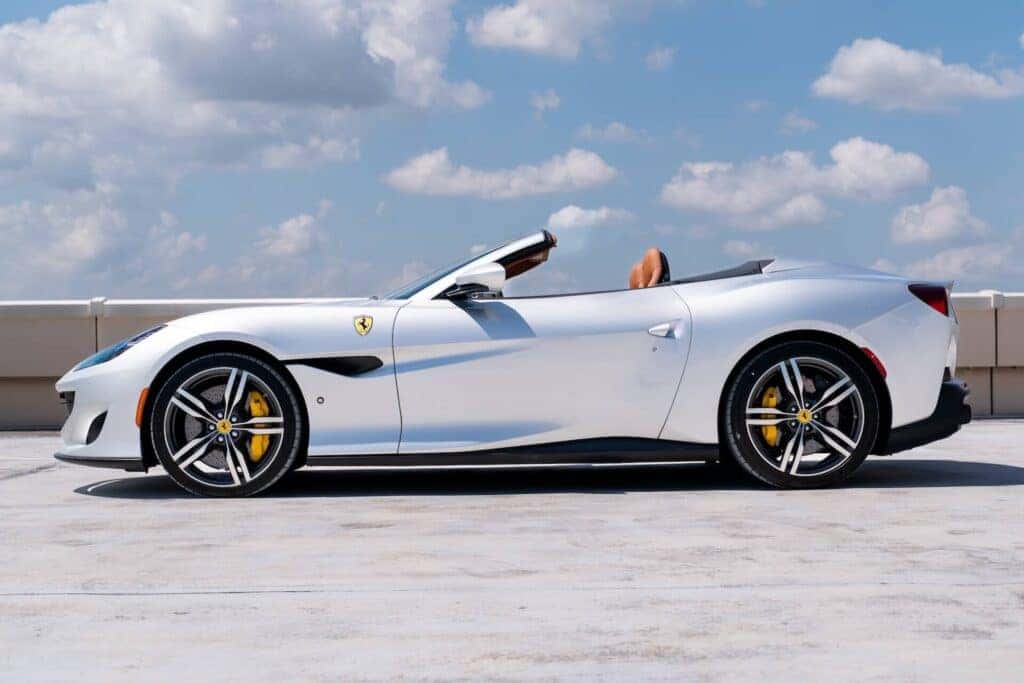
Ferrari has chosen a particularly evocative moniker for this exceptionally versatile drop-top car, referencing one of Italy’s most beautiful towns. Portofino is renowned for its charming tourist port and, over the years, has become internationally synonymous with elegance, sportiness and understated luxury. The launch colour of the new Ferrari has also been dedicated to this marvellous town: Rosso Portofino. A Ferrari designed to be driven every day that also effortlessly converts from an authentic ‘berlinetta’ coupé to a drop-top capable of delivering a unique Ferrari soundtrack and superb driving pleasure even in day-to-day situations.
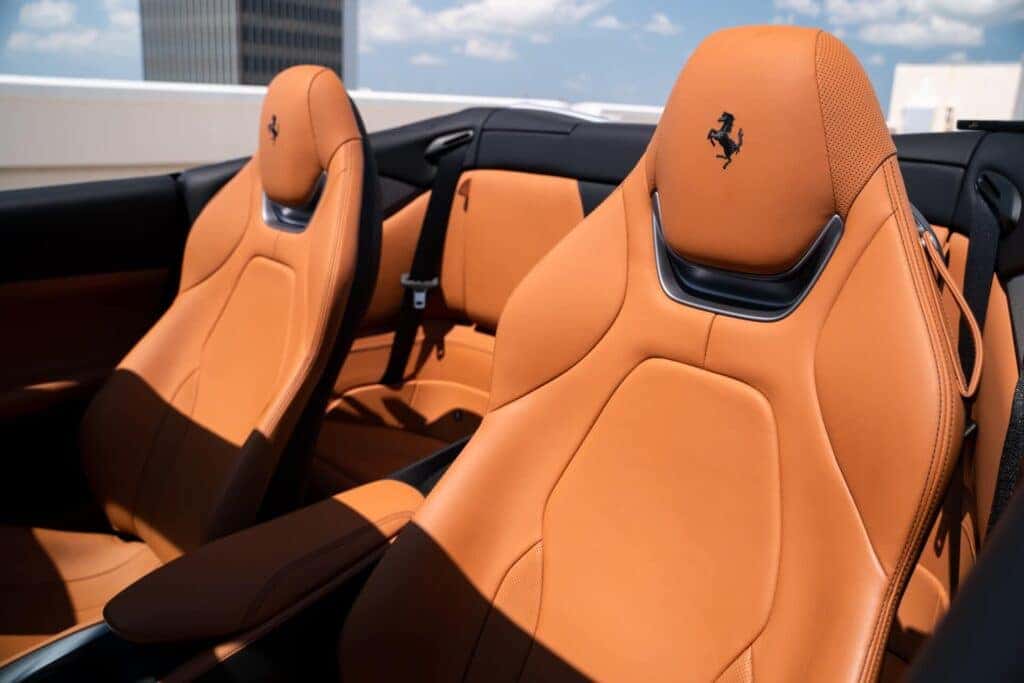
There was also a particular focus on board comfort which is guaranteed by a slew of features, not least an infotainment system with 10.2″ touchscreen display, an air-conditioning system that improves occupant comfort both with the top up or down, a redesigned steering wheel, 18-way electrically adjustable seats with an innovative backrest design that boosts legroom for rear seat passengers, and the passenger display. All occupants will particularly appreciate the wind deflector which, when the top is dropped, cuts air flow inside the cabin by 30% and also reduces aerodynamic noise.
Every Line Has a Purpose
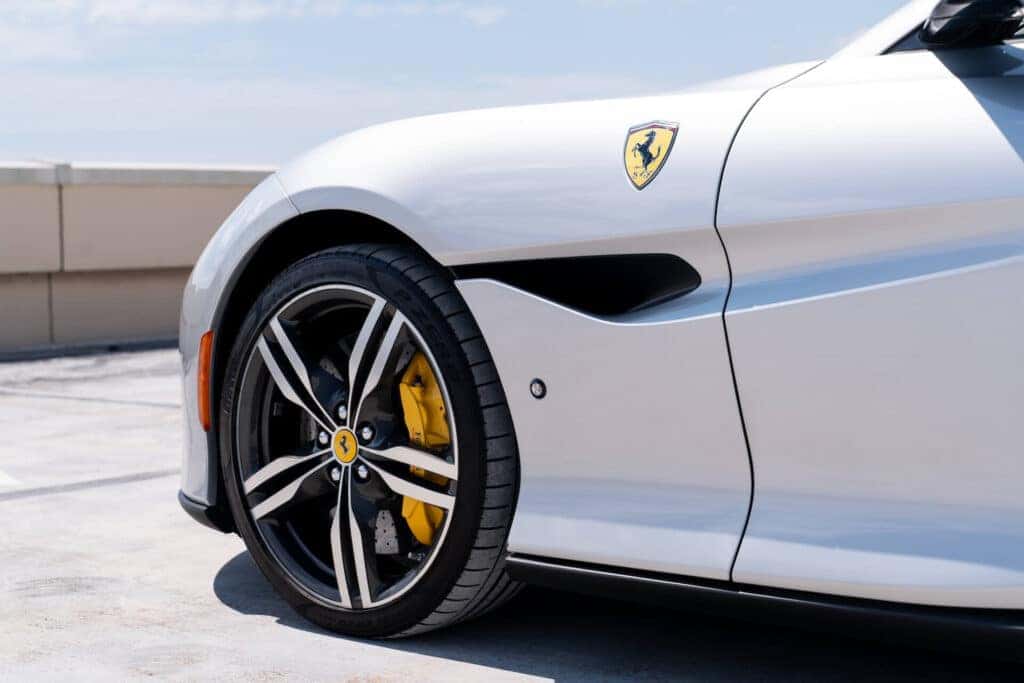
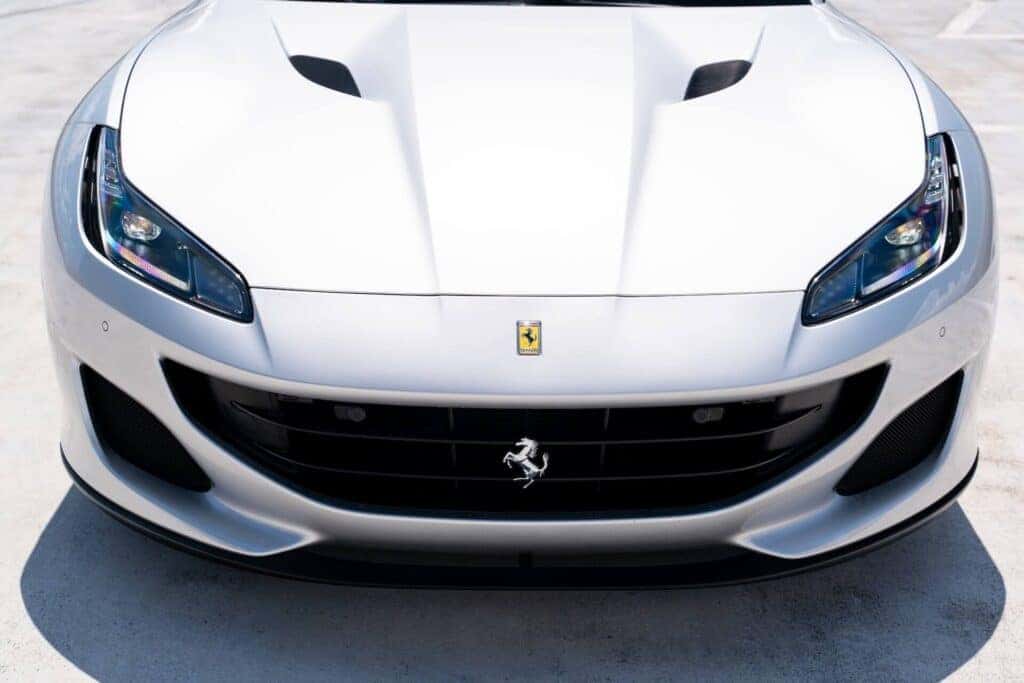
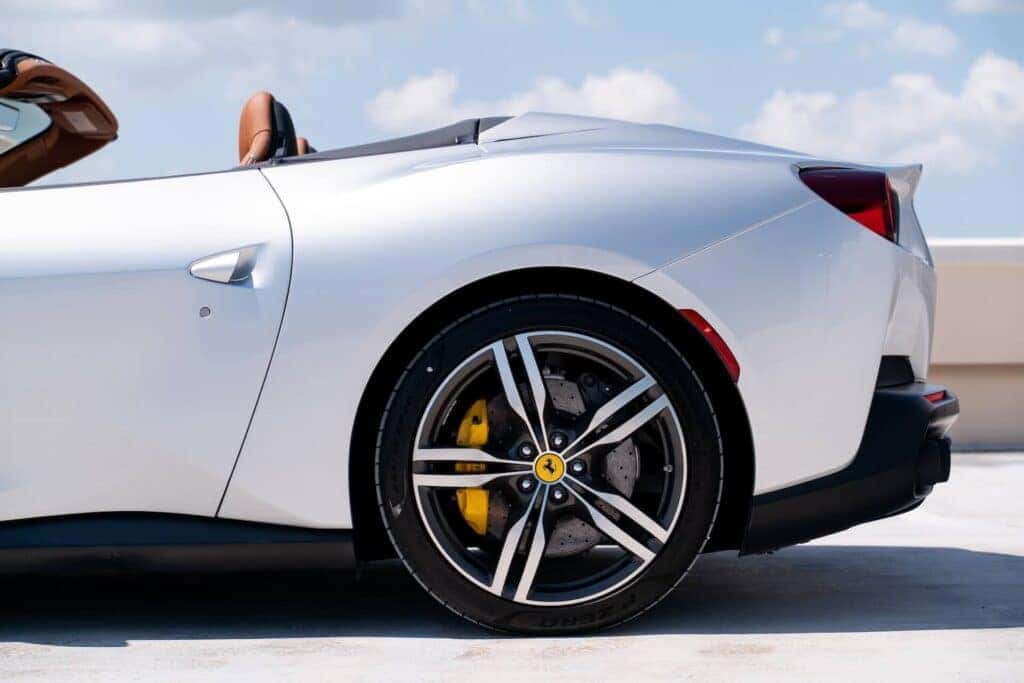
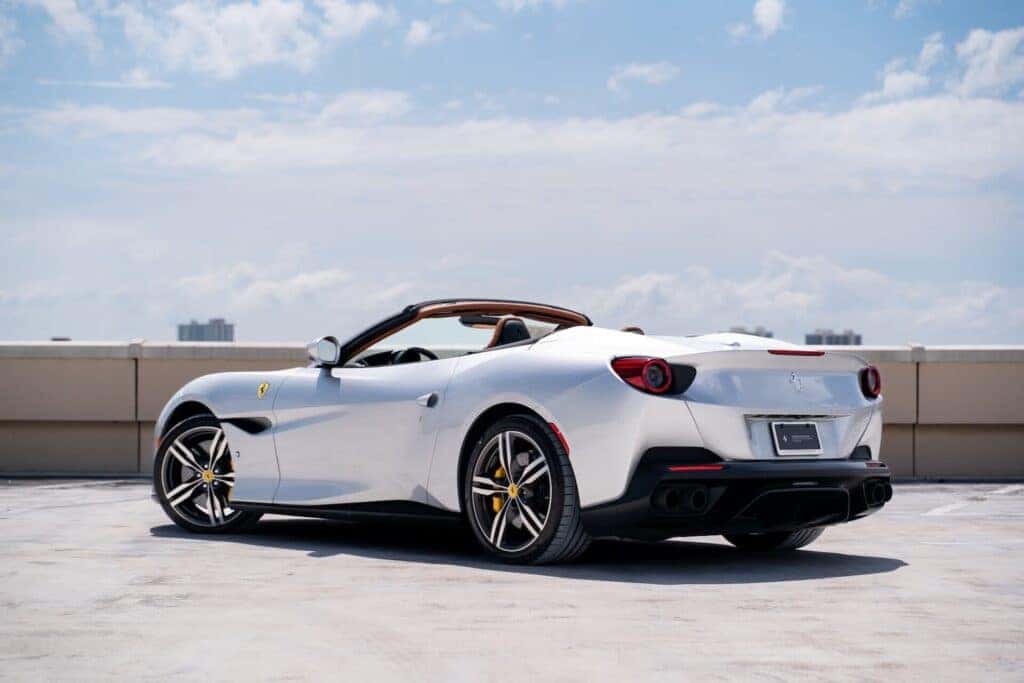
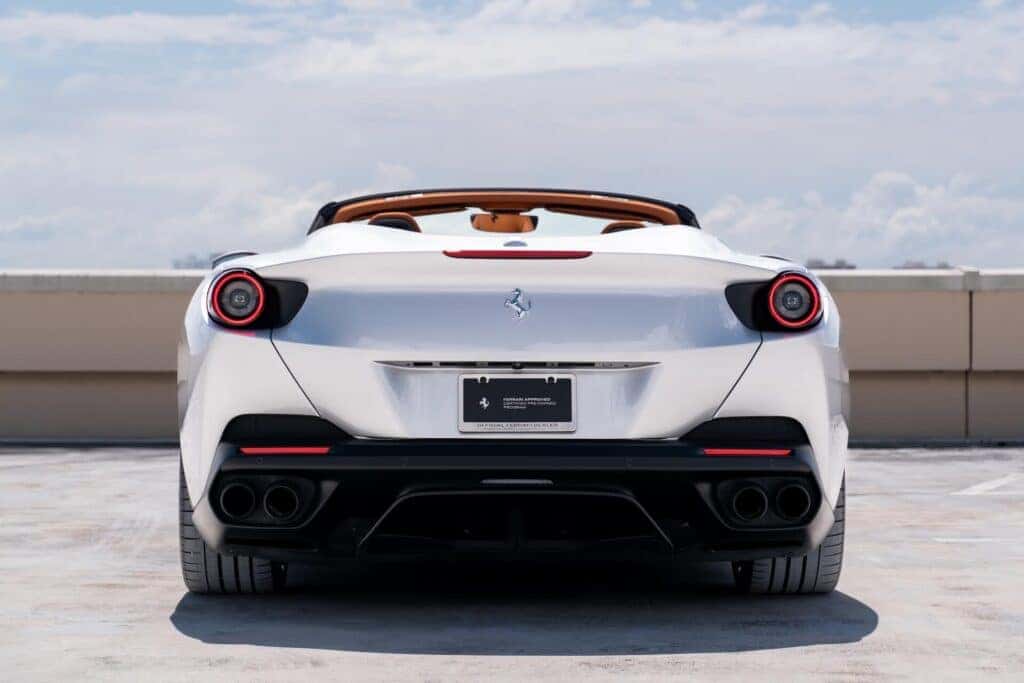
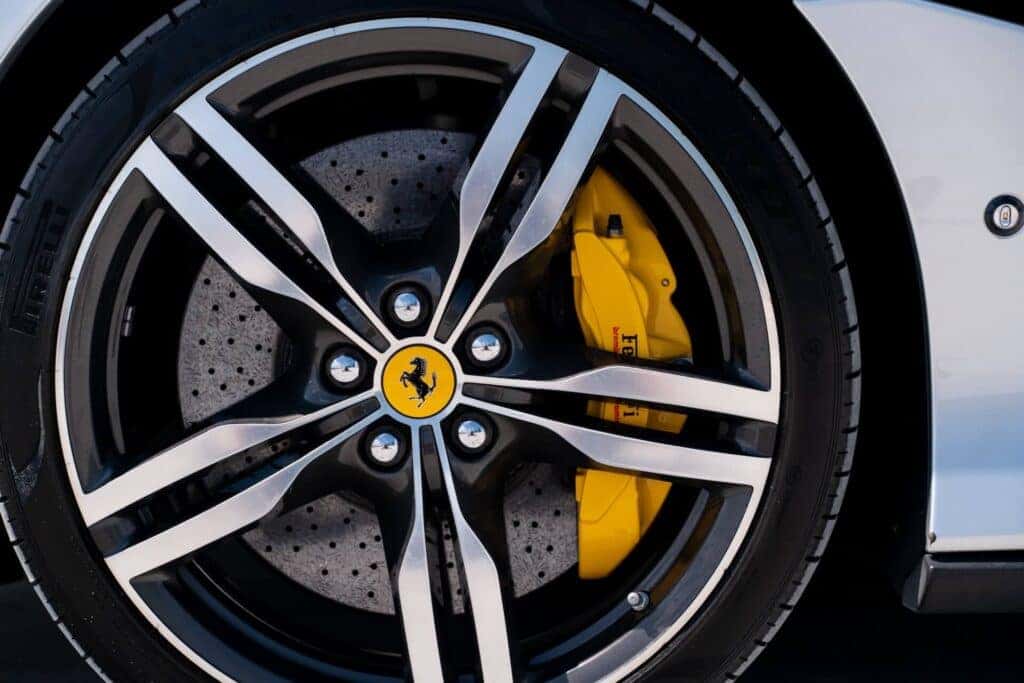
Up front, a wide honeycomb grille and slim full-LED headlights give the Portofino a sharp, focused stare. Sculpted flanks carry vents behind the front wheels that help guide air along the body. At the back, twin round taillights and four exhaust tips nod to classic Ferrari style. The roof is a folding hard top, so the car looks just as clean with the top up as with it down.
Lighter, Stiffer, Sharper
The Portofino’s aluminium chassis is 35% stiffer than its predecessor’s, yet the car weighs about 80 kg less. Ferrari got there with new alloys and fewer, smarter parts. With the V8 tucked behind the front axle, the balance is close to ideal. That combination is the quiet reason it feels so alive on the road.
Retractable hard top
The retractable hard top (RHT) can be opened or closed in just 14 seconds on the move at lower speeds. Careful modelling of the RHT housing allows the luggage compartment to hold two cabin trolleys with the roof down and three with the roof up. Ideal for any occasion, the Ferrari Portofino represents the perfect combination of design, performance and technology.
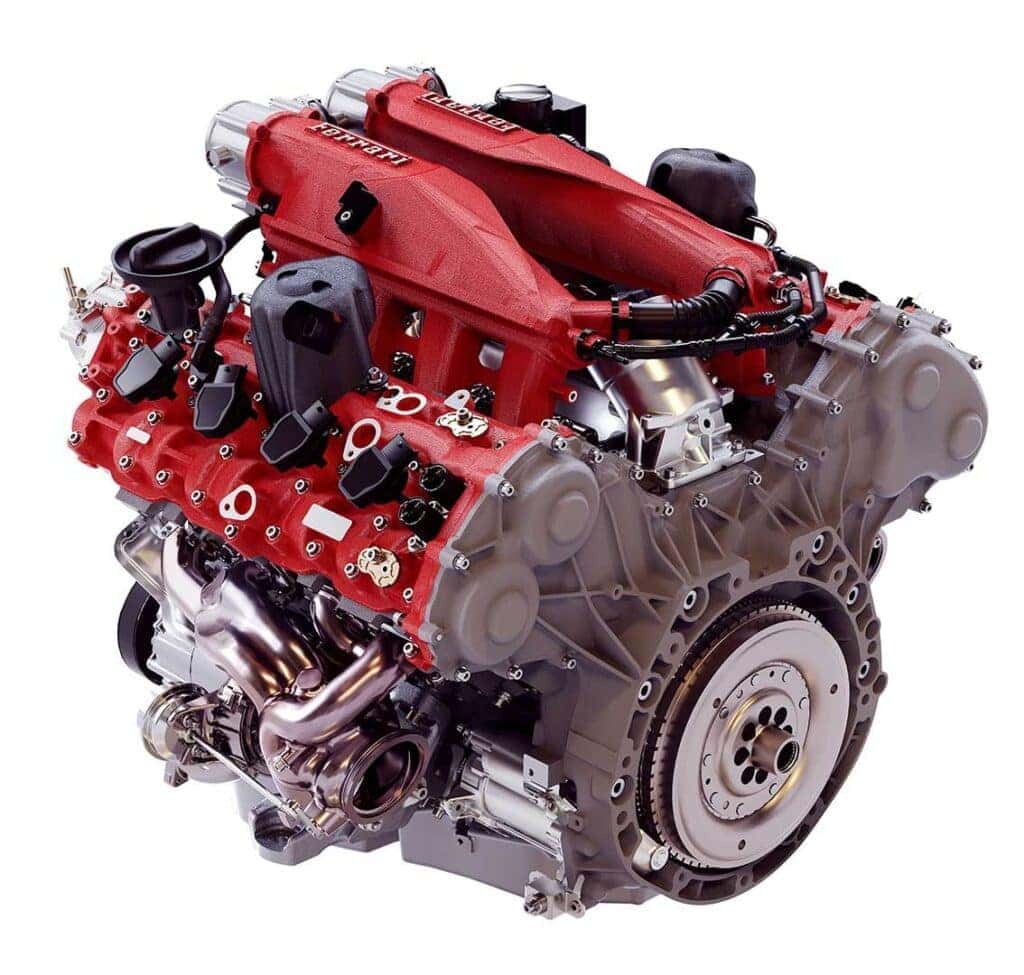
The Portofino’s twin-turbo V8 makes 600 cv and gets it from 0 to 100 km/h in about 3.5 seconds, with a top speed above 320 km/h. Electric power steering and a quicker steering ratio make it eager to turn in, while the electronic differential sharpens its exit from corners. Magnetorheological dampers adapt to the road in milliseconds, so it stays composed when pushed and comfortable when cruising.
Rear-Drive, the Ferrari Way
The Portofino skips all-wheel drive and sends every bit of its 600 cv to the rear wheels, just as a classic Ferrari should. A 7-speed dual-clutch gearbox handles the shifts. The E-Diff3 electronic differential splits the power between the rear tyres to find grip coming out of corners. The result is a car that feels lively and engaging without ever being a handful.
5
Interior
Room to unwind
Inside, the Portofino seats four in a 2+2 layout, with rear seats that work best for short trips or extra luggage. A 10.2-inch touchscreen runs the infotainment, and an optional passenger display lets your co-pilot watch the speed and revs. The front seats use lightweight magnesium frames, which also free up a bit more legroom in the back. A smarter climate system and a wind deflector keep things calm and comfortable with the top down.
6
Technical Specifications
Portofino Specs at a Glance
Performance
Engine
3.9
Liter Twin-Turbo V8
Power
592
hp
Torque
561
lb-ft
0–100 km/h
3.5
seconds
Top Speed
320+
km/h
Engineering
Drivetrain
RWD
E-Diff3
Transmission
7-Speed
DCT
Dry Weight
1,545
kg
Seating
2+2
Passengers
Dimensions
Length
4,586
mm
Width
1,938
mm
Height
1,318
mm
Cargo Capacity
292
Liters
Experience the Ferrari Portofino
Discover available Portofino models and connect with our Ferrari specialists to begin your ownership journey.
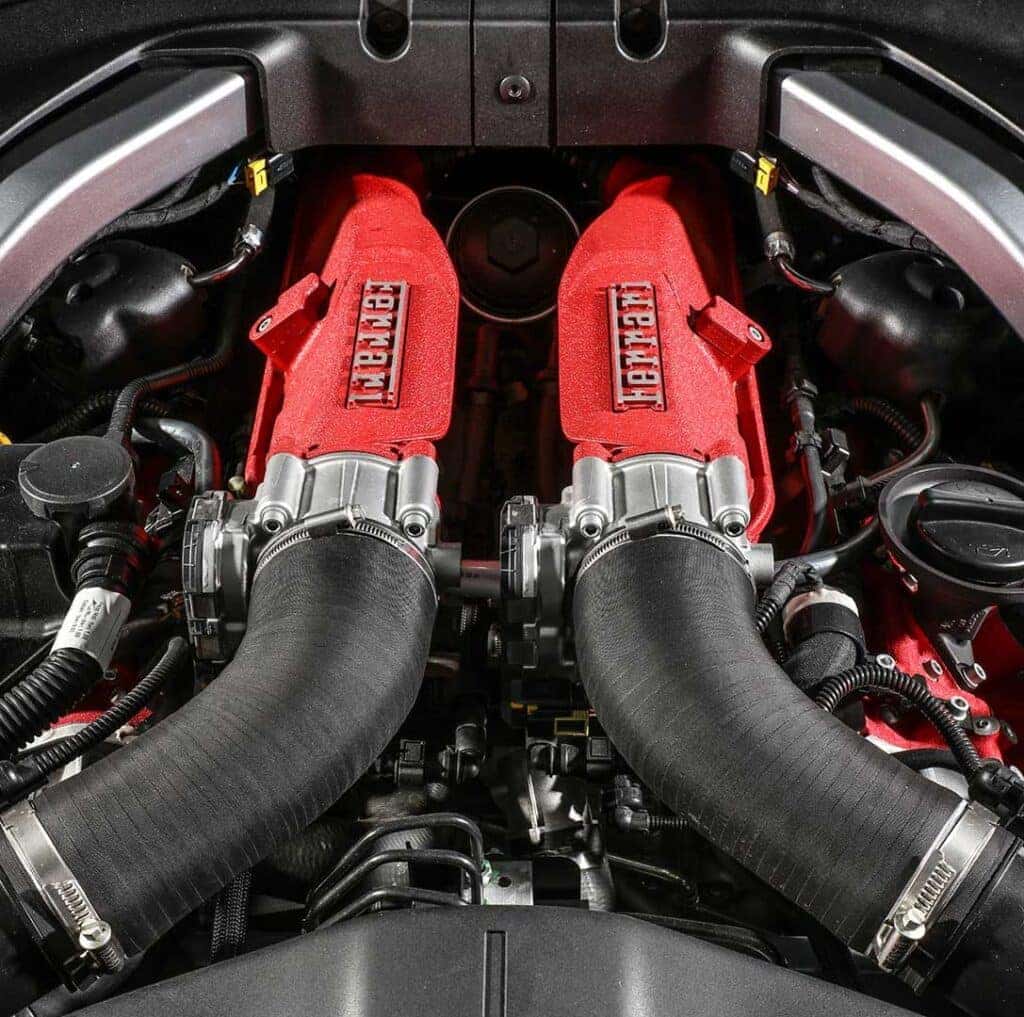
The renowned Ferrari V8 turbo, part of the engine family that was nominated International Engine of the Year for four years in a row (2016-2019), punches out an impressive 600 cv thanks to the adoption of innovative components and specific calibration of the engine management software.
All aspects of the 8-cylinder’s efficiency have been honed with the adoption of an updated version of the pistons and con-rods, and a different intake system design. The geometries throughout the exhaust system have also been revolutionised. The one-piece-cast exhaust header reduces losses, an important factor in ensuring Ferrari’s characteristic throttle response with zero turbo lag. These improvements, combined with the Variable Boost Management which adjusts torque delivery to suit the gear selected, enable the Ferrari Portofino to offer extremely high levels of acceleration in all gears and lower fuel consumption.
A day-to-day collaboration
Designed by the Ferrari Design Centre, the Portofino is the first retractable hard-top convertible with a two-box fastback shape, giving it a sleek, sporty silhouette without losing its elegance. Ferrari’s designers and aerodynamicists worked side by side on every detail of the body and underbody. Up front, the large central grille is flanked by intercooler intakes, while wider-set bonnet vents release engine heat without bothering occupants when the top is down. Horizontal headlights follow the line of the front wheel arches and hide “air curtain” intakes that channel air through the wheel housings and along the scooped sides, cutting drag from the front wheels.
Cutting Through the Air
Ferrari shaped the Portofino to stay slippery and stable whether the roof is up or down. Along with the front “air curtains” that clean up turbulence around the wheels, the scooped flanks guide air smoothly toward the rear. A sharp tail with an integrated lip spoiler helps keep the back end planted at speed. Underneath, a largely flat underbody feeds a rear diffuser that adds downforce without adding much drag, and Ferrari says the car’s overall aerodynamic efficiency improved by around 6% over the California T. With the top down, a redesigned wind deflector cuts airflow into the cabin by about 30%, so open-top driving stays calm even at highway speeds.